

Mornings in Shenzhen feel different now than they did ten years ago. Delivery robots hum softly down sidewalks outside glass-walled tech parks. When exposed to fluorescent lighting, digital payment kiosks flicker. Engineers enter buildings where artificial intelligence is part of the infrastructure, not just a trendy term. Shenzhen is implementing something more concrete: scale, while most of Silicon Valley is debating red-teaming procedures and AI guardrails.
The city released three comprehensive action plans on a single Monday earlier this year with the goals of increasing the adoption of AI, increasing the capacity of smart computing, and establishing itself as a leader in robots worldwide. The speed was nearly shocking. Coordinated ambition replaced bureaucratic caution. It seemed more like a systems overhaul than a test project.
| AI & Space Technology Overview | |
|---|---|
| Key City | Shenzhen |
| Emerging Rival Hub | Hangzhou |
| Notable AI Firm | DeepSeek |
| Robotics Leader | Unitree |
| Strategic Focus | AI integration, robotics, satellite infrastructure |
| U.S. Counterpart | Silicon Valley |
| Reference | https://www.scmp.com/ |
There is more going on here than just chatbots and language models. It has to do with national deployment, edge computing, data networks, and satellites. China’s AI push seems to be subtly moving higher and into orbit.
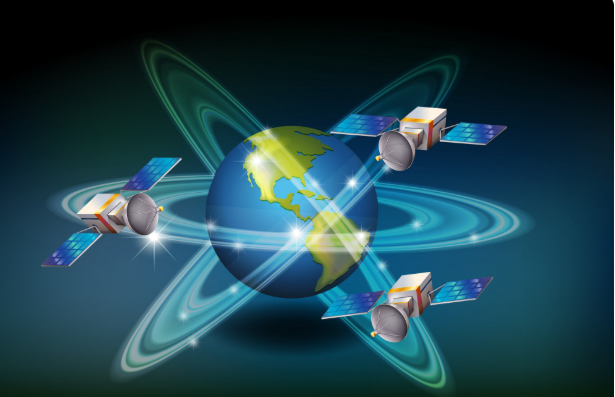
The next level of technical rivalry is now low-Earth orbit. AI-enabled satellites that can manage logistics, monitor agriculture, and analyze images in real time are no longer science fiction. They are tools for operations. Sending enormous volumes of raw data back to Earth is less necessary when machine learning is integrated directly into orbital gear. Decisions are made more quickly. Cleaner insights are delivered.
It is probable that China’s approach becomes most significant at this satellite layer. Instead of exporting AI as a consumer good, it is being integrated into infrastructure, such as climate monitoring systems, smart ports, and autonomous shipping routes. The sort of technology that rewires economies in a covert manner.
Another example of ambition is developing in Hangzhou in the meantime. The focus has shifted eastward due to the success of robotics company Unitree and AI startup DeepSeek. Investors appear to think that Hangzhou’s environment provides a powerful combination of quick commercialization and in-depth research. Chinese city-to-city rivalry is nearly as fierce as the international one.
Construction cranes may be seen soaring over AI research facilities in Shenzhen’s Nanshan neighborhood. Newly paved roadways are crossed by fiber cables. The scale is not theoretical; it is physical. It’s difficult to ignore how intentional it feels.
Venture capital continues to dominate the conversation in California. Startups strive for valuation benchmarks. The humming of IPO speculation never stops. However, China’s strategy seems more cohesive, with industry, municipal, and national strategies convergent on robots and artificial intelligence. More coordination and less romance are present.
Western critics frequently point to governance disparities, voicing worries about governmental intervention and data privacy. These issues are genuine and intricate. However, ignoring China’s technology advancements alone might overlook the bigger picture. Deployment is important. Compounds for infrastructure.
Whether China’s AI satellite push will outpace American capabilities in terms of innovation depth is still up in the air. It is nevertheless challenging to replicate Silicon Valley’s culture of taking risks and its exceptional research capabilities. However, China seems intent on integrating intelligence into orbital systems and supply chains, while the West disputes the ethical boundaries of AI.
It makes sense from an economic standpoint. Food security is improved by satellites that have real-time agricultural yield analysis capabilities. Belt and Road corridor shipping routes are optimized using AI-enhanced logistics solutions. Smart towns easily incorporate digital Yuan infrastructure. The parts fit together.
As this is happening, it seems like ecosystem velocity is more important to the competition than individual innovations. Which system has a faster rate of deployment? Which is capable of combining policy, software, and hardware into a cohesive engine?
It’s easy to portray this as a straightforward race. But there are additional layers to the reality. Talent crosses national boundaries. American colleges provide training for Chinese researchers. Through convoluted procedures, American venture funds covertly invest in Asian businesses. Despite political conflict, innovation is still a global phenomenon.
AI is being viewed as a public service rather than a consumer novelty, as evidenced by Shenzhen’s robotics labs and satellite arrays that reach beyond the atmosphere. That tactical framing could be essential. Early adopters benefit from compounding advantages if AI is integrated into the nation’s infrastructure.
Engineers back in Silicon Valley work on improving models while discussing inference costs and parameter counts. The intellectual force is still very strong. However, there is a growing perception that rivalry extends beyond software releases.

