Online Fortune Telling , Why Millions Are Asking the Internet About Their Future

People are increasingly asking strange things into a search bar late at night, when the world becomes silent and phones glow brightly in dimly lit spaces. Will I have a better career? Is this a long-term relationship? What does the upcoming year hold?
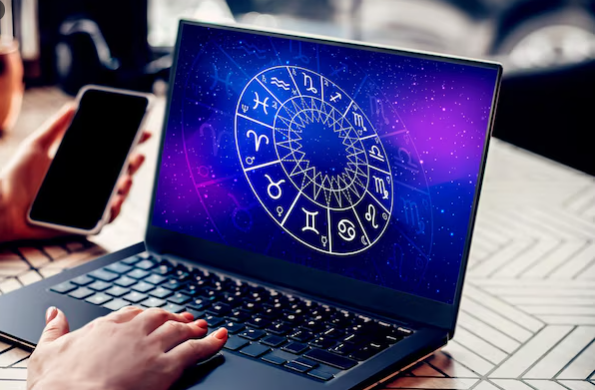
An answer shows up a few seconds later. Occasionally, a digital tarot card is flipped across the screen. Sometimes it’s an app-generated, comprehensive astrological chart. Sometimes it’s an artificial intelligence algorithm that makes oddly customized predictions. This is the peculiar and growing realm of online fortune telling.
Key Information About Online Fortune Telling
| Category | Information |
|---|---|
| Concept | Digital fortune-telling services providing insights into love, career, and life decisions |
| Popular Methods | Tarot readings, astrology charts, AI predictions, digital fortune slips |
| Common Platforms | AstroSage, Tarot Teller, Fortune Teller – Life Path |
| Paid Marketplace | Fiverr |
| Typical Cost | Free to $300+ for personalized sessions |
| Main Purpose | Entertainment, personal reflection, emotional guidance |
| Growing Trend | Post-pandemic surge in career and relationship readings |
| Reference Website | https://www.astrosage.com |
What used to need a tiny store on a city street—dim lights, velvet fabric, perhaps a crystal ball—can now be found conveniently inside cellphones. Applications like Fortune Teller-Life Path and Tarot Teller provide fast readings in a matter of seconds. Based on a user’s birthdate and location, astrology platforms such as AstroSage generate complete natal charts.
It’s difficult to ignore how smoothly these technologies have evolved. People have always looked for clues about what is ahead. Simply put, the medium shifted from candlelit rooms and handwritten charts to algorithmic predictions and push notifications.
Certain platforms rely a lot on automation. These days, individualized readings are produced by artificial intelligence programs that analyze user reaction patterns and provide in-depth interpretations. Although detractors sometimes point out that a large portion of fortune telling relies on ambiguous language that can match practically anyone’s life, companies creating these systems claim astonishingly high accuracy. The appeal is still strong, though.
Hundreds of fortune-telling services, from astrological analysis to tarot readings, are available on the freelance marketplace Fiverr. Prices differ significantly. Twenty dollars could be spent on a brief reading. A thorough session can surpass three hundred, often involving lengthy video calls or multi-page forecasts.
An intriguing aspect of the demand is shown by the economics. Even when done digitally, fortune reading falls somewhere between amusement and consolation. Seldom do people approach it in the same manner that they treat financial guidance or medical counsel. Rather, they approach it more like a contemplative discussion about potential. That distinction becomes obvious when seeing how people use these services.
Questions about careers seem to be particularly prevalent. Indeed, a number of platforms indicate a significant spike in career-related readings following the pandemic years, with some estimates indicating a nearly 80% increase in demand. The change makes sense. Uncertainty in the economy has a tendency to encourage self-reflection and perhaps unorthodox advice.
Structured introspection also provides psychological comfort. For instance, tarot cards do more than just forecast results. They narrate archetypal tales of struggle, change, or rebirth. When someone draws the “Tower” or the “Star,” the meaning frequently shifts from prophecy to alternative perspectives on life’s occurrences.
But technology has altered the mood. The atmosphere had a major role in the traditional fortune-telling process. The subtle tension before a reading started, the scent of incense, and the silent stillness while cards were shuffled. Online versions use animated graphics and fast interactivity in place of that ceremony. A portion of the mystery vanishes. Yet accessibility improves tremendously.
For instance, websites in Tokyo provide virtual Omikuji, which are traditional Japanese fortune slips that were originally created at temples. These days, they show up instantaneously on phone screens. A brief message about luck, relationships, or travel is revealed through a digital animation. It’s straightforward, almost lighthearted, but it preserves the custom in a novel way. The tendency is being accelerated by artificial intelligence.
According to a number of new systems, machine learning and historical astrological data are combined to produce readings in several languages and modify predictions in response to user comments. Thousands of readings are analyzed by the systems to produce astonishingly personal responses. It’s still up for dispute whether these technologies actually “predict” anything.
Online fortune telling, according to critics, runs the risk of conflating believing with amusement. Even if a prediction is purposefully ambiguous, it might nevertheless sound plausible if it is written correctly. Psychologists refer to this propensity to interpret generalizations as distinctively personal as the “Barnum effect.” Nevertheless, users keep coming back to these platforms.
Curiosity might be a contributing factor. Fortune telling offers an organized method of envisioning the future, which is a basic human tendency. Sometimes, even skeptics acknowledge that reading a horoscope or drawing a tarot card can cause unexpected introspection.
It’s difficult to ignore how these customs reflect more general digital behaviors. Self-analysis is encouraged by social media. Apps for wellness monitor mood and sleep habits. Identity-related insights are promised by personality tests. That introspective culture is well suited to online fortune telling.
However, the practice has a distinctly archaic quality. Tarot cards have been around for generations. Astrology charts trace origins thousands of years into human history. Technology only created a quicker delivery mechanism; it did not alter the need for instruction. And maybe that’s why these platforms are so quietly popular.
After a long day, someone may not be looking for exact truth when they open a fortune-telling app late at night. More often than not, they’re looking for perspective, comfort, or even just a little time to think. The screen flickers. A card shows up. A brief message comes after.
The future seems a little less enigmatic for an instant. Whether the forecast turns out to be accurate or not might not be as important as the moment it causes someone to halt, reflect, and wonder what will happen next.