
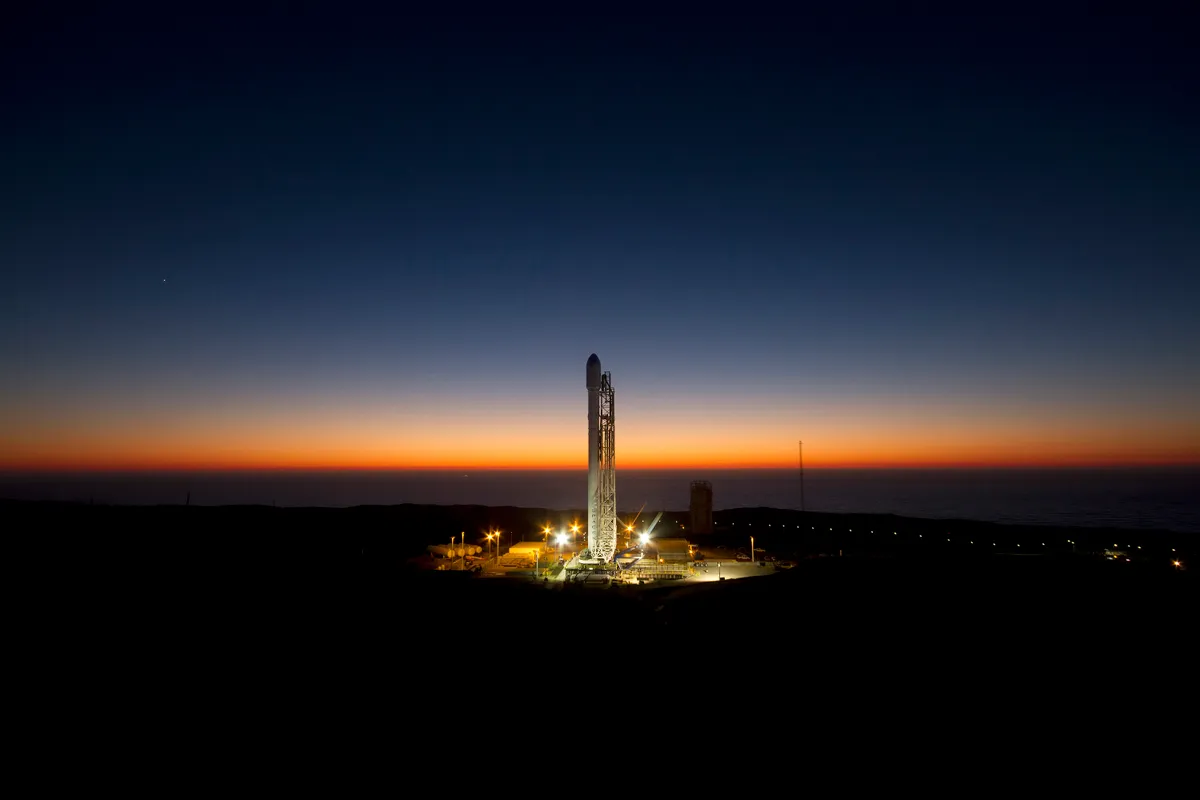

The SpaceX IPO hedging challenge is, at its core, a problem with no precedent: when SPCX begins trading on the Nasdaq this Friday, institutional investors who built private-market positions will face a company so singular in its sector that the usual toolkit simply does not apply. Dennis Davitt, chief investment officer at Millbank Dartmoor Portsmouth, frames the dilemma in a single rhetorical question: ‘What are you going to do, short NASA?’
A business with numbers as unusual as its orbit
The financials make the challenge more acute. In the first quarter of 2026, SpaceX reported total revenue of $4.694 billion, an approximately 15.4% year-over-year increase, according to TradingKey’s prospectus breakdown. The Starlink connectivity segment drove the bulk of that, contributing $3.26 billion, roughly 69% of quarterly revenue. Net losses, however, widened by approximately 709.8% over the same prior-year period: a figure that underscores how aggressively the company is spending even as top-line growth continues.
Beneath the headline figures lies a deal structure with its own complexities. Quartz reported that SpaceX conducted a five-for-one stock split effective 4 May 2026, and that the listing will preserve a dual-class share structure in which Class B shares carry enhanced voting rights. Goldman Sachs and Morgan Stanley are among the underwriters, according to a 20 May 2026 SEC disclosure.
The path to market was itself compressed. Reuters reported that SpaceX had originally targeted a late-June listing before accelerating the timeline to the second week of June, and that Reuters was first to report in March 2026 that the company was leaning toward a Nasdaq listing partly to seek early inclusion on the Nasdaq-100 index. According to CNBC, SpaceX confidentially filed with the Securities and Exchange Commission (SEC) in April 2026, with a roadshow targeting a kick-off on 8 June 2026.
One revenue line in the filing caught particular attention. Anthropic will pay SpaceX $1.25 billion per month through May 2029 as part of a compute deal, with Anthropic using all capacity at SpaceX’s Colossus 1 data centre in Memphis, Tennessee, per the IPO filing as reported by CNBC.
The SpaceX IPO hedging challenge: why the basket trade breaks down
For institutions carrying SpaceX exposure through private markets, valuation risk has already expanded considerably. On Forge Global’s secondary market, SpaceX hit an all-time high closing price of $634.05 per share, representing a 215% increase over the trailing 12 months and implying a valuation of $1.51 trillion, according to The Globe and Mail, citing Forge data. The snippet from which this article draws separately notes the company’s private market valuation has nearly tripled over the past year, citing Forge data, a characterisation that reflects the same broad trend. When a single holding appreciates that sharply, position sizing relative to a portfolio forces the hedging question.
Davitt, who worked at Credit Suisse during the Google IPO in 2004, draws a direct comparison. ‘Hedging it back then was easier because there were more things to sell,’ he says. ‘So when you put a hedge together on something like this, you create a basket of things that simulate the price action… but there’s nothing to sell in SpaceX.’
Without a listed peer to short, basket construction becomes approximate at best. The absence of directly correlated proxies means hedgers are left managing expectations rather than risk positions.
On pricing expectations, Davitt is measured. ‘My instinct, being old, is and having been around these bigger IPOs like this, is that it tends not to be that crazy 200% blow-off top,’ he says. ‘I do not believe that Elon Musk is going to allow this to IPO at $135 and trade up to $270 the first day.’
A wave of levered instruments arriving all at once
Even a disciplined first-day price move would not neutralise the structural complexity building around SPCX. Several leveraged vehicles are set to launch alongside or shortly after the IPO. Leverage Shares has listed both a 2x Long SPCX Daily ETF (ticker: SPCH) and a 2x Short SPCX Daily ETF (ticker: SSPC) tied to SpaceX’s common shares. Defiance ETFs separately announced plans for SPCU, its own 2x SpaceX ETF, according to Markets Insider. An SEC-registered fund filed on 20 May 2026 goes a step further, targeting 2x the income generated from selling options on SPCX shares by writing options on those leveraged ETFs.
Brent Kochuba, founder of Spotgamma, summarised the compounding pressures in an email: ‘Not only is the price action of the stock under question, but you have these levered ETFs which are going to launch, and then forced index buying. Compounding that are the FOMC meeting and VIX expiration on the next day (17th), followed by a massive June options expiry.’
The options market for SPCX is expected to open wide. ‘I think the initial SPCX markets are going to be pretty challenging for traders meaning super wide and with a very high IV,’ Kochuba said. Forced buying from index inclusion, rebalancing pressure from leveraged products, and a macro calendar that would test any large-cap debut: the SpaceX IPO hedging challenge is not a single problem but several arriving simultaneously. The first options print on Friday will tell practitioners more than any model currently can.

