
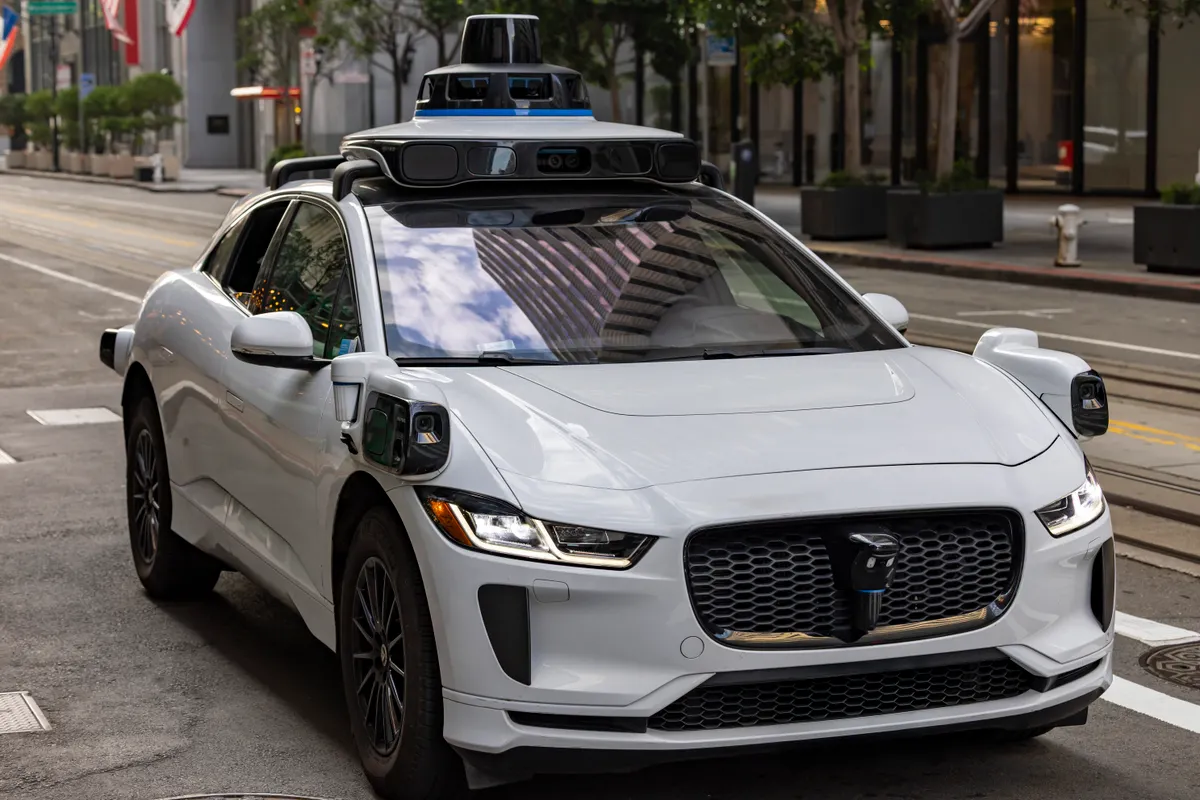

The federal pressure on the autonomous vehicle industry hardened last week, and the NHTSA AV first-responder ultimatum issued by the agency’s administrator on 8 July 2026 is the clearest sign yet that Washington is losing patience with the sector’s excuses. The National Highway Traffic Safety Administration (NHTSA) also published a sweeping new regulatory agenda that could reshape the legal framework for driverless vehicles entirely.
The NHTSA AV First-Responder Directive
NHTSA administrator Jonathan Morrison sent a letter to every autonomous vehicle developer listed in the Department of Transportation’s Standing General Order, telling them flatly that vehicles unable to safely interact with emergency services represent a danger on public roads. The letter, confirmed by NHTSA’s own press release, builds on recent agency efforts that include hosting the first-ever National AV Safety Forum and cutting what the agency described as redundant regulatory red tape.
Morrison’s language left little room for interpretation. ‘Let me be clear: the inability to detect and appropriately respond to such situations represents a functional insufficiency. Emergency scenes are not rare or extreme “edge cases.” As such, NHTSA is today issuing a call to action for AV developers and operators to immediately focus their resources on fixing this issue.’
According to Road & Track, the letter follows several high-profile incidents involving autonomous ride-hailing vehicles and law enforcement agencies in California and Texas. Morrison did not name any single company, but the context is hard to misread: Waymo operates the largest robotaxi fleet in the United States, with vehicles running in Los Angeles, Phoenix, and San Francisco, and a prior investigation documented repeated run-ins between Waymo vehicles and first responders. The latest flashpoint came over the July 4 holiday weekend, when numerous Waymo robotaxis had to be towed after running out of power during a traffic jam triggered by fireworks crowds in San Francisco. San Francisco supervisor Bilal Mahmood subsequently said he plans to submit a letter of inquiry examining how autonomous vehicles affected public transit services and emergency responders that night.
Morrison has set a deadline of the end of July for companies to present the agency with concrete ‘solutions.’ What happens if they do not comply is less clear. TechCrunch’s own reporting on the letter noted that it does not specify consequences for developers who ignore the request, a gap that will define how seriously the industry treats the ultimatum. The International Association of Fire Chiefs flagged the directive in its Washington Update, an indication that the emergency-services community is watching closely.
Rivian’s Capital Raise and the Regulatory Road Ahead
While federal scrutiny tightened on robotaxis, a separate piece of Washington news carried consequences for a different part of the autonomous and electric vehicle ecosystem. The Department of Transportation published its 2026 Regulatory Plan and Unified Agenda, which contains eight separate rulemakings aimed at updating ten Federal Motor Vehicle Safety Standards (FMVSS) to account for vehicles without human drivers. According to the Sidley Environmental, Health & Safety Brief, the rulemakings adjust existing standards rather than create entirely new safety frameworks for autonomous operations.
The changes are granular but consequential. One rulemaking would revisit the requirement for sun visors, a feature with no obvious purpose in a vehicle without a human driver. Another would update FMVSS No. 126, which currently ‘assumes the presence of a human driver using a steering wheel,’ to cover vehicles equipped with Automated Driving Systems that lack manually operated controls. A proposed amendment to FMVSS No. 110 on tyre selection and rims, filed under docket NHTSA-2026-0630-0001, would allow tyre placard requirements to be met on the left side of a vehicle when there is no designated driver’s side. Companies such as Tesla and Zoox, both developing vehicles without steering wheels or pedals, stand to benefit from the modernised standards.
Away from the policy arena, Rivian (Nasdaq: RIVN) completed the week’s most eye-catching capital markets move. The electric vehicle maker sold 86.25 million Class A common shares at $15.50 each, a figure that includes 11.25 million additional shares that underwriters opted to exercise, according to the company’s investor relations page. Rivian expects net proceeds of $1.32 billion, which the company said it intends to use for general corporate purposes, including funding equity contributions under an Amended and Restated Loan Arrangement with the US Department of Energy. Rivian’s annual report filed with the SEC lists the par value of each Class A share at $0.001.
The timing is logical, if not surprising. Rivian began delivering its new R2 SUV last month and raised its 2026 delivery forecast to between 65,000 and 70,000 vehicles after outperforming its own expectations in the second quarter, driven by growth in its EDV and R1 lines alongside the early R2 ramp. Scaling that production is expensive, and Rivian has not yet reached profitability.
The NHTSA ultimatum expires at the end of July. Whether AV developers table credible solutions or offer boilerplate commitments will tell the industry a great deal about how the Morrison era at the agency is likely to proceed.

