
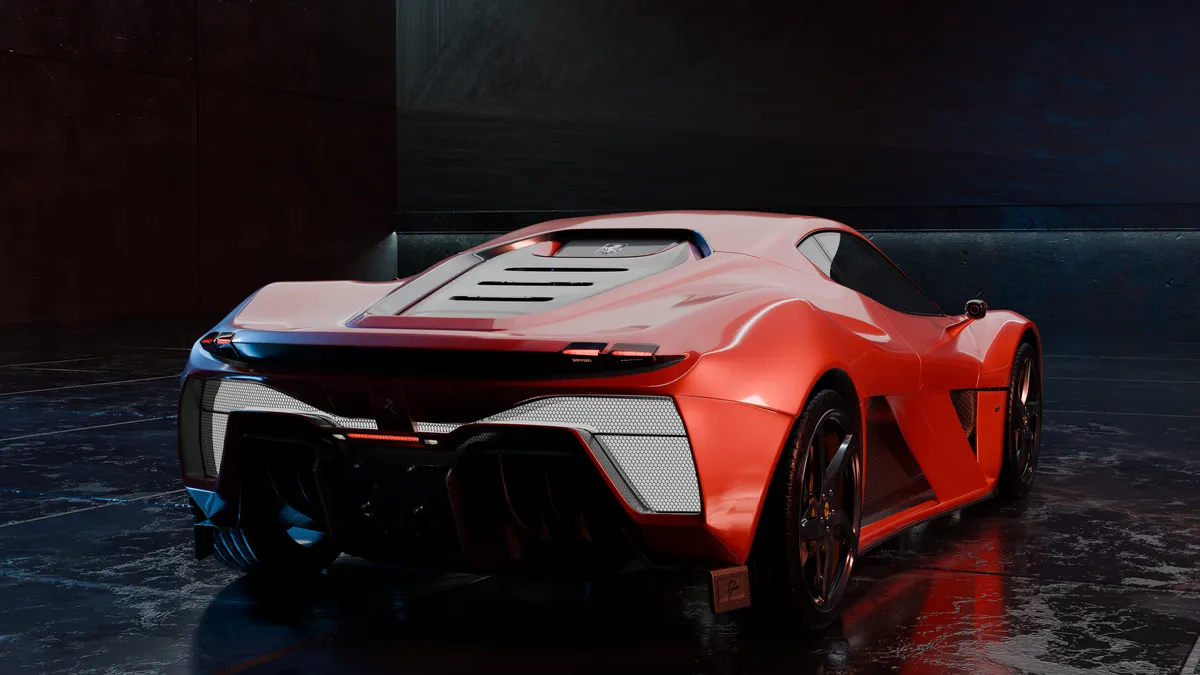

Ferrari Luce EV sales have confounded the sceptics: the prancing horse’s first battery-electric car filled its entire 2026 annual quota in fewer than two months after launch, according to a report by the Financial Times.
The backlash when Ferrari unveiled the Luce on 25 May 2026 was swift and, by now, rather embarrassing for those who led it. Critics compared the wedge-shaped five-seater to a Nissan Leaf. Others predicted Chinese rivals would undercut it on price while outperforming it on technology. Even Luca Cordero di Montezemolo, the former Ferrari chairman, joined the chorus of disapproval. Ferrari’s stock fell 8% the day after the reveal.
The market has since delivered its own verdict.
Ferrari Luce EV Sales: Filling the Quota in Two Months
Ferrari was aiming to sell just under 500 Luces in its first year. Those orders arrived well before the year was out. Reuters reports that the annual quota was filled in less than two months from the 25 May launch date.
On pricing, the Reuters report puts the Luce at €550,000 (approximately $626,285 at the time of reporting). The snippet from the original FT report cited €555,000 / $630,000; the Reuters figure supersedes that. Ferrari’s press office declined to comment on the FT report, according to Reuters, with the company expected to provide an update on market reception when it presents its half-year results on 31 July 2026.
The car was co-designed by former Apple designers Jony Ive and Marc Newson, working through Ive’s firm LoveFrom. The snippet credited Ive and LoveFrom; Reuters also names Newson as a co-designer on the project.
For context on what 500 units means within Ferrari’s broader business: Road & Track, citing the FT, calculates that if roughly 500 Luces are delivered in the first year, the model would account for about 3 to 4 percent of Ferrari’s global shipments, based on the 13,640 cars the company sold worldwide in 2025.
Design, China, and the Long Game
Much of the internet’s hostility focused on the Luce’s appearance. A senior Ferrari executive addressed this directly, telling Reuters that the car’s unconventional shape was largely dictated by aerodynamic requirements and needed to be ‘digested’ before it can be understood. Early reviews suggest that once buyers are behind the wheel, the driving experience meets expectations for a Ferrari.
Appearance is, in any case, a secondary concern for a customer base that tends to own multiple Ferraris and treats a six-figure purchase as a considered addition to a collection rather than a primary vehicle. Asking 500 of those buyers to place an order for a practical four-door EV that carries the prancing horse badge was never the stretch that critics assumed.
China is part of the story, though a complicated one. Previous reports indicated that at least 20% of Luce deliveries would go to China, a market that favours fast, sleek four-door EVs. Yet Ferrari’s official financial data shows the company’s shipments to Mainland China, Hong Kong and Taiwan totalled 941 units in 2025, down from 1,162 in 2024 and 1,490 in 2023. Against that declining trend, the Luce’s reported appeal in the Chinese market offers Ferrari a specific vehicle to arrest the slide, rather than a guaranteed recovery.
The longer-term ambitions are more substantial than the first-year quota implies. Road & Track, citing the FT, reports that Ferrari’s target is approximately 600 Luce units per year through 2030, implying roughly 2,500 vehicles in total over that period. At €550,000 apiece, that is a revenue line that justifies whatever the company spent on Ive, Newson, and the aerodynamic engineering that produced a shape the internet spent weeks mocking.
Ferrari updates investors on half-year results on 31 July 2026. Whether management addresses the Luce’s sales pace directly, or lets the order book speak for itself, will be the next read on how confidently the company is positioning the model against its 2030 target.

