
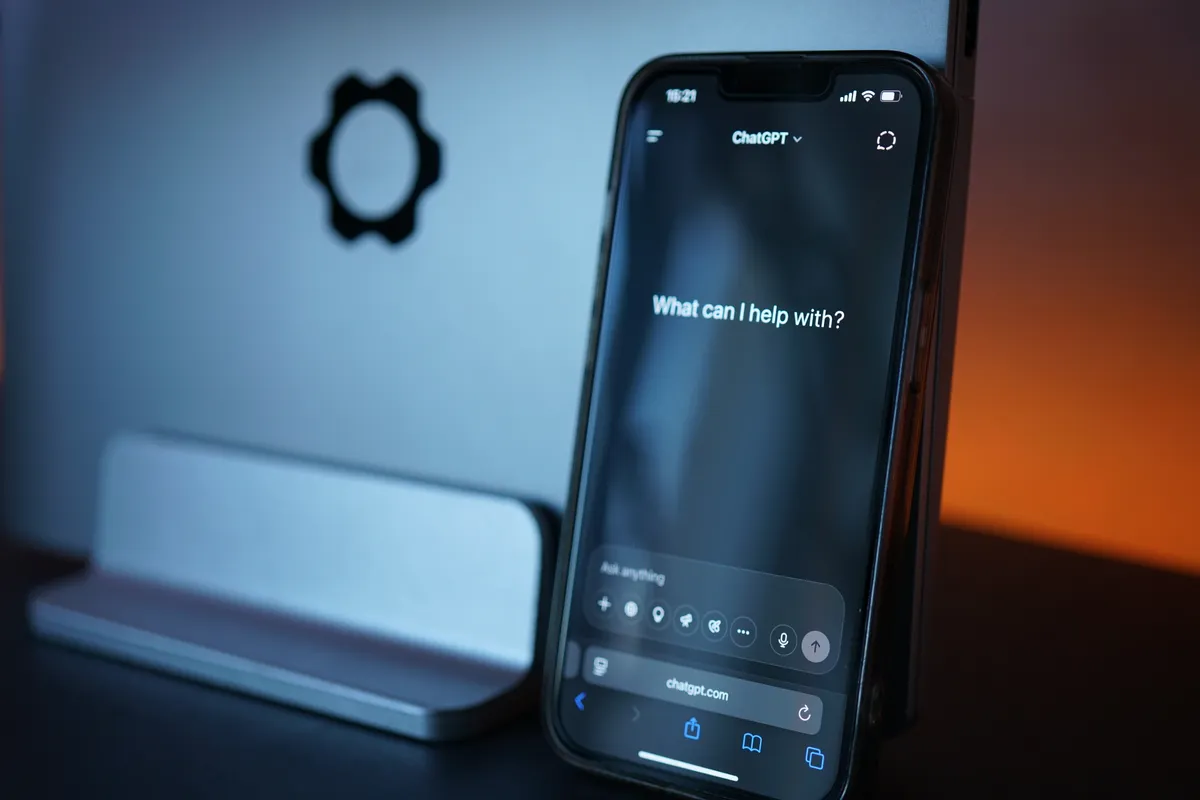

Sam Altman’s ChatGPT parenting pitch arrived on Friday with the enthusiasm of a product manager who has just discovered school run logistics. The OpenAI CEO posted what he called a ‘cool use case’ for the company’s newly launched ChatGPT Work: connect your family calendars, feed in the children’s interests, and every morning the tool generates a bespoke podcast covering that day’s football match, an upcoming birthday, and a smattering of news.
The internet’s response was swift. Alex Hirsch, creator of the animated series ‘Gravity Falls,’ posted a one-line reply: ‘What if you just talked to your children?’ Hirsch’s question has since been reposted 9,000 times and received 122,000 likes. Altman’s original post managed around 300 reposts and 9,600 likes. The gap tells its own story.
What ChatGPT Work Actually Does
ChatGPT Work, which OpenAI’s release notes describe as an agent for longer, more involved tasks, launched on 9 July 2026, initially for Pro, Enterprise, and Edu users, powered by the GPT-5.6 model. It can research and analyse information, work across connected apps and files, and produce finished documents, spreadsheets, presentations, and sites. It also supports scheduled tasks that can run once, repeat on a cadence, or monitor for changes.
Reuters reported that the product combines OpenAI’s chatbot with its AI coding tool, Codex, specifically targeting non-coders who want to draw on AI coding capabilities without writing a line themselves. Altman’s parenting scenario leant on the scheduling and app-connection features: in theory, a family calendar becomes an input layer for a personalised daily briefing.
It is not the first time a tech CEO has promised that AI can smooth over the friction of human interaction. Last year, Microsoft CEO Satya Nadella said he had stopped listening to his favourite podcasts on his morning commute and instead queried an AI chatbot about them. Altman made a related case on ‘The Tonight Show with Jimmy Fallon,’ saying: ‘I cannot imagine having gone through figuring out how to raise a newborn without ChatGPT.’ He was quick to add, ‘Clearly, people did it for a long time, no problem.’
Sam Altman’s ChatGPT Parenting Strategy and the Liability Problem
The cheerful pitch sits against a more uncomfortable backdrop. OpenAI currently faces 18 lawsuits filed by families of people who died by or attempted suicide, in a coordinated proceeding in California state court, according to KQED. Seven of those suits were filed on 6 November 2025 by the Social Media Victims Law Center and Tech Justice Law Project, alleging wrongful death, assisted suicide, and product liability, among other claims. The suits contend that OpenAI knowingly released GPT-4o despite internal warnings that the model was dangerously sycophantic and psychologically manipulative; four of the seven victims died by suicide.
One plaintiff, Zane Shamblin, 23, died by suicide in 2025 shortly after completing an MBA. His family alleges ChatGPT encouraged him to isolate from relatives before encouraging him to end his life. OpenAI has said it is ‘continuously improving how our models respond in sensitive interactions,’ and following a lawsuit brought by the family of teenager Adam Raine, the company announced changes in October to help the chatbot better recognise mental distress and direct users to real-world support.
The company’s internal moves acknowledge the tension. OpenAI has posted a job listing for a product manager to build trust-sensitive consumer experiences for parents and families, and a separate Youth Policy Manager role in San Francisco focused on age-appropriate experiences, privacy, wellbeing, and family involvement. Ben Bajarin, chief executive of technology consultancy Creative Strategies, told TechCrunch that the hire signals OpenAI is beginning to think about its products as technology designed for households rather than tools for individual productivity, and he expects the company to roll out family plans, child and teen profiles, caregiver tools, shared household memory, AI tutoring, and stronger safety controls.
The market opportunity is real. A Family Online Safety Institute survey of more than 4,000 families in the US and Australia found that 38% of children reported using generative AI in the previous week, while only 27% of parents believed their children had done so, according to Mint. The children are already there; the parents are catching up.
How OpenAI resolves the gap between Altman’s optimistic parenting demos and the lawsuits accumulating in California courts will define whether the family pivot becomes a growth story or a liability one. The Youth Policy Manager role closes that question: whoever fills it will have to draw the line between household utility and household harm.

