
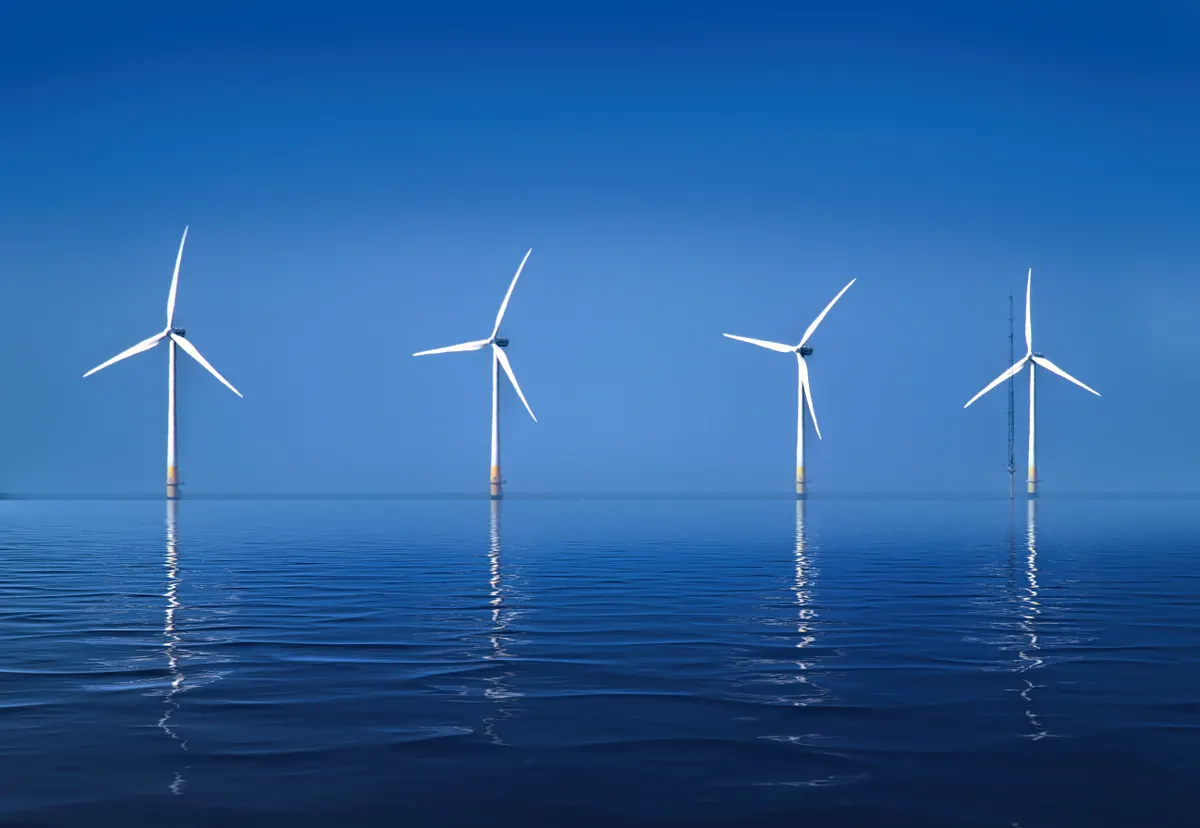

The bill for Trump’s offshore wind cancellations has reached $3.93 billion, after the administration struck its latest deal last week: a $1.22 billion settlement with German utility RWE that erases roughly seven gigawatts of potential US clean energy capacity and sends the proceeds into fossil fuel infrastructure instead.
RWE, one of Europe’s largest energy companies, will relinquish three offshore wind leases covering waters off California, Louisiana, and New York. AP News reports the surrendered leases represented enough generating capacity to power more than 5 million homes. The company will have no remaining US offshore wind leases once the deal is finalised.
The settlement, worth $1.22 billion (approximately EUR 1.06 billion) according to Offshore Wind Biz, is structured in two parts. RWE will spend $900 million to acquire an indirect 16% stake in a Louisiana liquefied natural gas export terminal, with the investment proceeds intended to fund construction of that facility. The remaining $300 million goes towards natural gas turbines for 15 peaking power plants across the country.
From Wind to Gas: Where the Money Goes
Reuters reports that Australia’s Woodside Energy Group (ASX: WDS) is the likely counterparty in the LNG stake acquisition, though RWE declined to officially name the project owner. Simpson Thacher & Bartlett, the law firm representing the issuer in the transaction, confirmed the indirect 16% stake structure and the $900 million figure.
The $300 million earmarked for turbines comes with a practical constraint: there is currently a backlog for new gas turbines stretching into the early 2030s. Peaking plants, which fire up only during periods of peak demand, are among the costliest and most polluting of natural gas facilities to run.
The three RWE projects had been in very early stages of development and would not have come online until the 2030s in any case, Reuters notes. RWE had already halted work on its US projects after the administration moved to freeze several multibillion-dollar offshore wind projects under construction earlier in its term.
Trump Offshore Wind Cancellations: The Running Tally
The RWE agreement is the fifth such settlement the administration has negotiated, according to the New York Times. Across all 12 leases the administration has coaxed developers into abandoning, the total cost stands at $3.93 billion, paid from the US Department of the Treasury’s Judgment Fund.
Earlier deals include a $928 million refund to French energy company TotalEnergies in March 2026, covering leases in the New York Bight and Carolina Long Bay regions. TotalEnergies also pledged to pursue no new offshore wind projects in the United States, according to the Harvard Environmental and Energy Law Programme’s federal offshore wind tracker.
Before the RWE deal, the US Department of the Interior had paid $765 million to Invenergy to terminate four offshore wind leases in the New York Bight, the Gulf of Maine, and off California’s central coast, bringing the buyout total at that stage to eight leases at a cost exceeding $2.5 billion, according to Utility Dive. The administration is facing a legal challenge from the attorneys general of seven northeastern states over its buyout agreement with TotalEnergies.
The New York lease alone would have generated more than 3 gigawatts of offshore wind power, according to Heatmap News.
RWE is not retreating from offshore wind as a global business. The company secured 6.9 gigawatts of capacity in the UK’s most recent offshore wind auction, and its offshore wind segment posted preliminary adjusted EBITDA of EUR 810 million in the first half of 2026, up from EUR 643 million in the same period of the prior year, prompting management to raise its full-year 2026 and 2027 offshore wind earnings outlook. The US exit is a chapter closed, not a strategy abandoned.
Whether the seven northeastern attorneys general can unwind what has already been paid out is the question that will define the programme’s legacy. A court ruling on the TotalEnergies deal could set the precedent for every subsequent settlement, including RWE’s.

