Flock Safety Surveillance Backlash Deepens as Congress Moves to Curb Licence Plate Cameras

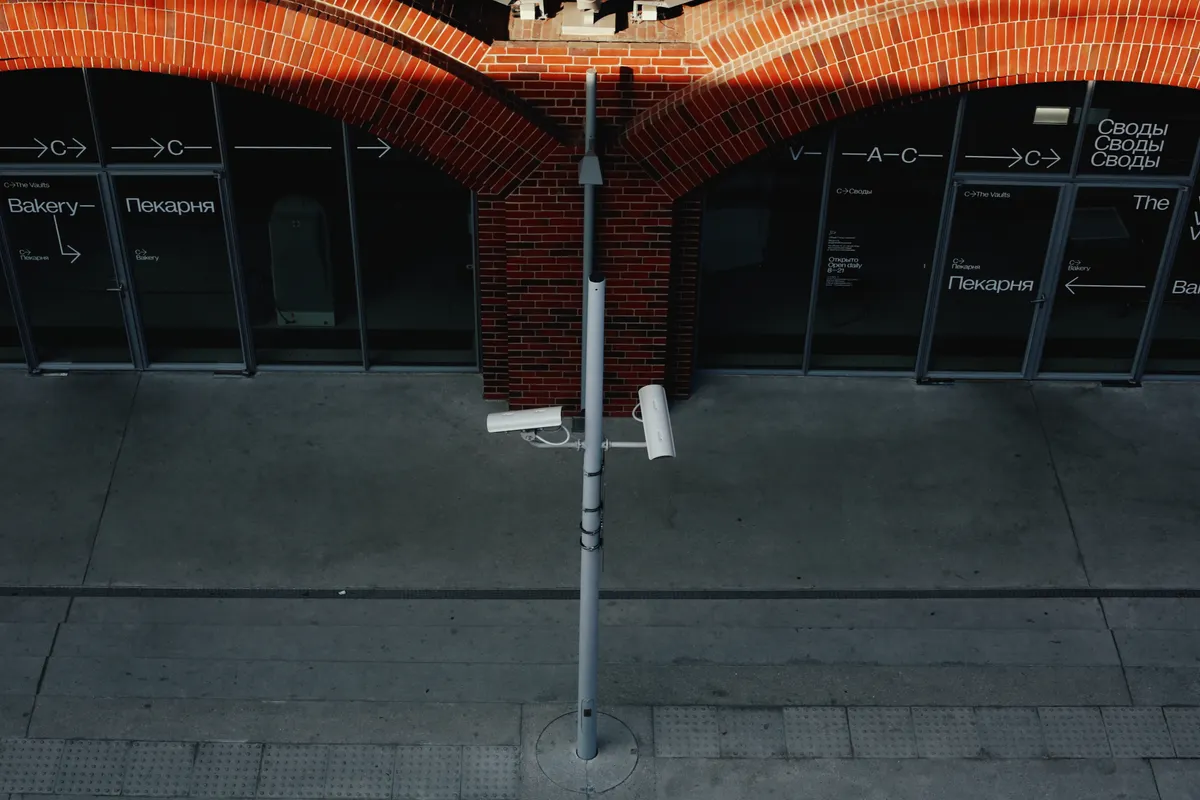
The Flock Safety surveillance backlash has entered a new phase, with the company’s chief executive making the media rounds even as a clutch of bipartisan bills in Congress threatens to choke off the business model that made it one of America’s fastest-growing public-safety technology firms.
Flock Safety CEO Garrett Langley has been arguing for what he calls balance. ‘When people talk about just one of these, privacy or safety, they’re prioritising the wrong thing, and what we have to prioritise as a country is compromise,’ he told Fox News recently. ‘How do we have our safety, and how do we balance privacy?’ The defence comes as the company operates more than 119,000 cameras nationwide, a footprint that has made it both indispensable to thousands of police departments and a lightning rod for civil liberties advocates.
The Scale of the Flock Safety Surveillance Backlash
The pressure is not abstract. The Washington Post identified 46 cases where police officers have been accused of using Flock’s technology for unauthorised purposes, including to stalk wives, girlfriends, or former partners. After hearing one alleged victim’s account on CBS News, Langley said: ‘I apologise. It kills me that she went through that.’ He also insisted, ‘I don’t think that Flock created police abuse. I think we’re the first company to ever shine a light on it and build the tools to find it.’
The problem, critics say, runs deeper than individual bad actors. A review by the Wisconsin Examiner found that officers in that state frequently entered vague justifications, including terms like ‘investigation,’ ‘suspicious,’ or simply a period, when searching the Flock network. Some Wisconsin communities have since cancelled their contracts with the company.
Policy Changes That May Not Be Enough
Flock has responded with a package of reforms. The company cut its default data retention period from 30 days to seven days and made a case-code requirement mandatory before any search. According to Flock’s official blog, the 30-day default dated to the company’s founding nine years ago, and the case-code system was first introduced as an optional feature in July 2025 before being made compulsory.
Under the revised policy, agencies that conduct emergency searches without entering a case code will have those searches automatically flagged for administrative review, according to Police1. The Associated Press also reports that the new framework lets individual cities decide which offence categories, such as homicide or arson, outside agencies may search their data for, with the explicit option to block searches related to immigration enforcement.
The American Civil Liberties Union was measured in its response: ‘While Flock has not shortened the default retention period to the ACLU’s recommended 48 hours, its proposal may be a step in the right direction. Whether this is a real change or just another Flock PR move, however, will depend on how its “Evidence Mode” operates.’ That mode, which allows police to save data beyond seven days, means both key reforms carry override provisions.
Langley has acknowledged the regulatory gap himself. ‘Today, it is too often that in Flock and in other technologies, there’s no regulation. There’s no accountability, and we think that’s wrong,’ he said on Fox News, adding that state legislators should ‘pass bills that make [the illegal use of Flock data] a criminal offense.’
A Bipartisan Legislative Push With Limits
On Capitol Hill, the reaction has been louder but, at least so far, bounded. The Washington Times reports that as of late August 2026, no bill in Congress would ban Flock’s automated licence plate readers outright; every proposal targets how federal agencies buy, access, or fund such systems.
Several distinct measures are moving simultaneously. Republican Rep. Tim Burchett of Tennessee introduced the Protection Against Mass Surveillance Act in July, which would bar federal agencies from purchasing or deploying automated surveillance systems that identify, track, or record individuals, Flock cameras included, and would block state and local governments from using federal funds for the same purpose.
A separate measure, the so-called Flock-Off Act, counts five co-sponsors spanning both parties: Lauren Boebert (R-CO), Paul Gosar (R-AZ), Ro Khanna (D-CA), Chip Roy (R-TX), and Victoria Spartz (R-IN), according to Yahoo News. Meanwhile, a bipartisan amendment sponsored by Rep. Scott Perry (R-PA) and Rep. Jesús ‘Chuy’ García (D-IL) would prohibit any recipient of federal highway funding from using licence plate readers for any purpose other than tolling, under a $580 billion five-year federal surface transportation bill, according to WIRED. A third Republican-led bill, H.R. 9716, the PRIVACY Act, introduced by Reps. Keith Self, Eli Crane, and Andrew Clyde, would require federal law enforcement to obtain a warrant before querying covered surveillance data and would generally limit federal retention of such data to 30 days.
The breadth of that legislative coalition, libertarian-right Republicans alongside progressive Democrats, reflects how the Flock Safety surveillance backlash has scrambled traditional alignments. Vermont Senator Bernie Sanders has posted bluntly: ‘STOP AI MASS SURVEILLANCE. STOP FLOCK.’ Michigan’s Democratic Senate nominee Abdul El-Sayed has accused his opponent of backing ‘this mass proliferation of Flock cameras, any and everywhere, watching your every move.’
Whether that political energy coalesces into law, or dissipates without passing a single binding restriction, may well be decided before the end of this Congress. For Langley, the more immediate test is whether the company’s own reforms can outrun the legislation aimed at curbing it.