
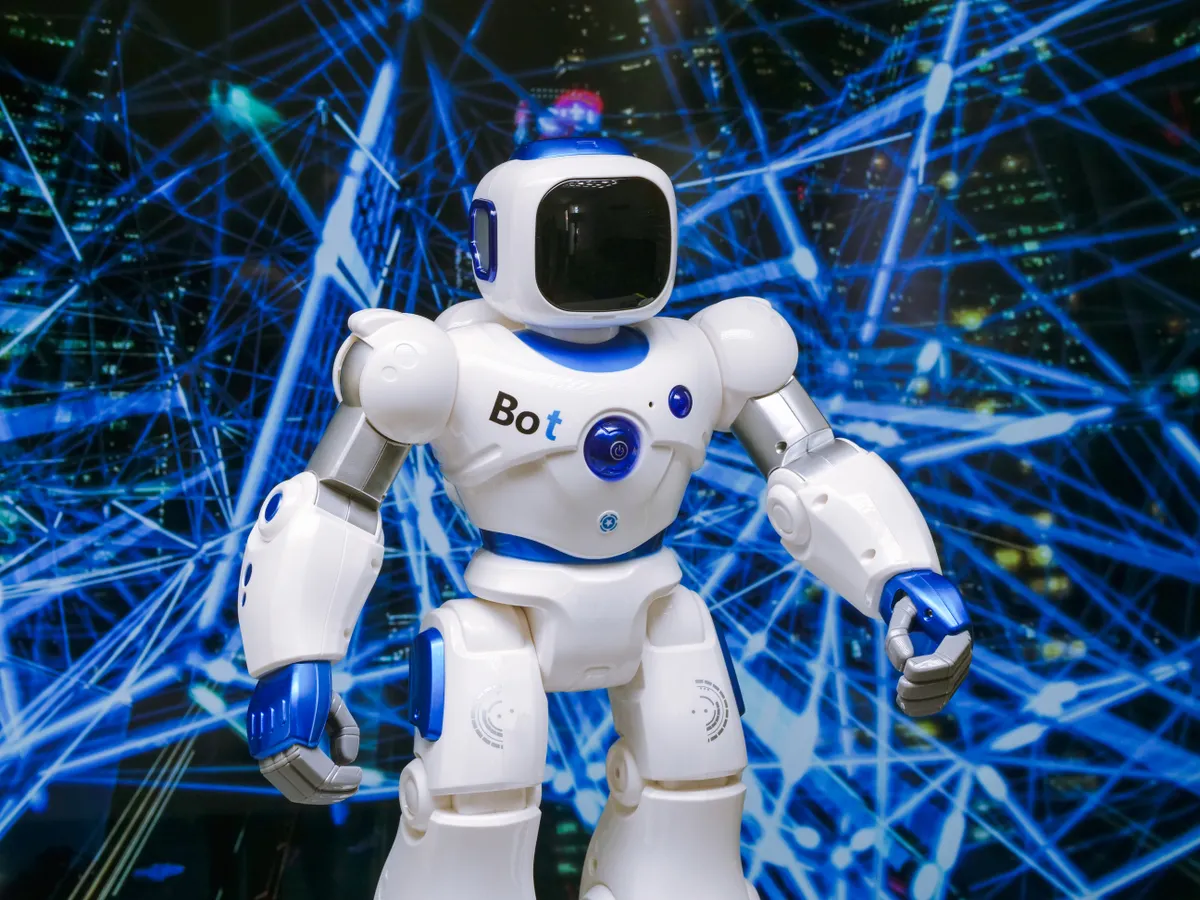

The push by Chinese automakers into humanoid robots has a new price tag on it: $900 million, raised in a single round by Dogotix, the robotics subsidiary of electric-vehicle maker Xpeng, at a post-money valuation of more than $6.3 billion.
The round’s structure tells its own story. According to Xpeng’s official newsroom, the $900 million Series A breaks down as $600 million from external investors, $200 million from Xpeng itself, and $100 million from company executives, including founder He Xiaopeng and co-president Brian Gu. The lead investor is IDG Capital, with Gaorong Ventures, Tencent, and Alibaba also participating. Xpeng described it as the largest single-round private financing ever recorded in China’s “embodied AI” industry.
The headline figure could grow further. Bloomberg reports that if $500 million in warrants and other options were exercised, the total fundraising amount for the robotics unit would exceed $1.4 billion. For context, Dealroom places the raise in the 99th percentile of Series A deals globally over the trailing 48 months, based on a sample of 12,652 rounds.
Why Chinese Automakers Are Betting on Humanoid Robots
The strategic logic is not hard to follow. Michael Dunne, chief executive of advisory firm Dunne Insights, argues that Xpeng watches Tesla more closely than any other Chinese carmaker. ‘He sees razor-thin profit in cars on the near horizon. Robots look much more promising,’ Dunne said of He Xiaopeng.
Xpeng is far from alone. BYD has unveiled a humanoid robot called Xiao Di. AiMOGA, the robotics arm of Chery Automobile, is reportedly preparing for an initial public offering. Changan, GAC, Li Auto, SAIC, and Seres are each developing their own humanoid programmes. The sector is crowding fast.
Dunne credits Chinese carmakers with a genuine advantage on the hardware side. ‘They have all the hardware to get the job done,’ he said. ‘Question is if they can catch Tesla on the AI side of the equation.’ Gaorong Ventures, one of the Dogotix round’s backers, has prior investments in autonomous driving company Momenta and humanoid robot startup AgiBot, according to Reuters, suggesting the investor pool brings sector-specific knowledge rather than just capital.
Xpeng’s near-term target for its IRON humanoid robot, a commercially focused machine built for industrial and retail environments, is a monthly output of 1,000 units by the end of the year, with initial deployments at its own retail stores and campuses. Commercial sales and deliveries in China and overseas markets are scheduled to begin in 2027, Reuters reports.
The robotics announcement arrived alongside second-quarter results that missed expectations. Revenue rose 8% year-on-year to RMB 19.74 billion (US$2.91 billion), up 51.5% from the prior quarter but below the RMB 20.57 billion analyst consensus. Net loss widened to RMB 1.34 billion (US$0.20 billion) from RMB 0.48 billion in the same period a year earlier. Shares fell 3.5% in premarket trading on the day of the disclosure, per Dealroom.
Mobileye Enters the Frame With a Structured $900m Deal
The race for humanoid robots extends well beyond the Chinese automaker cohort. Mobileye, the Intel-spun-off automotive vision company, closed its acquisition of Mentee Robotics on 3 February 2026. The purchase price of $900 million comprised approximately $612 million in cash and an equity component of up to 26,229,714 shares of Mobileye Class A common stock, with 90% of the equity portion deferred and released to Mentee’s three founders at 24 and 48 months after closing, according to Mobileye’s SEC 10-Q filing. A separate SEC business combinations filing shows that the actual cash paid for outstanding Mentee shares at closing was $583 million of that cash component.
According to the Mobileye newsroom, Mentee is an AI-first humanoid robotics company with a third-generation, vertically integrated robot. First on-site proof-of-concept deployments with customers are expected in 2026, intended to operate autonomously without teleoperation. Series production and commercialisation are targeted for 2028, the same year Hyundai plans to have Boston Dynamics’ Atlas robots handling parts sequencing at its Georgia factory.
Rivian has a robotics spinout called Mind Robotics, though its machines are not expected to resemble conventional humanoids. The field now includes Agility Robotics, Apptronik, and Figure, all chasing commercial deployment at scale.
The near-term test for Xpeng’s Dogotix is whether it can meet its own 2027 commercial sales target. If it does, the $900 million Series A will look prescient. If the IRON robot slips into the same timelines that have plagued every prior humanoid programme, the question Dunne raised about AI capability will reassert itself with considerably more force.

