
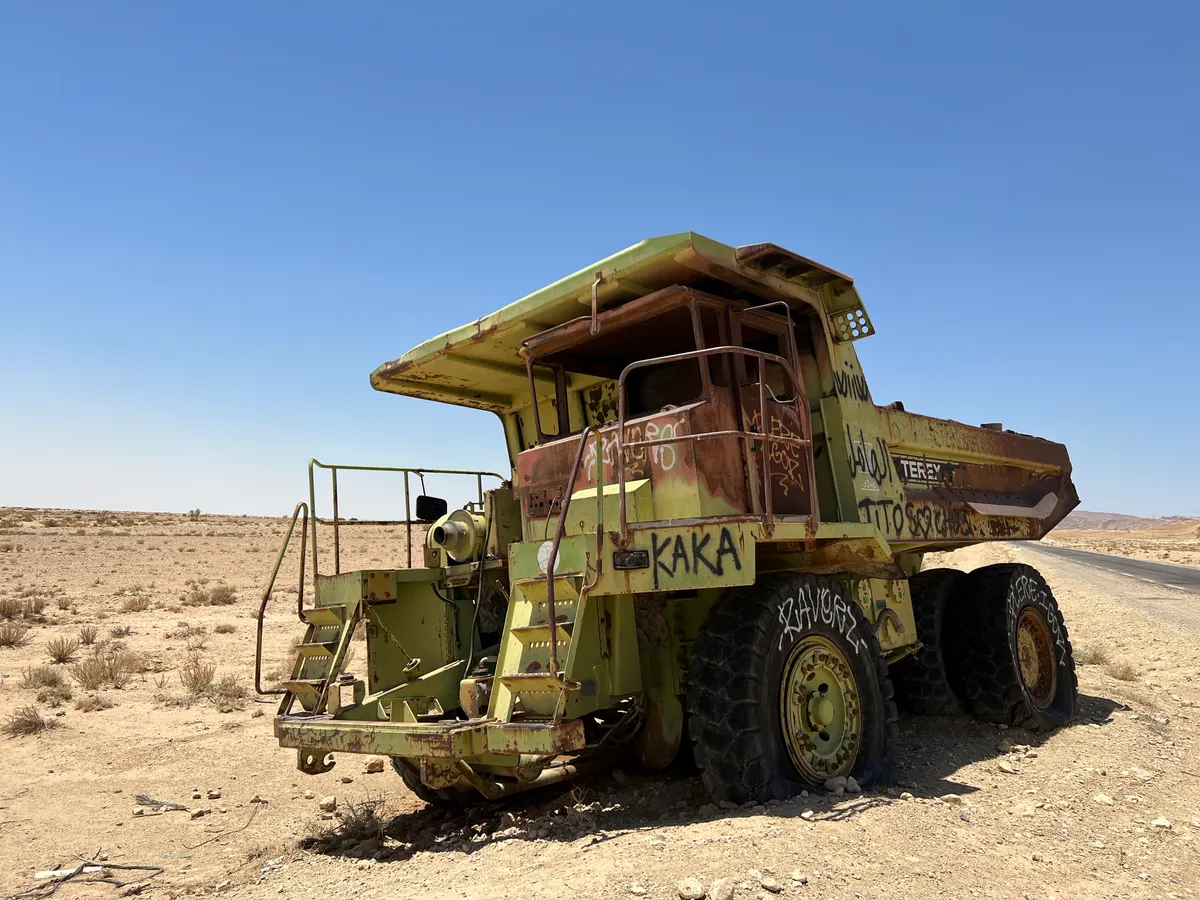

Caterpillar’s AI deployment strategy is rooted in something the industrial giant has been doing in remote mine pits for years: making heavy machinery work without a human in the cab. Now the company is taking that accumulated knowledge into construction sites, quarries, and the enterprise software layer that runs beneath all of it.
‘Now we’re in this super exciting time where we can take all of that learning from mining and bring it into much more dynamic environments, jobsites, quarries, and construction sites,’ Jaime Mineart, Caterpillar’s chief technology officer, told TechCrunch at the Ai4 conference in Las Vegas.
The product portfolio that came out of mining is already broad: automated haul trucks, drilling systems, underground loaders, dozers, remote-controlled construction equipment, plus a software command centre, fleet management tools, and remote terrain intelligence. The next step is extending that stack beyond the mine gate.
From the Pit to the Jobsite: Caterpillar AI Deployment in Practice
One of the more concrete examples is the Cat AI Assistant, a voice-driven tool that lets field technicians standing beside a machine pull up repair procedures, troubleshoot faults, and identify parts before touching a wrench. Mineart said the assistant is now being used by customers, operators, and technicians in the field.
The assistant draws on Caterpillar’s proprietary data pool: roughly 1.6 million connected assets globally and more than 16 petabytes of structured data. The company is also using AI to scan sites, generate digital twins in manufacturing, and analyse operations. Internally, it is applying AI agents to modernise legacy code, generate and test new software, and catch defects earlier in the development cycle.
Mineart is candid about where the real difficulty lies. ‘The hard part about autonomy and about physical AI is incorporating that technology into the customer jobsite and into the workflows,’ she said. Building the technology is only part of the problem; the other part is redesigning how people work alongside it. Caterpillar leans on experienced operators to help train its AI systems, preserving institutional knowledge built over decades. As machines grow more autonomous, some operators will shift from controlling a single machine to supervising multiple machines from a remote command centre.
That shift has a cost. Caterpillar plans to spend $100 million over the next five years to train its 118,000-strong workforce in AI, autonomy, and robotics.
Data-Centre Demand Fuels the Revenue Engine
The strategic investment in AI is arriving at a moment when one specific customer need is rewriting Caterpillar’s financial story. Its power-generation division, which supplies the reciprocating engines and turbines that back-up and power data centres, saw sales surge 72% to $3.10 billion in the second quarter. Overall quarterly revenue reached $20.54 billion, with total revenue up 24% year-on-year, according to CNBC’s coverage of the Q2 2026 results. CEO Joseph Creed said ‘no one is slowing down’ when it comes to demand for cloud computing and generative AI infrastructure.
The profit picture was equally sharp. Adjusted earnings per share came in at $8.17, up from $4.72 a year earlier and well above analysts’ consensus of $6.20, per LSEG data reported by CNBC. The quarter also included an expected tariff recovery of $392 million.
Caterpillar booked $9.4 billion in orders during the quarter, pushing its total order backlog to $72.1 billion. The construction segment contributed to the strength as well, with core construction revenue growing 35%, including a 50% jump in North America.
The order pipeline for power generation equipment tells the longer story. CEO Creed has said that the backlog for large reciprocating engines has grown more than 3.5 times since January 2024, when the company first announced plans to double its power generation capacity. Those plans have since been upgraded: Caterpillar now intends to triple that capacity from 2024 levels, with heavy investment running from 2027 through 2029, and expects a positive cash payback on the full investment by the end of 2030.
To match that ambition, Caterpillar has raised its long-range growth targets, now forecasting a compound annual growth rate for sales and revenues of between 6% and 9% from 2024 to 2030. Full-year 2025 sales and revenues were $25.1 billion, according to the company’s Power and Energy investor presentation filed in March 2026.
Caterpillar’s 2024 annual 10-K filing with the SEC already flagged strong expected growth in power generation for 2025, driven by data-centre demand for both reciprocating engines and turbines. By comparison, the Q2 2024 earnings release recorded revenues of $16.7 billion, underscoring how quickly the data-centre cycle has moved the top line.
The test now is whether Caterpillar can scale its AI capabilities as fast as its engine capacity. The $100 million workforce training programme and the autonomous-machine toolkit it has been building since its mining days are the two sides of that bet. The first earnings print to reflect the full weight of the 2027 capacity ramp will be the one to watch.

