

The Dyson HF1 fan heater markets itself as a year-round solution: a single $499 appliance that replaces both the space heater you drag out in October and the ceiling fan you reinstall every May. After three months of living with one, the pitch holds up.
Dyson brands the HF1 under the ‘Rapid React’ sub-branding, describing it as its quietest and most powerful heater and cooling fan. The unit stands 23 inches tall, weighs just under six pounds, and carries the company’s signature bladeless design. Its slim profile moves between rooms without disrupting either the furniture arrangement or the electricity bill: Dyson’s own product page states the HF1 is up to 30% more energy efficient than a non-thermostat-controlled heater.
What the Dyson HF1 Fan Heater Actually Does Well
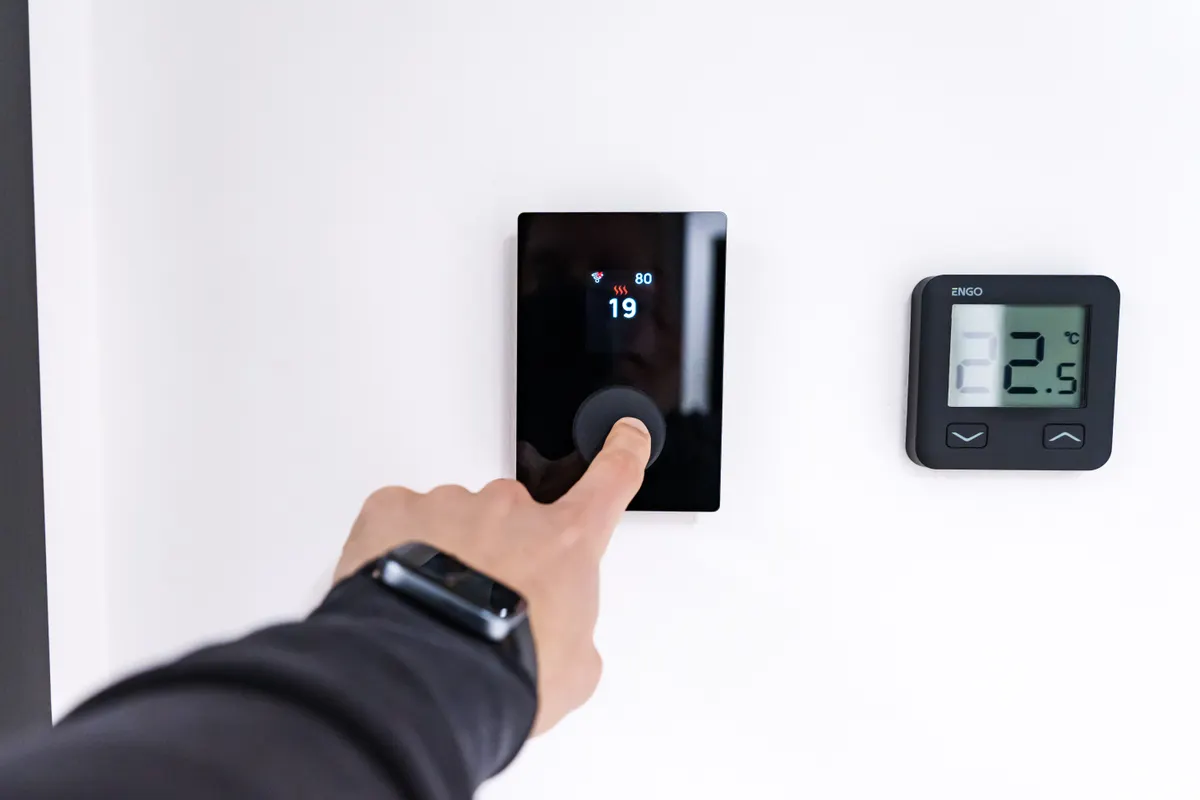
The intelligent thermostat is the feature that earns its keep. It continuously monitors the room and adjusts heating output to hit and hold your chosen temperature, which is where that efficiency gain originates. Behind the scenes, the HF1 uses PTC (Positive Temperature Coefficient) ceramic heat plates to warm air as it passes through, a design that keeps the heating element self-regulating.
The MyDyson app extends that control further. A ‘Remote Link Pre-heat’ function lets users warm a room before they arrive home, which on cold mornings is less a luxury than it sounds. Scheduling, oscillation adjustments (15, 40, or 70 degrees), and on/off control all sit in the same interface. The onboard controls and included remote cover the basics for anyone who prefers not to reach for a phone.
Sleep mode runs at 26 decibels and dims the display automatically. For light sleepers sharing a room with the unit, that is a genuine concession to real-world use rather than a spec-sheet footnote.
The Caveats Worth Knowing Before You Buy
Cooling mode is not air conditioning. The HF1 circulates air rather than lowering room temperature, which matters in climates where summer heat is the primary problem. Buyers expecting refrigerant-style cooling will be disappointed; buyers who want airflow and heat in one device will not.
The metal casing around the front can get warm to the touch in heating mode. The bladeless design eliminates grille-cleaning and removes exposed blades from the reach of children and pets, but the automatic shut-off if tipped over and the absence of protruding blades are the primary physical safety features rather than a cool-running exterior.
On Dyson’s own reviews page, the White/Silver model holds a rating of 4.3 stars out of 5 from 46 ratings. That is a reasonably tight sample but consistent with a product that divides buyers mainly on price rather than performance.
And the price is where the conversation always lands. At $499 in the United States and £300 in the UK market, the Dyson HF1 fan heater sits well above what a standalone space heater or ceiling fan costs individually. The arithmetic only works if you value the consolidation, the app controls, and the energy efficiency claim together. For a single-room setup in a home office or bedroom, the case is stronger than it first appears.
The next real test is a full summer. If the fan performance holds across sustained heat, the two-appliance replacement argument completes itself.

