
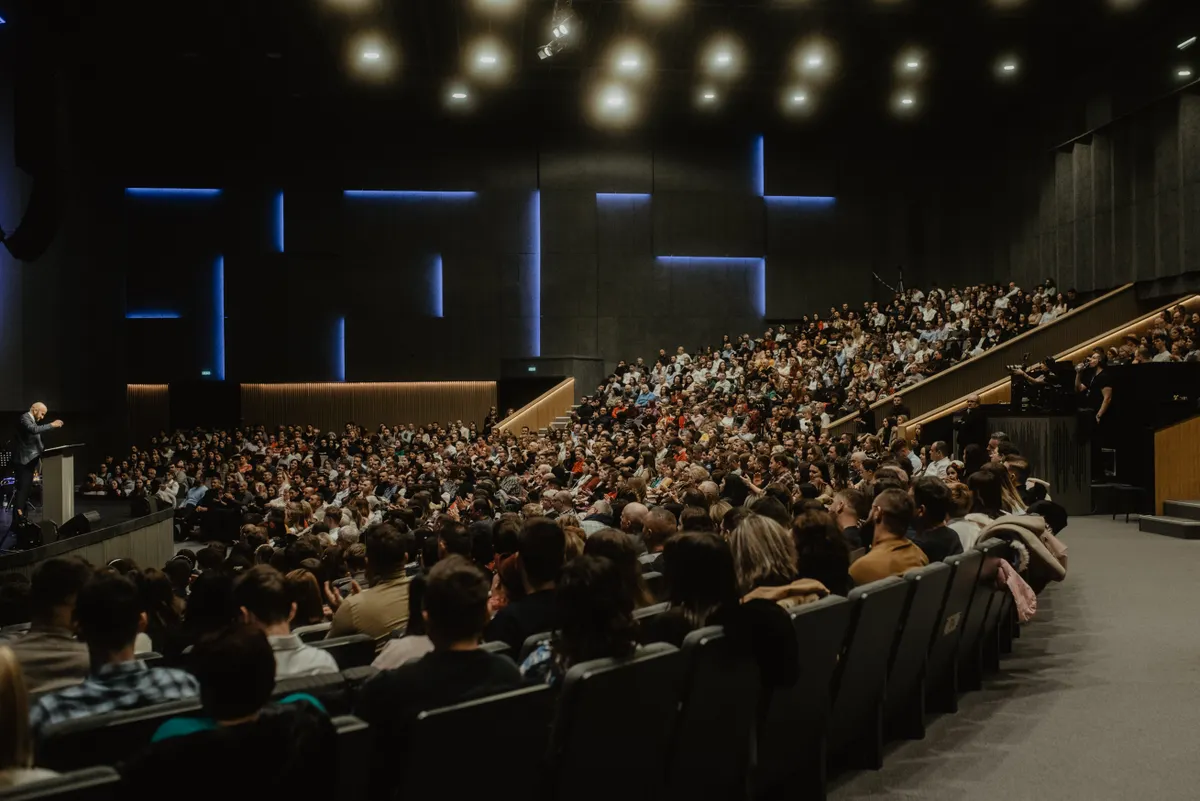

European AI sovereignty was the unshakeable undercurrent at TechBBQ 2026, the Nordic region’s largest startup conference, which ran on 26–27 August at Bella Center Copenhagen. Onstage and off, from panels to rooftop barbecues and speakers’ dinners on an island in the harbour, the question that kept surfacing was the same: who actually controls the technology Europe is building its future on?
The timing was not incidental. On 12 June 2026, Anthropic disabled access to its Claude Mythos 5 and Fable 5 models for users outside the United States, reportedly acting on a US government export control directive that restricted access to American nationals only. Gravitee.io reported that the directive cited a Fable 5 jailbreak; Anthropic disabled both models within hours while calling the underlying finding ‘a likely misunderstanding it is working to reverse.’
The suspension stung in part because of how recently Europe had gained access at all. According to BBC News, the EU had only secured access to Mythos 5 earlier in June 2026 after weeks of negotiations. European Commission spokesman Thomas Regnier said the episode ‘further underlined Europe’s need for technological sovereignty,’ and noted that the Commission had ‘this month unveiled measures to slash the 27-nation bloc’s dependence on America and Asia for key technologies, including AI.’
A Jailbreak, an Export Order, and a Lesson in European AI Sovereignty
The models at the centre of the dispute are not routine tools. Bristows LLP notes that Mythos 5 is Anthropic’s most advanced model, with significantly improved capabilities for cybersecurity use cases, and was initially offered only to a small group of trusted customers under a programme called Project Glasswing. Fable 5, launched just before the suspension, is a general-purpose model built on the same underlying architecture as Mythos 5 but with additional technical restrictions to reduce cyber risks. Both are priced at $10 per million input tokens and $50 per million output tokens, and carry a 30-day data retention requirement, according to Anthropic’s own platform documentation.
At TechBBQ, reactions among founders and operators split roughly along the lines of how exposed their teams were. One startup executive said the sudden unavailability seriously disrupted his software team. Another shrugged: relying on US or Chinese infrastructure might eventually cause headaches, but for now, things were still manageable. That gap in reaction, between the disrupted and the unbothered, illustrated precisely the fragility the conference’s theme was designed to interrogate.
TechBBQ’s 2026 theme, ‘Emerging from Agency,’ had been chosen before the Anthropic incident. It turned out to be prescient. ‘TechBBQ’s theme of agency felt particularly timely this year as the conversation shifted from what AI can do to what we’re actually willing to let it do,’ said Ellen de Brever, angel investor and head of partnerships at the Novo Nordisk Foundation Cellerator. ‘The debates weren’t about smarter machines, but about human judgment and who gets to stay in the driver’s seat.’
Signal, Sovereignty, and the Advertising Machine
One session that drew particular attention was a panel on privacy and AI featuring Meredith Whittaker, president of the nonprofit foundation behind Signal. A Bloomberg profile has quoted Whittaker warning that AI assistants can store and mine chat data, potentially calibrating responses on behalf of advertisers rather than users, citing the example of surfacing a flight from a preferred advertising partner rather than the genuinely cheapest option. At TechBBQ, she went further, speaking out against AI assistants and agents being integrated into operating systems. She described this AI era as creating ‘a data collection apparatus,’ and accused AI labs of using clever marketing to make people forget ‘about the collateral consequences’ of acquiring so much data. ‘There is still a huge market need for privacy,’ she said. ‘And particularly with the sovereignty concerns, we will have customers here.’
Emad Mostaque, co-founder of Stability AI and Intelligent Internet, addressed the structural question more bluntly. ‘Sovereignty is the ability to resist power being exerted over you,’ he said, speaking about the concentration of power in a handful of AI labs. ‘Inevitably, every country will be run by AI and the person that controls the AI controls the country.’
Mia Negru, advocacy and engagement director at the nonprofit Life With Artificials, sent a message after Mostaque’s panel that widened the frame further. ‘If intelligent agents perform cognitive work and robots increasingly perform physical work, we may be approaching something much bigger than another technological revolution,’ she wrote. ‘We may have to rethink ownership, work, democracy, economic participation and eventually even who gets to participate in society.’
De Brever offered her own summary as the conference closed: ‘The most memorable moments still come from the simplest thing. Human connection, face-to-face, building relationships, sharing ideas, and reminding each other of what technology can never quite replace.’ Whether European policymakers can build the infrastructure to match that sentiment before the next export control order lands is the test that follows everyone home.

