
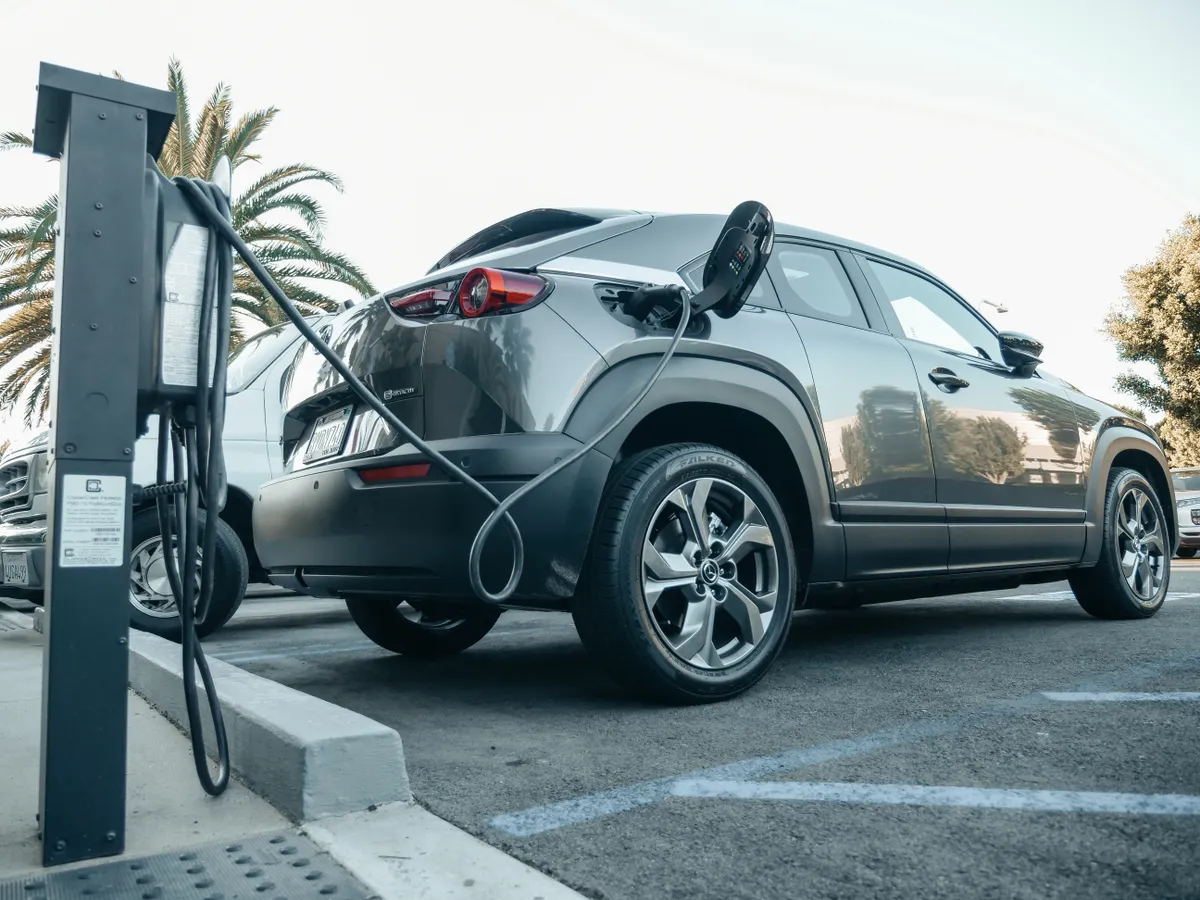

The US EV market retreat is broader, and moving faster, than any single discontinued model can capture. Honda’s confirmation that the Prologue is going out of production is the most recent entry on a list that now spans Japanese, Korean, Swedish, and German automakers, all pulling back from American showrooms for overlapping but distinct reasons: federal tax credit expiry, Chinese-linked technology bans, import tariffs, and a platform strategy that has simply moved on.
Honda Prologue: From Promising Numbers to Free Fall
The Prologue had genuine commercial momentum before the bottom fell out. Honda sold roughly 33,000 units in 2024 and 39,000 in 2025, numbers respectable enough to suggest the model had found an audience. Then the $7,500 federal EV tax credit expired in autumn 2025, and sales collapsed. Car and Driver reports the Prologue registered just 8,407 sales in the first half of 2026, a fall of 49 per cent against the same period in 2025.
Honda’s formal position is measured: ‘Honda will conclude sales of Prologue later this year following completion of the 2026 model year.’ In a video communication to retailers reviewed by Automotive News, Honda sales boss Jessika Laudermilk was more direct, saying customer demand has shifted away from EVs, with the company now targeting hybrid and gasoline-powered models instead. Remaining Prologue inventory is expected to last until the end of the first quarter of 2027.
The Prologue’s roots matter here. CarBuzz reports the vehicle was built by General Motors using GM’s Ultium platform and battery technology at GM’s Ramos Assembly Plant in Mexico, making it closely related to the Chevrolet Blazer EV. GM has since moved on from Ultium to next-generation batteries and motors, severing the technical foundation beneath the partnership. Earlier in 2026, Honda and GM also wound down their shared hydrogen fuel-cell venture in Brownstown, Michigan.
Honda also cancelled the Acura RDX EV, the Honda O sedan and O SUV in March 2026, citing US tariffs and Chinese competition. The Sony-Honda Afeela joint venture, which had generated years of show-floor attention without producing a single consumer vehicle, folded the same month.
US EV Market Retreat: Regulation Shuts the Door on Polestar
Not every departure is about demand. Swedish maker Polestar (Nasdaq: PSNY), owned by Chinese automotive giant Geely, is leaving the US because of a regulatory prohibition rather than a sales slump.
The US Connected Vehicle Rule, finalised in January 2025, bans connected vehicles with a sufficient nexus to China or Russia from American roads. Electrek reports that the Bureau of Industry and Security, part of the US Department of Commerce, specifically declined to authorise Polestar to sell vehicles in the US from model year 2027 onwards. The rule targets Bluetooth, Wi-Fi, cellular, and certain satellite systems on national security grounds, with software prohibitions taking effect for model year 2027 and hardware restrictions following in 2030.
Polestar has said it will sell through its existing stock of Polestar 3 and Polestar 4 vehicles and continue to support customers through its service network. Its Geely sibling, Volvo Cars, fared differently: Volvo received authorisation after, as the company stated publicly in May 2026, conducting ‘constructive discussions with the US Department of Commerce and other US officials regarding Volvo Cars’ governance, technology and data security.’
Volvo had already taken a separate hit: in March, it pulled the subcompact EX30 and EX30 Cross Country from the US market, ending production for American buyers after the summer. The EX60 and EX90 remain on sale.
The Broader Picture: Sales Numbers and the Remaining Gap
Across the industry, the contraction is real but not total. According to Kelley Blue Book and Cox Automotive data published in July, 247,226 EVs were sold in the second quarter of 2026, representing 5.8 per cent of the total US vehicle market. That is an improvement on the first quarter of 2026, but EV sales in Q2 were still 20.5 per cent lower than in the same period in 2025. Fourth-quarter 2025 had been worse still, running 36 per cent below fourth-quarter 2024 levels.
Other automakers have trimmed around the edges rather than exiting altogether. Hyundai stopped importing the Ioniq 6 to the US in March, keeping the tariff-exposed South Korean-built model out of American showrooms while continuing to sell the Ioniq 5 and Ioniq 9 from its Georgia plant. Nissan quietly declined to produce a 2026 model year of the Ariya SUV for the US, effectively ending the model after its short run. Volkswagen moved ID.4 production out of its Chattanooga, Tennessee plant and back to Europe, though remaining inventory is expected to carry US buyers into 2027. Tesla, meanwhile, discontinued the Model S and Model X this spring, removing the assembly lines at its Fremont factory to make space for Optimus robot production.
The Rivian R2 is among the few new entrants. Whether it, and a handful of others, can offset an exodus of this scale is the question the industry’s next set of quarterly figures will begin to answer.

