
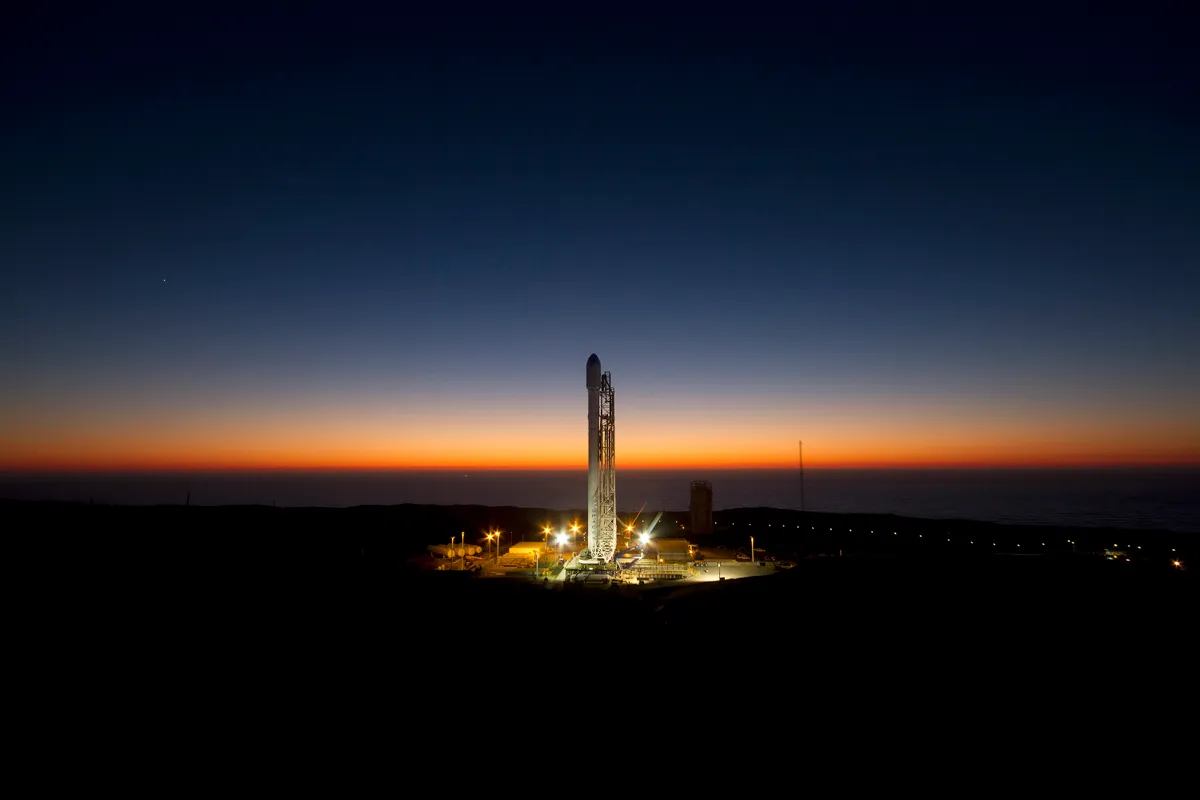

The SpaceX IPO hedging challenge facing institutional investors this week is, in the blunt formulation of Millbank Dartmoor Portsmouth CIO Dennis Davitt, a problem with no obvious solution: ‘What are you going to do, short NASA?’
SpaceX begins trading on the Nasdaq this Friday, the only publicly traded private-sector company operating in the space launch business at scale. Reuters reports that the listing was initially targeted for late June before being accelerated, with 11 June as the pricing date. The company is seeking a valuation of $1.75 trillion (including the greenshoe option) and up to $75 billion in proceeds, which would make it the largest IPO in US history.
No Comparable to Sell, No Easy Hedge to Buy
For investors who already hold SpaceX equity through private markets, the listing creates an immediate risk-management problem. The company’s private market valuation has nearly tripled in the past year, meaning the position has grown into a far larger slice of many portfolios than was originally intended.
The standard response is to hedge, typically by shorting something that moves in sympathy with the position. SpaceX makes that nearly impossible. Davitt, who worked at Credit Suisse during the Google IPO in 2004, draws the comparison directly: ‘Hedging it back then was easier because there were more things to sell. So when you put a hedge together on something like this, you create a basket of things that simulate the price action… but there’s nothing to sell in SpaceX.’
Without workable proxies, the alternative is expectation management. Davitt’s read is that the opening day will be less dramatic than the most bullish scenarios imply. ‘My instinct, being old, is and having been around these bigger IPOs like this, is that it tends not to be that crazy 200% blow-off top. I do not believe that Elon Musk is going to allow this to IPO at $135 and trade up to $270 the first day.’
The underlying business gives bulls plenty to work with. Forbes, citing the IPO filing, reports $18.67 billion in 2025 revenue, up from approximately $14.1 billion in 2024, representing roughly 33% growth. The Anthropic compute deal adds a visible revenue line: CNBC reports Anthropic will pay SpaceX $1.25 billion per month through May 2029 for full capacity at the Colossus 1 data centre in Memphis, Tennessee.
Critics have their own numbers. Forbes notes that SpaceX’s AI segment carries an approximately $2.5 billion quarterly cash burn that could suppress free cash flow for years, and that 93% of the company’s $28.5 trillion total-addressable-market claim is attributable to AI. CNBC also reports that SpaceX struck a deal to acquire Cursor for $60 billion as part of its overhaul of xAI’s business and technology.
The SpaceX IPO Hedging Challenge in Practice: Leverage and Index Mechanics
Even if the stock itself opens calmly, the ecosystem around it will not. Spotgamma founder Brent Kochuba, writing to Davitt by email, put it plainly: ‘the initial SPCX markets are going to be pretty challenging for traders meaning super wide and with a very high IV.’
Several leveraged single-stock ETFs are entering the market alongside the IPO. Direxion has launched the Daily SpaceX Bull 2X ETF (LOFF), targeting 200% of the daily performance of SpaceX shares, with an operating expense cap of 0.95% of average daily net assets through 1 September 2027. ProShares has filed to launch SPCF Ultra SpaceX, a 2x daily-performance product. Leverage Shares has launched both a 2x long product (SPCH) and a 2x short product (SSPC).
Passive buying adds a further layer of complexity. Forbes reports that SpaceX made early Nasdaq-100 inclusion a condition of its listing on the exchange. Unlike S&P 500 inclusion, which carries a seasoning requirement, Nasdaq-100 inclusion could trigger forced buying from passive funds within days of the debut rather than months.
Kochuba identified the full stack of pressures converging simultaneously: ‘Not only is the price action of the stock under question, but you have these levered ETFs which are going to launch, and then forced index buying. Compounding that are the FOMC meeting and VIX expiration on the next day (17th), followed by a massive June options expiry.’
The share structure itself has been engineered to limit certain kinds of market pressure. Quartz reports that SpaceX conducted a five-for-one stock split effective 4 May 2026 and will maintain a dual-class structure in which Class B shares carry enhanced voting rights, concentrating control regardless of how the float trades.
Pricing on 11 June sets the clock. How the options market prices implied volatility in the first hour of trading will tell investors more about whether conventional hedging vehicles can gain traction than any pre-IPO forecast.

