
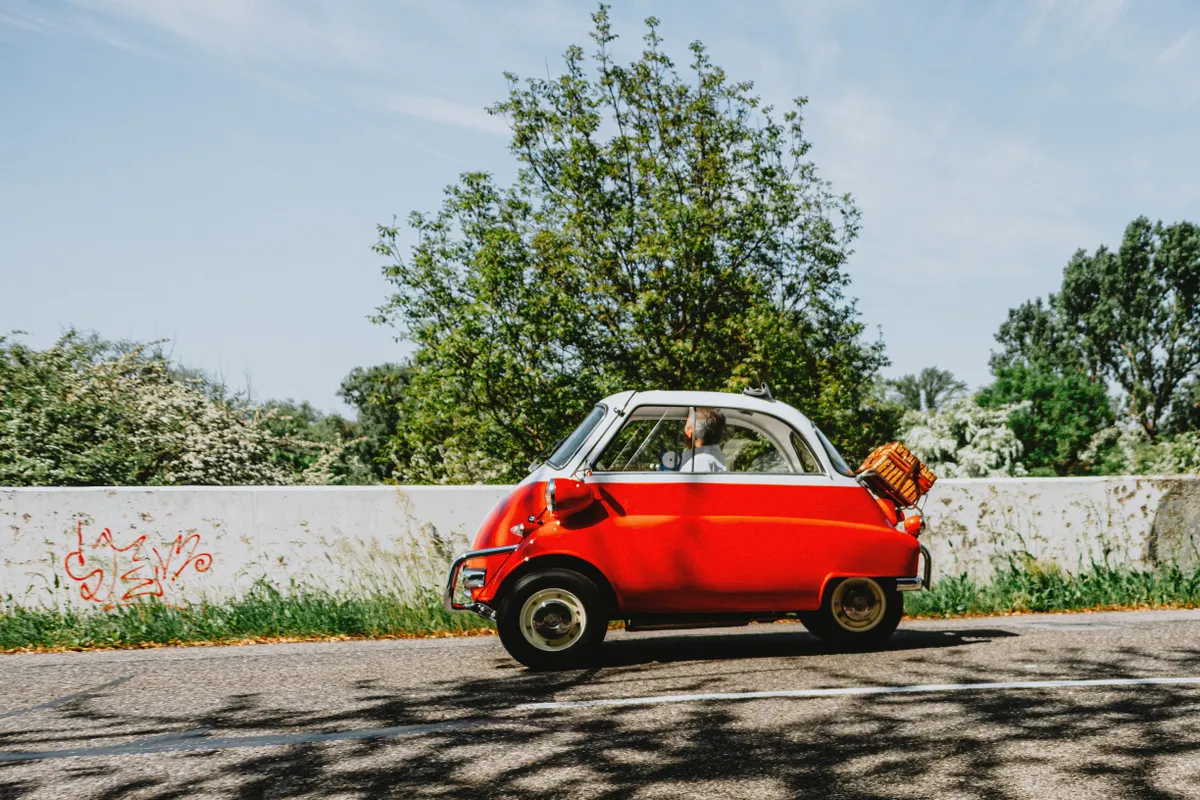

The Liux Big microcar may be small enough to park at a right angle to the kerb, but the Spanish startup behind it is taking on one of the most competitive segments in European motoring: the city car market that Chinese electric vehicle makers now largely dominate.
Founded in 2021, according to PitchBook, Liux has secured Europe-wide homologation for the Big and plans to begin sales in the first half of next year, with Mezha.net reporting a 2027 market launch across multiple countries. The company has raised €16 million (roughly $18.5 million, including European funding) and has grown to 65 employees spread across three production facilities in Spain.
A Startup Built on Second Lives
Co-founder Antonio Espinosa de los Monteros came to cars by way of water. He previously co-founded Auara, a Spanish B Corp selling natural mineral water in bottles that are both recycled and recyclable. After a larger player acquired that brand, he joined forces with engineer David Sancho, whose most arresting prior credit is the Bóreas, a hybrid supercar unveiled at the 24 Hours of Le Mans in 2017.
Their first joint project, the Animal, was a fully electric five-seater built almost entirely from recycled or plant-based materials. They unveiled it in 2022, then almost immediately pivoted: homologating a smaller vehicle, they concluded, was a far more achievable goal. The Big is the result.
Espinosa is clear-eyed about what sustainability means at the production scale a startup can actually reach. ‘One thing that’s very clear for David and me is that recycling isn’t just a lab concept,’ he said. ‘You can recycle almost anything in a lab. What makes something recyclable has to do with how it’s built. When you build something, you have to try to preserve the integrity of the material and the components so that a second life is possible.’
The Big’s body is made from a linen-based biocomposite, engineered so the material can later be separated and recycled. PitchBook notes that Liux’s broader technology approach also draws on 3D-printed lightweight body and chassis moulds, modular battery packs, lean manufacturing in small modular plants, and AI-driven vehicle software. The batteries are not European-made, but the car is designed to charge at home, including from solar panels, and to resist the accelerated obsolescence that afflicts most consumer electronics on wheels.
Liux Big Microcar’s Case Against Chinese Rivals
The competitive context is unforgiving. Even Smart, the compact car brand that once defined urban motoring in Europe, now manufactures in China. Liux opened Spain’s first new car plant in more than 30 years, in Azuqueca de Henares roughly an hour from central Madrid. The factory applies Toyota’s lean management principles and handles only the final stages of assembly, but Liux says production capacity could reach 20,000 cars a year by 2030.
It is following a path that Microlino has charted from Switzerland: the idea that a European-made microcar, differentiated by materials and ethos rather than price alone, can hold its own. More than 7,500 people have joined the Liux Big waiting list without paying a deposit. The most common profile among those registrants is a 55-to-60-year-old city dweller, and Liux now expects the Big will frequently serve as a household’s second car rather than a primary replacement for conventional ownership.
Espinosa does not pretend that is a revolutionary outcome. The company is keeping the door open to B2B fleet partnerships and potential autonomous-vehicle collaborations, but for now the priority is getting the urban version to market through dealerships across Europe.
On price, Liux has confirmed only that the Big will come in below €18,000 (roughly $21,000) before any EV subsidies, placing it at the upper end of the microcar bracket. The car will be offered in two battery variants, 15 kWh and 20 kWh, and a cargo version is also planned. Despite its L7e category classification not requiring crash testing, Liux has been running slalom, braking, and stability tests anyway, aware that a car which feels flimsy on a bend will not win converts from conventional vehicles.
Head of R&D Celso Fernández Llorens points to one number as a marker of what the engineering achieved within tight weight and size limits: a 260-litre boot, engineered into a car that can parallel-park perpendicular to the pavement.
Head of brand Ana Terrado Leyva says the showroom experience, with textile screens, 3D models of the Big’s three colour options, and a linoleum floor as a nod to linen, is the start of a wider sales identity designed to set Liux apart aesthetically from its Chinese competitors. Espinosa started the conversation by questioning whether a distinctly European car concept even exists. The showroom, the linen body panels, and the recycling philosophy are Liux’s answer.
The waiting list opens for paid reservations once pricing is confirmed. That moment will be the first real test of whether the sustainability pitch, at €18,000, is a reason to buy or merely a reason to admire.

