
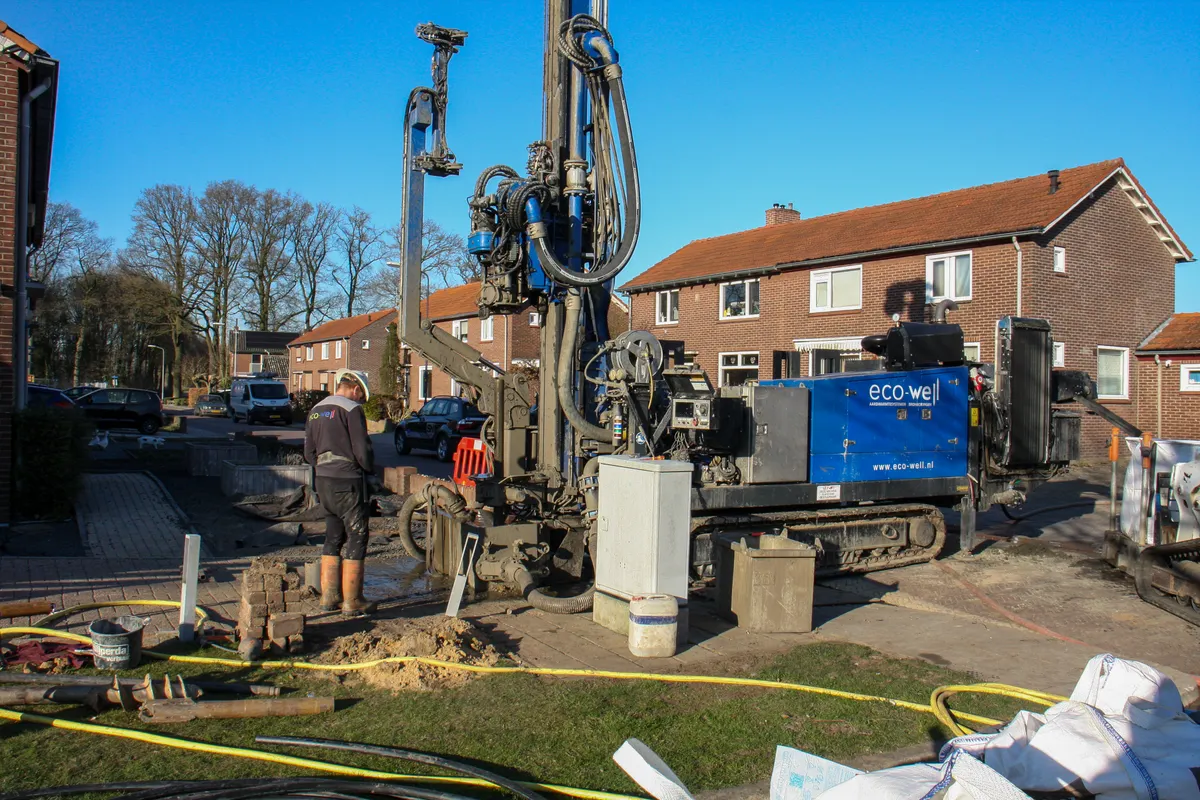

The Mazama Energy Series B round closed at $135 million on 17 September 2026, oversubscribed and with enough demand that the Texas-based startup could hand-pick its new backers. The money will fund Project Ceres, its programme to drill horizontal wells into rock so hot it forces water into a supercritical state, and to begin generating electricity by 2027.
The round was led by Centaurus Capital and Doerr Capital, with ConocoPhillips and Shell Ventures joining as strategic participants. Existing investors Khosla Ventures and Gates Frontier returned. New entrants included SiteGround Capital, H. Barton Asset Management, and the Jeffrey and Marieke Rothschild Foundation.
According to Your Oregon News, Mazama spokesperson Pete Lumley said the oversubscription gave the company the latitude to select investors with combined experience in technology and energy, rather than simply taking whoever showed up.
Project Ceres and the Physics of Superhot Rock
Mazama’s project site sits near Newberry Volcano in central Oregon, where the company already holds the record for the hottest engineered geothermal system ever built at that location, according to The Source. The company is drilling past 10,000 feet in 15 days, targeting a final depth of around 15,000 feet, where temperatures reach 750°F (400°C).
At those depths and pressures, injected water becomes a supercritical fluid, a phase that is neither fully liquid nor fully gas and that absorbs far more thermal energy than ordinary steam. Mazama says each well can deliver up to 10 times the power output of conventional geothermal wells, with a target of 15 megawatts per well under Project Ceres.
The site’s estimated capacity has moved sharply upward. A year ago, investor Vinod Khosla put the Oregon site’s potential at 5 gigawatts. Mazama now says it can produce 10 gigawatts. The company’s nearer-term milestone is more modest but concrete: 200 megawatts of operating capacity from the first site by 2030.
Chief executive Sriram Vasantharajan framed the physics as a commercial necessity. Canary Media reported him telling reporters ahead of the announcement: ‘Superhot rock is almost essential for geothermal to become cost-competitive with fossil fuels.’
The Mazama Energy Series B in a Crowded Field
Mazama is not alone near Newberry. Competitor Quaise Energy, which is also drilling a geothermal well at the same site, closed a $180 million Series B the month before, bringing its total funding to $280 million. That round included a $35 million investment from Nabors Industries, a major land-drilling contractor that is already a Quaise partner. Quaise was founded in 2018 out of research at MIT.
The broader sector is moving fast. Fervo Energy went public earlier in 2026 and its Utah project secured a power-purchase agreement with Google. Sage Geosystems recently began producing power from its first pilot system in Texas. All three are chasing the same gap in the grid: firm, round-the-clock renewable power that wind and solar cannot provide.
The appetite from investors like Centaurus Capital’s John Arnold reflects that thesis. Arnold, the Houston energy trader who closed his Centaurus hedge fund in 2012 and moved into private investment and philanthropy, said in the company’s news release: ‘Superhot geothermal offers the promise of firm, carbon-free power with a relatively small footprint, but realizing that promise requires significant technical innovation. Mazama has made impressive progress, and I am excited to support its next phase of development.’ Gates Frontier, the investment vehicle of Bill Gates, also returned for the round, according to Family Office Herald.
The resource case underpinning all of this capital is striking on paper. Research from the Clean Air Task Force and the University of Twente calculates that tapping just 1% of the world’s superhot rock could generate more than 63 terawatts of electricity, more than eight times the planet’s current total electricity generation. In the United States alone, the CATF’s heat-mapping data puts 1% of the domestic resource at 4.3 terawatts, enough to power New York City 687 times over.
Mazama has now raised a total of $191 million across five funding rounds, per CB Insights, with the Series A closing on 28 October 2025 and this Series B as its largest round to date. According to ThinkGeoEnergy, the company has also secured land for a second development site, though no location has been disclosed.
The next test is whether Project Ceres can deliver power to the grid by 2027. If it does, the argument that superhot rock is commercially viable stops being theoretical, and the race to the next site begins in earnest.

