

The SpaceX Cursor acquisition is now complete, with the AI coding startup formally joining Elon Musk’s aerospace-turned-technology conglomerate and gaining what it called ‘access to the largest fleet of GPUs in the world.’
The deal had been telegraphed in stages. SpaceX and Cursor disclosed a partnership in April 2026, framed at the time as a collaboration with SpaceX’s AI segment, branded SpaceXAI, to accelerate Cursor’s model training. That agreement included an option for SpaceX to acquire Cursor outright for $60 billion. Two months later, as SpaceX completed its public listing, both companies confirmed they were exercising that option. The acquisition close was announced on the Cursor blog.
Why Computing Infrastructure Is the Real Story Behind the SpaceX Cursor Acquisition
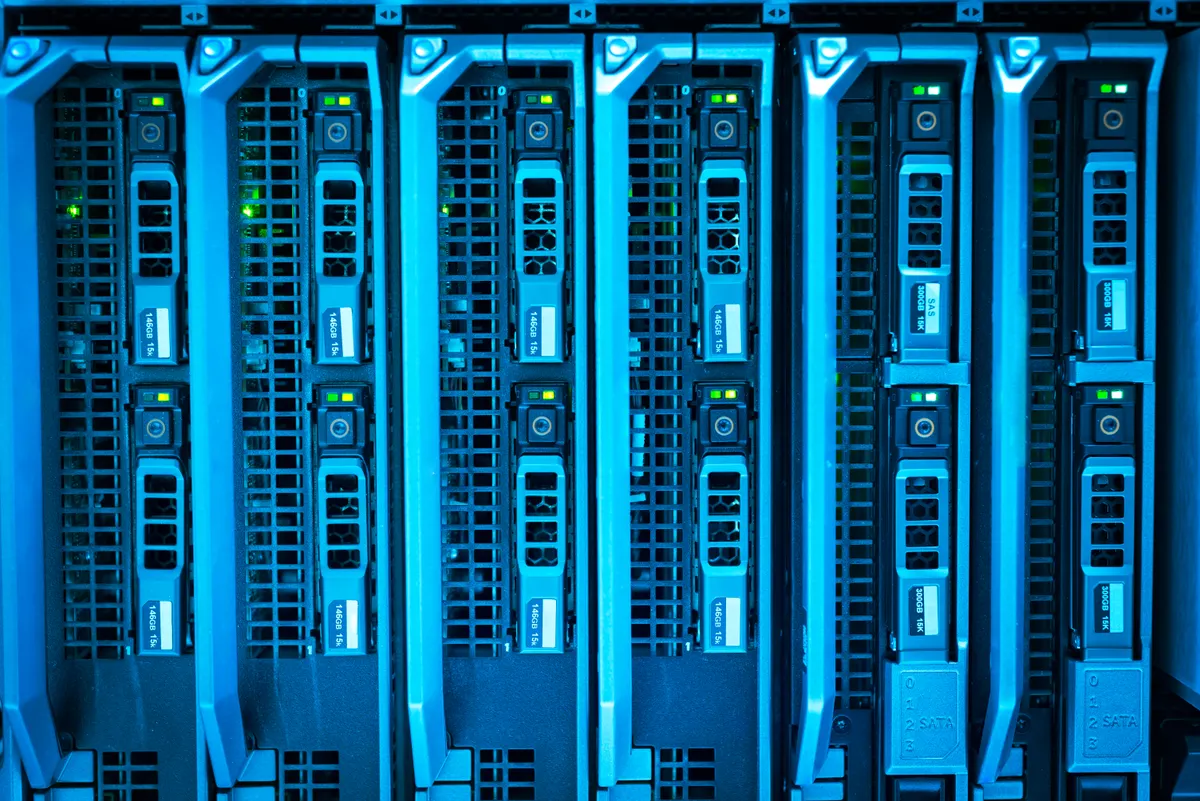
Cursor’s announcement leant heavily on hardware, not software. SpaceX has been building out and renting its computing infrastructure to outside customers, including Anthropic and Google. Cursor, by joining SpaceX, steps to the front of that queue.
‘SpaceX is building the computing capacity needed to scale intelligence far beyond what exists today,’ Cursor wrote in its announcement. ‘Cursor will be one place where that intelligence becomes useful.’
The GPU pitch matters because Cursor competes in a market where model quality and inference speed are directly tied to compute access. Acquiring that access through ownership, rather than procurement contracts, is a structural shift in how the company operates.
SpaceXAI’s Financials Show the Cost of Scaling
The segment Cursor is joining is burning cash at a significant rate. According to SpaceX’s IPO prospectus, as reported by Yahoo Finance, the SpaceXAI segment posted revenue of $818 million in Q1 2026 alongside a loss from operations of $2.469 billion. For full-year 2025, the segment lost $6.355 billion from operations.
SpaceX as a whole generated consolidated revenue of $4.694 billion in the three months ended 31 March 2026, with a loss from operations of $1.943 billion for the same period. Full-year 2025 brought in $18.674 billion in consolidated revenue. The profitable engine underneath is Starlink’s connectivity business, which subsidises the AI segment’s expansion.
The xAI business, folded into SpaceXAI after SpaceX acquired it earlier in 2026, is part of what makes the segment’s equity plan complex. SpaceX’s Form S-8 resale registration filed with the SEC on 12 June 2026 lists equity incentive plans from xAI Corp., X Holdings Corp., Swarm Technologies, Inc., and xAI Holdings Corp., all registered for resale under SpaceX’s umbrella.
Cursor arrives into that structure as SpaceX beds in its identity as a publicly traded company. SpaceX listed on the Nasdaq under the ticker SPCX on 12 June 2026, pricing at $135 per share. The offering sold roughly 556.6 million shares and raised approximately $75 billion, at a valuation near $1.75 trillion, according to IPO Club. By most measures, it was the largest initial public offering in history.
The IPO itself moved faster than most observers expected. Reuters reported that a faster-than-expected SEC review drove the accelerated timeline, with the roadshow launched 4 June 2026 and pricing targeted for 11 June 2026.
What Cursor Brings to the Table
Cursor is not arriving empty-handed. The company earned a Gartner Magic Quadrant Leader designation for Enterprise AI Coding Agents in 2026 and received an AIUC-1 certification for agent security and reliability, according to its company blog. Another firm, Firetiger, also joined Cursor around the same period.
The Gartner recognition, in particular, gives Cursor enterprise credibility at the moment SpaceX is pitching its compute infrastructure to large organisations. A coding tool that sits at the top of analyst rankings is a more persuasive demonstration of what SpaceXAI’s GPU capacity can produce than internal benchmarks alone.
SpaceX does face some friction on the infrastructure side. The company is dealing with a lawsuit over pollution linked to the gas turbines powering its data centres, a complication that could affect how aggressively it expands that capacity.
For Cursor’s founders and users, the near-term question is whether GPU abundance translates into model improvements fast enough to hold its lead in an enterprise market where rivals including GitHub Copilot and Google’s own coding tools are not standing still. The answer will start becoming visible in product updates over the next few quarters.

