

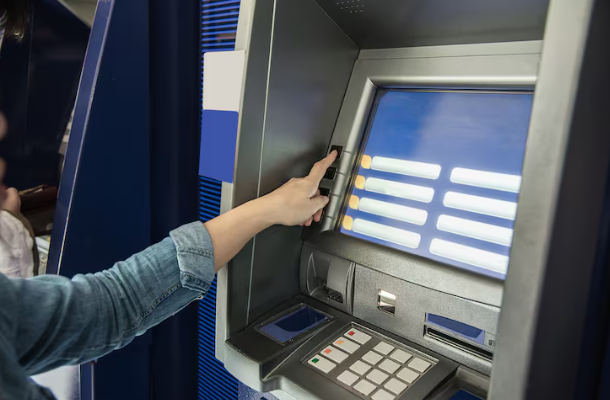
There are about 9,000 Bitcoin Depot kiosks in 47 states in the United States. These colorful, recognizable devices, which convert cash into bitcoin for a fee, can be found at most mid-sized cities’ gas stations, convenience stores, and check-cashing establishments. None of those devices ceased operating on March 23, 2026. Consumers came up, put their bills in, got their Bitcoin, and left.
The company’s platforms for transactions worked well. Customer information remained unaltered. Everything that was visible to the general public kept functioning as intended. Bitcoin Depot’s corporate settlement accounts are located in the back-office layer, which is where the breach occurred. It appears that an attacker moved 50.9 Bitcoin out of company-controlled wallets over the course of about three days before anyone noticed.
| Category | Details |
|---|---|
| Company | Bitcoin Depot Inc. (NASDAQ: BTM) — largest cryptocurrency ATM operator in the US; 9,000+ kiosks across 47 states; $614.9 million in 2025 revenue |
| Incident Date | March 23, 2026 — unauthorized access detected; approximately 3 days elapsed before breach was discovered; SEC Form 8-K filed April 8, 2026 |
| Amount Stolen | 50.903 Bitcoin — valued at approximately $3.665 million at time of theft; classified as a material cybersecurity incident |
| Attack Vector | Credential theft — attacker gained control of credentials associated with the company’s digital asset settlement accounts within its corporate IT environment |
| What Was NOT Affected | Customer-facing ATM platforms, customer data, customer transaction systems — all reported unaffected; no PII accessed or exfiltrated |
| Response | External cybersecurity experts engaged; law enforcement notified; insurance claim being pursued; Bitcoin Depot stated it expects partial recovery through cyber insurance |
| Broader Context (2026) | Drift DeFi platform: $280 million stolen (attributed to North Korean hackers); separate 2026 incidents: $26 million and $40 million stolen; Chainalysis: $3.4 billion stolen from crypto companies in 2025 |
| Regulatory Disclosure | SEC Form 8-K filed citing “reputation harm, legal, regulatory and response costs” as grounds for disclosure; management deemed incident material on April 6 |
On April 8, Bitcoin Depot submitted a Form 8-K to the Securities and Exchange Commission, detailing the event and its financial consequences. The figures are precise: at the moment of the transfer, the value of the pilfered Bitcoin was roughly $3.665 million. Credential theft was the attack vector; someone got access to the company’s internal IT environment and took control of login credentials associated with the digital asset settlement accounts, which are the infrastructure utilized to settle Bitcoin transactions handled throughout the network of kiosks.
Until the vulnerability was found, the attacker used those credentials to transfer the money without seemingly raising any red flags. The business claims that as soon as it was discovered, it engaged outside cybersecurity specialists, alerted law enforcement, and triggered its incident response procedures. Bitcoin Depot has admitted that its initial estimate of the overall damage may vary as the inquiry progresses.
It is more important than it may first appear to distinguish between what was impacted and what was not. Customer wallets and settlement accounts in bitcoin ATM operations are not the same. When a user purchases Bitcoin at a Bitcoin Depot kiosk, the transaction is handled by customer-facing systems that store and move the user’s unique funds. The funds utilized to control the supply of Bitcoin throughout the network of kiosks, corporate float, and operational liquidity are all included in the settlement layer.
Money from a customer’s transaction is not directly taken by stealing from the settlement layer. The settlement infrastructure, however, is precisely the kind of target a sophisticated attacker would concentrate on in a company that generates over $600 million in revenue annually across thousands of physical locations: high value, less monitored than customer accounts, and linked to credentials that exist in a corporate IT environment rather than in hardened blockchain-level security.
The disclosure’s timing is a story unto itself. The breach happened on March 23. The SEC notice was not filed by Bitcoin Depot until April 8, which is more than two weeks later. Citing the SEC’s cybersecurity disclosure regulations, which mandate that material incidents be reported within four business days of materiality assessment, the company designated the incident as “material” on April 6, three days prior to the filing.
The roughly two-week lag between the discovery date and the materiality judgment is not uncommon for complicated occurrences where the full extent is still being evaluated, but it does raise concerns about when an organization has enough information to consider a $3.6 million theft. At the very least, the company’s statement, which states that it reported “in light of potential consequences of the incident, including reputation harm, legal, regulatory and response costs,” is honest.
This episode appears to be a data point in a fairly steady trend rather than an exception given the larger context. In 2025 alone, $3.4 billion was stolen from cryptocurrency companies, according to blockchain analysis firm Chainalysis.
The figures for 2026 are already alarming: authorities blamed North Korean state-sponsored hackers for a $280 million withdrawal from the Drift decentralized banking platform last week; there was also a $40 million incident and another involving $26 million. In absolute terms, the Bitcoin Depot theft is less than all of those, but it operates at the nexus of a separate risk category: physical cash-to-crypto infrastructure, where thousands of kiosks in actual American neighborhoods handle daily transactions involving regular people.
Although insurance seldom leaves victims of bitcoin theft completely whole, Bitcoin Depot carries cyber insurance and has stated that it anticipates recovering some of the stolen assets under that coverage. In the wake of the incident, the corporation claims to be striving to strengthen its IT security. The settlement layer, or the back-office plumbing that transfers value between systems, is thought to be an increasingly appealing target due to the following factors: it’s where the money moves, it’s less hardened than the customer-facing systems, and the credentials that control it typically reside in regular corporate IT environments that weren’t built to defend against adversaries targeting eight-figure cryptocurrency transfers.

