
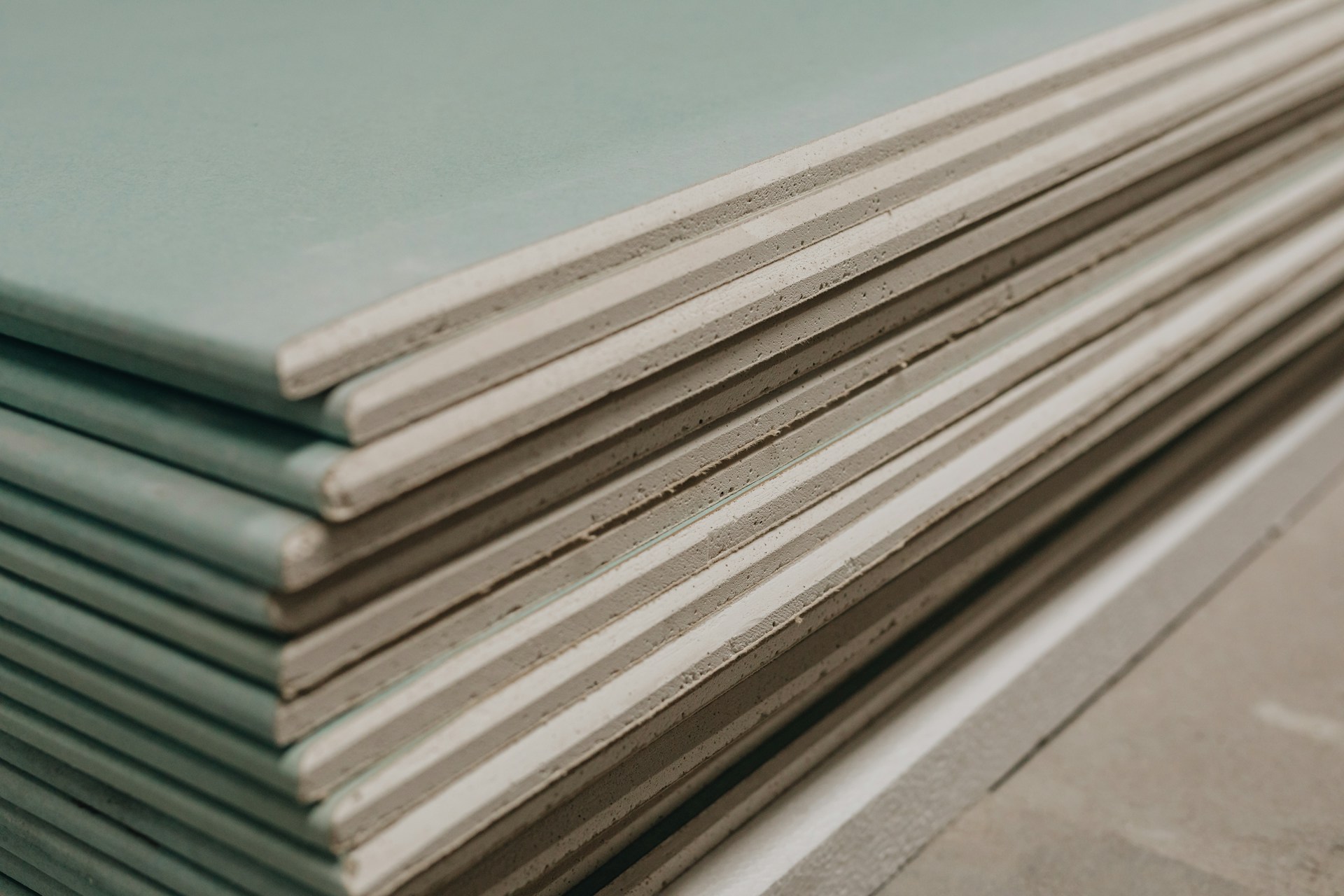

You make drywall decisions every time you step onto a commercial site. Most don’t treat it like a major call — but they should. The boards you pick shape how fast your crew moves, how well a space holds up under pressure, and how many callbacks land in your lap after handover. Selecting the best drywall boards for commercial use isn’t just about what’s cheapest on the supplier sheet. It’s about protecting your schedule and your margin at the same time.
What Actually Drives the Cost
Material type carries the most weight — but thickness and specialty features move the number fast. Fire resistance, moisture control, acoustic performance: each one adds to your per-sheet cost. Heavier boards also quietly eat into labor hours your estimate probably didn’t fully price out. Freight goes up. Handling slows down. Your crew spends more time muscling sheets into place instead of finishing walls.
Lighter systems designed for faster cutting and handling change that math. Picture a hospital build with long corridors — installers carrying fewer boards per lift, spending less time repositioning heavy sheets overhead. That speed cuts labor costs even when the material price runs slightly higher. The unit cost looks worse; the job cost doesn’t.
Fire, Acoustics, Durability — Match the Board to the Building
Here’s the thing: the plan drawings tell you what the space looks like, not how the building will actually function. Those are different problems.
Fire-rated assemblies protect occupants and keep you in line with U.S. building codes that keep tightening across commercial sectors. Type X boards give you stronger fire resistance without forcing major design revisions down the road — which matters when an inspector tightens requirements mid-project or a tenant requests upgrades after moving in.
Acoustic control is a separate issue but equally real. Offices, schools, healthcare facilities — noise affects how usable a space actually is. And then there’s durability. High-traffic corridors, retail floors, spaces that see carts and equipment daily? Standard panels aren’t built for that. Impact-resistant surfaces reduce repair calls. Match the board to the environment, and callbacks drop. Default to whatever’s on hand, and they don’t.
Short-Term Price vs. Long-Term Costs
Most of the money gets lost after the job, not during it.
Higher-performance boards often mean fewer patching cycles, less repainting, and longer spans before replacement. Fewer return visits. Less client disruption. That protects your reputation on the next bid — which is where the real money lives.
The catch? You have to look past the upfront number. A slightly pricier board that prevents one expensive retrofit pays for itself fast. The flexibility you build in at spec time is worth more than the savings you think you’re getting by defaulting to standard panels.
Where the Market’s Heading
Sustainable materials that support energy-efficient construction are no longer a nice-to-have. Clients want them; updated regulations increasingly require them. Manufacturers are pushing lighter, greener gypsum products that still hit commercial fire and strength standards — and that shift is already baked into new construction expectations across the U.S.
When you’re selecting the best drywall boards for commercial use on your next project, you’re not just checking a code box. You’re deciding whether your work keeps up with where the industry is already going — or catches up to it later, at a higher price.

