
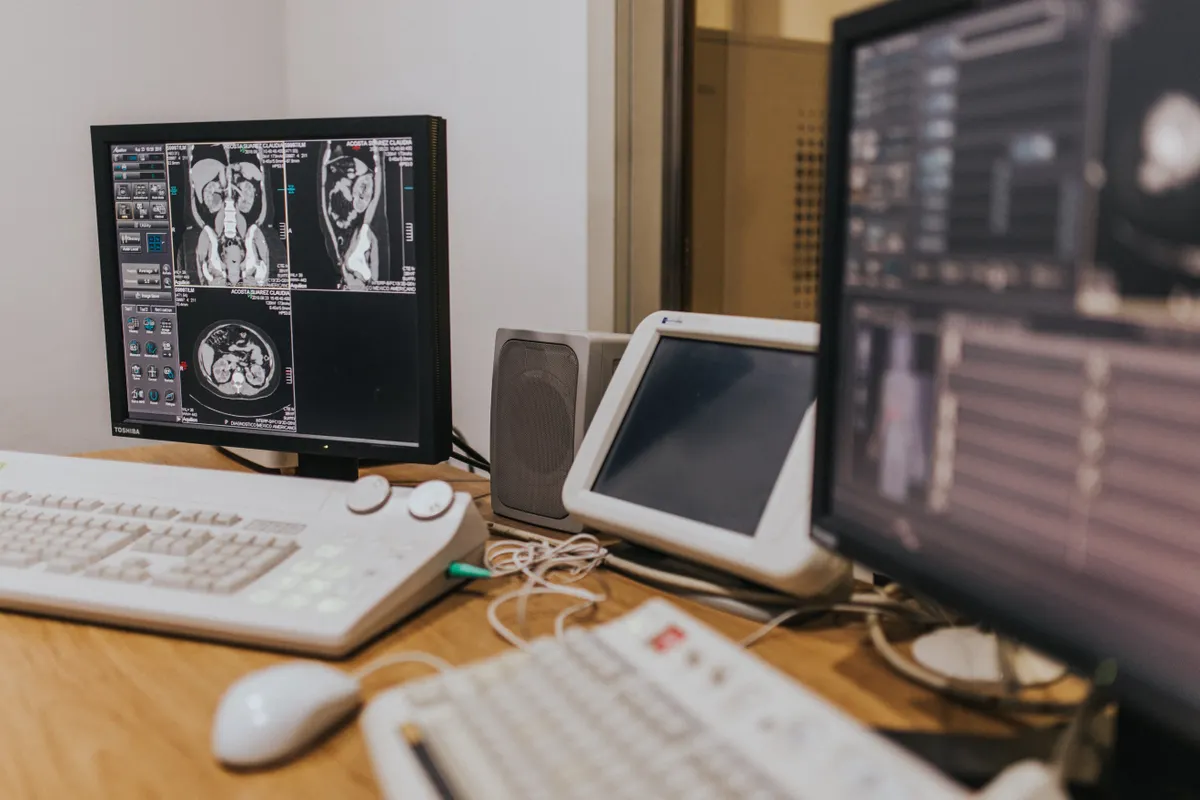

When Conno Christou’s final PET scan came back ambiguous, his oncologist began discussing radiotherapy close to his heart and lungs. What stopped that from happening was using AI for cancer imaging review: a general-purpose chatbot that flagged a rarely-discussed phenomenon and, Christou says, almost certainly spared him from unnecessary treatment.
That is where the story ends. It starts, as these stories often do, with a piece of luck so backhanded it barely feels like luck at all.
A Tumour Found by Accident
Christou, 35, is a founder who treats his body as a system to be optimised. He tracks his sleep with a Whoop band, cross-references it with an Oura ring, and has nearly 100 biomarkers checked every year, a practice he had maintained for four consecutive years following protocols associated with longevity researchers including Peter Attia and Rhonda Patrick. His 2025 checkup was, in his words, ‘It was the best I’d had in years.’
Then, after a workout, his arm swelled. He waited a week before seeing a doctor, who found two blood clots and scheduled surgery. The pre-operative exams changed everything. A doctor re-entered the room and told him the procedure was off.
‘We see an 11-by-11-by-8 centimeter mass behind your sternum,’ the doctor said.
A biopsy confirmed a diagnosis Christou had never contemplated: an aggressive, fast-growing form of non-Hodgkin’s lymphoma, a rare condition affecting roughly one in 420,000 people, caused by a random genetic mutation with no connection to lifestyle, diet, or stress. The tumour had existed for approximately three months. In three more weeks, it would have reached stage four. ‘Lucky in my unluckiness,’ Christou told the interviewer from his home in Athens. ‘It was only found because I went in for something else entirely.’
Twelve Opinions, One Decision
His first oncologist recommended the lighter of two available chemotherapy regimens. Christou booked his first infusion three days out, then sought a second opinion the night before. That second doctor recommended the harder path: continuous in-hospital infusion, cycling every three weeks across six months. The lighter treatment carried roughly a 60% success rate for his presentation; the aggressive regimen brought that figure to around 85%.
Two world-class physicians. Diametrically opposite advice.
Christou gathered 12 opinions in total, reaching out to haematologists and oncologists in the United States and abroad. Eleven to one voted for the harder regimen. He took it. ‘As founders, we hold the wheel,’ he says. ‘You hear many things. You don’t have to follow the first advice.’
He approached the six cycles of chemotherapy the way he approached building a company: each cycle a sprint, each week dense with data. He wore his Whoop throughout and found it accurate at predicting the days his immune system would bottom out. He kept a symptom journal via voice transcription, logging every shift, every side effect, every medication and counter-medication. Psychology, he concluded, mattered above all else. ‘It moves the needle more than anything,’ he said. ‘I never asked “why me”, not once. That question has no useful answer.’
Using AI for Cancer: What a Chatbot Caught
He fed all of it, blood results, scan data, wearable output, journal entries, into Claude, Anthropic’s general-purpose AI model. For a condition so rare that a typical oncologist might see it once a year, using AI for cancer research meant access to a model trained on the full body of medical literature, something categorically different from a Google search.
His experience sits inside a broader shift in how patients engage with health information. A Healthcare Dive report on a Pew Research Center survey found that more than 20% of U.S. adults at least sometimes use AI chatbots for health questions, with only 18% of those users rating chatbot responses as highly accurate. A separate Annenberg Public Policy Center survey of over 1,600 U.S. adults found that nearly half (49%) are not comfortable with healthcare providers relying on AI tools rather than their own clinical experience.
Christou does not argue with the sceptics. ‘It didn’t replace the doctors,’ he says, but it ‘helped me ask the right questions.’
The model proved most consequential when his end-of-treatment PET scan returned an ambiguous result. Christou had read that for his specific lymphoma, the false-positive rate on those scans is around 60%. ‘It’s 2026,’ he says. ‘Sixty percent.’ Peer-reviewed research published in Blood Advances documents false-positive rates of 20% to 40% across broader lymphoma cohorts treated with chemoimmunotherapy, suggesting Christou’s figure may reflect a narrower subtype. A separate PMC-published study corroborated a high false-positive incidence in patients with aggressive non-Hodgkin’s lymphoma treated with rituximab-containing regimens.
When Christou fed all three of his PET scans and his MRI into Claude, the model flagged a specific phenomenon: in patients under 40 recovering from this type of lymphoma, the thymus gland can reactivate after chemotherapy, appearing on imaging as active disease. Given his age and scan characteristics, the model put the probability of that explanation at roughly 90%. He sought three more opinions. The fourth doctor confirmed it: thymus rebound. No active disease. No radiotherapy required.
The Company on the Other Side
The experience did not change what Christou does for a living; it clarified it. Keragon, the company he built before his diagnosis, is a HIPAA-compliant, AI-powered workflow automation platform for healthcare organisations, connecting more than 300 healthcare and business applications to automate scheduling, patient intake, eligibility checks, and data sharing without requiring code. CIOReview recognised Keragon as a Top 50 Healthcare Solutions Company for 2024, the year the Boston-headquartered company raised $3 million in funding.
Going through treatment as a patient, Christou says, gave him new perspective on what the platform is trying to solve. He watched nurses and doctors buried under administrative tasks that had nothing to do with care. He received the same chemotherapy protocol as an 80-year-old woman, side effects managed through a cascading chain of additional drugs. He is certain, he says, that we will look back at this era of treatment and cringe.
He takes Sundays off now, mostly. He tries to be present at lunch with friends, at home with his dog, in conversations that might once have felt like a distraction. A VC friend’s advice kept replaying during treatment: be happy now. Christou calls it among the hardest things to do and says he finally understands why it matters.
On using AI for cancer care and what it can already deliver for a determined patient: ‘It’s not happening in 10 years. It’s happening today.’

