

The analysis that mapped seven years of Tesla earnings calls tells a clear story: Tesla AI and robotics now occupy roughly half of everything Elon Musk says when he speaks to investors, a figure that stood at between 15% and 20% as recently as 2022. The car business that still generates most of the revenue has been relegated, in Musk’s rhetoric at least, to an afterthought.
Tesla AI and Robotics: What the Numbers Actually Show
The data comes from a collaboration between TechCrunch and Hudson Labs, a New York-based financial research firm. Hudson Labs sourced transcripts from S&P Market Intelligence going back to 2019 and used its Co-Analyst tool to assign a topic to each sentence before counting frequency. The methodology is blunt but the trend is hard to argue with.
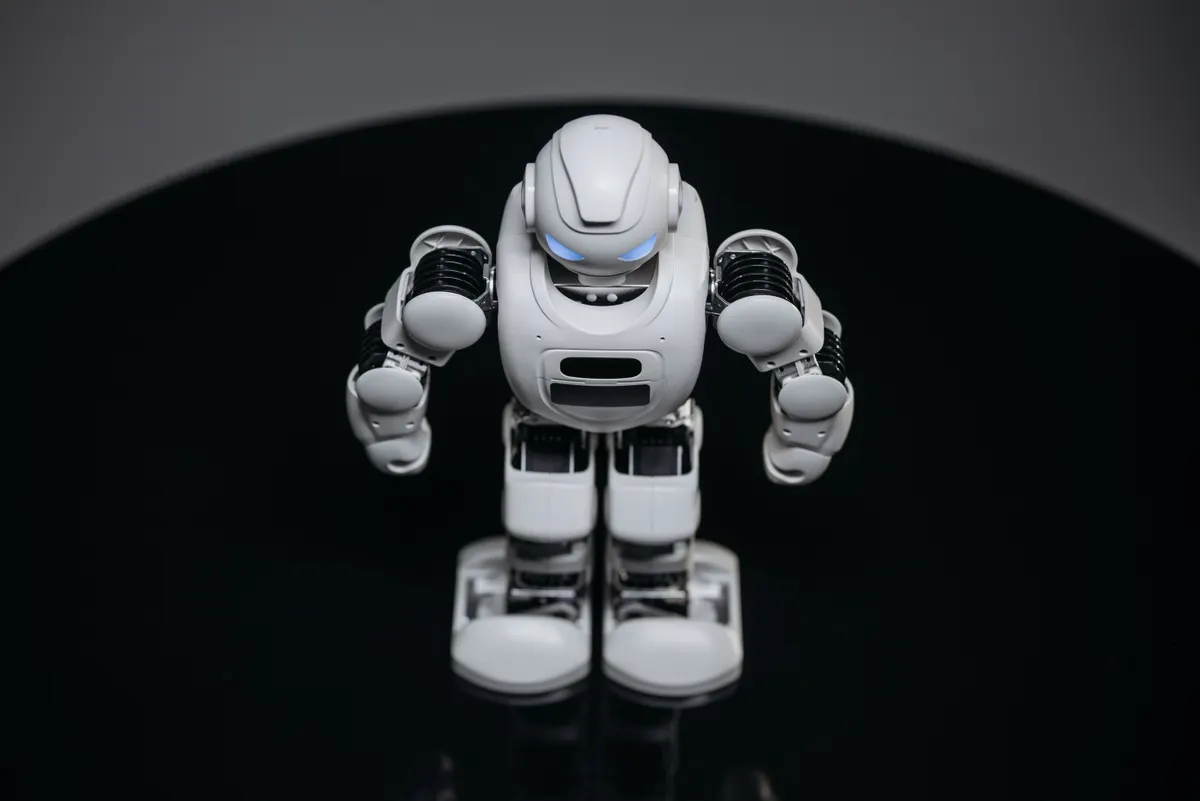
Musk now speaks about artificial intelligence, robotaxis, and Full Self-Driving software close to 50% of the time he opens his mouth on these calls. Talk of robotics has accelerated even faster. When Tesla first disclosed its Optimus humanoid robot project in 2021, Musk spent around two percent or less of his remarks on it in the year that followed. By the third-quarter 2025 call, Optimus occupied nearly a third of his total commentary, with at least 10% of his recent remarks devoted to the project across the past year.
On that same third-quarter call, the automotive business received less than 20% of his attention. Across earnings calls generally, he now spends less than a third of his time on cars and manufacturing.
The financial backdrop makes the rhetorical shift harder to dismiss as mere marketing. According to Tesla’s 10-K filing for FY2025, automotive segment revenues came in at $82,056 million for the full year, down from $87,604 million in 2024 and $90,738 million in 2023: two consecutive years of decline. Over the same period, net income fell to approximately $3.79 billion, a 46.5% drop year-over-year, while research and development spending climbed to $6,411 million in FY2025 from $4,540 million in FY2024. The company is spending more on the future and earning less from the present.
There was a partial recovery in the most recent quarters. The Tesla 10-Q for Q3 2025 shows total automotive revenues of $21,205 million for the quarter, up 6% year-over-year. And the Q1 2026 10-Q shows automotive segment revenues of $19,979 million, compared with $16,605 million in Q1 2025. The sequential bounce is real, though it sits against a backdrop of sharply lower full-year profitability.
The Gap Between Musk’s Focus and His Executives’
Chief financial officer Vaibhav Taneja and vice president of engineering Lars Moravy have not matched Musk’s pace. Even on recent calls they spend around 30% of their time on the automotive business, with AI, robotaxi, and Full Self-Driving as their next-most-common topics. They used to spend nearly 50% of their time, or more, on making and selling cars. That changed in 2024 as competition from legacy automakers and Chinese entrants began to bite.
But when they do embrace the future, the language is unguarded. ‘The path to amazing abundance is ever challenging and requires making bold bets,’ Taneja told investors on the Q2 call this year. ‘Our progress will be non-linear. The future is going to be great.’
Musk has been equally direct about the stakes. ‘If you value Tesla as just an auto company, fundamentally, it’s the wrong framework,’ he said on the Q1 2024 call. ‘If somebody doesn’t believe Tesla is going to solve autonomy, I think they should not be an investor in the company.’
According to the Motley Fool transcript of the Q4 2025 earnings call, Musk announced plans to convert the Fremont factory’s Model S and X production line into an Optimus robot factory with an annual capacity goal of one million units. He also said the robotaxi fleet had grown to ‘well over 500 vehicles’ operating across the Bay Area and Austin, doubling on a monthly basis, with CyberCab production expected to begin in April 2026.
Musk was candid about where Optimus actually stands. On the same call, he acknowledged the robot ‘is still in the R&D phase’ and ‘not in usage in our factories in a material way,’ with significant production volume unlikely until the end of 2026 at the earliest. Tesla earnings call transcripts from the past two years make plain that the distance between Musk’s ambitions and the current commercial reality remains wide.
The other executives’ lag is probably the most honest signal in the data. They talk about the businesses that are generating revenue now. Musk talks about the ones he expects to generate revenue later. If CyberCab launches on schedule and Optimus moves off the R&D floor and onto the factory floor by late 2026, his share of airtime devoted to cars will likely fall further still.

