
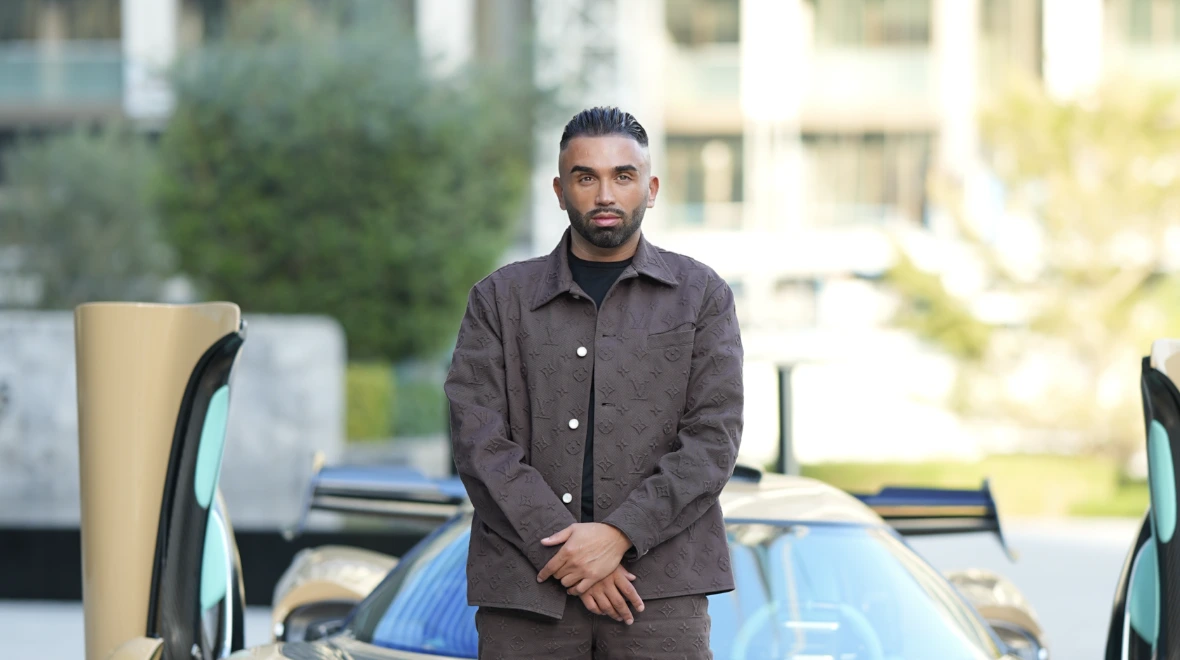


Gurhan Kiziloz won a first appeal in his effort to unfreeze a combined $527 million in Tether, corporate holdings, and other international assets tied to a Brazilian tax dispute.
The ruling does not return the money at once. It challenges the scale and the legal basis of the freeze, and it opens a route for the assets, including roughly $213 million in USDT, to be released by October 2026. What happened in the room was narrower than a full victory and larger than a technicality. The court accepted that the freeze had been applied too broadly and sent it back for a closer look.
That closer look is the heart of the decision. The court ordered authorities to separate assets with a direct link to Brazilian activity from those tied to independent companies, generated outside Brazil, or held before the country introduced its modern betting and virtual-asset rules. Each category now has to be argued and evidenced rather than swept into a single restraint. For a pool spread across cryptocurrency, company interests, financial accounts, and property in more than one country, that sorting is where the case will be won or lost.
Gurhan Kiziloz’s defense rests on timing. During the period under review, he operated 17 betting sites serving Brazilian users, alongside crypto token sales, at a time when Brazil’s rules for offshore betting and digital assets were still forming. Brazil wrote fixed-odds betting into law in 2018 but did not pass its federal licensing system until December 2023. Its main virtual-assets law arrived in late 2022, with regulatory build-out following in the years after. His lawyers argue that liability must be judged under the rules in force when the activity happened, not the fuller framework in place today.
The argument is not that gambling revenue or crypto profits were automatically tax-free. It is narrower and, in court, sharper. His team says the amount owed, if any, has to be calculated under the laws and enforcement powers that existed at the time. They also question whether an offshore operator could even have obtained the Brazilian license now demanded under the newer system. If no full licensing route was available then, they argue, an operator cannot be punished today for lacking a permit that had not yet been built.
The Tether piece gives the case reach beyond Brazil. Stablecoin issuers can restrict tokens after a court or law-enforcement request, which puts digital assets within reach across borders faster than a bank account or a property title. That same mechanism runs in reverse. With the order behind the freeze now narrowed, Gurhan Kiziloz’s lawyers can present the ruling to Tether and other institutions and request that access to the affected wallets be restored. A stablecoin that was locked with a request can be reopened with a ruling.
The case is moving through Brazil’s federal courts. The original freeze, tied to federal tax allegations, began before a federal court of first instance, with the appeal heard by the relevant regional federal tribunal. Federal-law questions could reach the Superior Court of Justice, while constitutional points involving retroactivity, due process, and property rights could travel as far as the Supreme Federal Court. None of that is unusual for a dispute of this size, and it signals clearly that the fight is far from over.
The next phase is separation work. Gurhan Kiziloz’s side and the authorities have to split the $213 million in USDT from the additional $314 million in other restrained holdings and test each asset for a genuine connection to the alleged Brazilian liability. Some of that will be straightforward. Some of it, especially holdings generated outside the country or predating the rules, will be contested line by line.
For the wider crypto and gambling sectors, the case is a test of whether newer regulatory systems can be turned back on historic activity. Plenty of operators served Brazilian users through international entities while the rules were still fragmented. A ruling that limits retroactive reach would matter well beyond one entrepreneur.
For Gurhan Kiziloz, the stakes are more immediate. The release of $527 million would restore liquidity to affected companies, free operating capital, let counterparties be settled, and reactivate investments that have sat idle through the dispute. If no higher court restores the original blanket freeze, he is set to regain access to the full amount by October 2026. This reporter will follow the case as the separation phase and any further appeals play out.

