
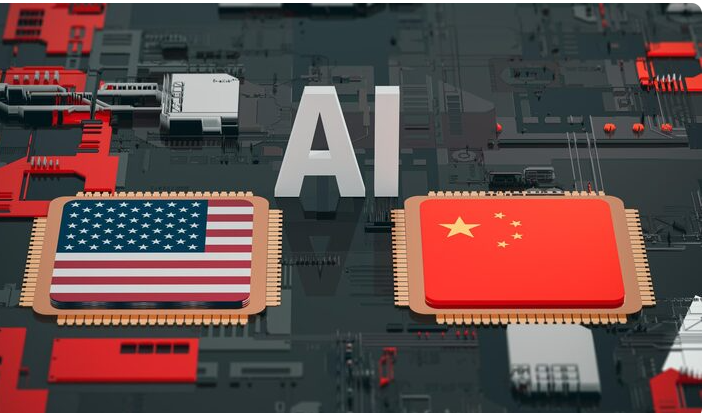

In early 2026, a silent revolution is happening in the realm of Artificial Intelligence. It’s coming from China, which is something that many people in the West didn’t expect. With its ground-breaking AI models, DeepSeek and other companies are making us question everything we thought we understood about the future of technology. The Chinese AI surge has caused a huge change that could jeopardize America’s long-standing leadership in the area.
In the past, the US has been at the forefront of AI development, with companies like Google, OpenAI, and Microsoft leading the way. But as China’s government-led efforts get stronger, these big American companies are having to defend themselves. What caused this?
Key Information Table
| Category | Details |
|---|---|
| Key Company | DeepSeek, Alibaba, Tencent, ByteDance |
| Key Technologies | Deep Learning, Open-Source Models, AI Chips |
| Leading Figures | Xi Jinping (China’s President), DeepSeek Founders |
| US Companies Affected | Google, Microsoft, Amazon, OpenAI |
| Key Trends | Cost-effective AI, Open-source AI, Hardware Independence |
| Timeline | Early 2026 |
| Sources | TechCrunch |
China’s strategic focus on cutting costs, encouraging innovation through open-source models, and strong government support are the keys to its success. In the U.S., AI models have usually been linked to proprietary systems and expensive operating expenses. China, on the other hand, has come up with a novel way that cuts costs and boosts efficiency. DeepSeek is a Chinese AI business at the center of this movement. Its models outperform American ones for a fraction of the cost, which has shaken up the sector.
The DeepSeek Effect
DeepSeek’s remarkable achievement has come to stand for China’s ability to tear down barriers and change the rules. DeepSeek’s AI models are made to run on less expensive hardware, which makes them available to a global market. This is different from U.S. models that frequently need a lot of money to buy cutting-edge technology. This capacity to make models that are as good as the best in the world while keeping prices low is a direct danger to U.S. tech businesses, which are suddenly having trouble staying ahead of the competition.
As AI models from businesses like DeepSeek and Alibaba’s Qwen become more popular in global marketplaces, it seems like U.S. companies’ historic dominance is becoming less stable. These models, which are typically open-source, are making it easier for governments and businesses all over the world to use them more quickly and on a larger scale. This is helping them get ahead of Western technology. China’s decision to use open-source software is also going to change the AI environment in a big way.
The Benefits of Open Source
China is moving ahead of the West in a big way by using open-source AI models. China’s biggest digital businesses, such as Alibaba, Tencent, and ByteDance, are delivering open-source AI solutions that let anybody access, change, and use AI models without having to worry about proprietary constraints. This is different from companies like OpenAI, which work with closed-source models. This speeds up the pace of new ideas and makes it easier for smaller companies to get in.
This open-source way of thinking not only makes AI technology available to everyone, but it also quickly spreads its use across boundaries. On the other hand, U.S. companies are finding it harder to compete since their unique methods use more resources and are less adaptable in a market that moves quickly. Chinese companies are becoming more and more important in defining the global standard for AI, which is a big change that U.S. companies are trying to catch up to.
The Tech Shock in China
Even though the U.S. has strong rules about sending high-performance processors to China, China has developed ways to make its own high-quality electronics. China has been able to get ahead of the West in some important areas of AI infrastructure because the government has spent a lot of money on developing its own chips, like the Cambercon series, and AI software continues to improve.
The growth of chips in China, along with a well-functioning software environment, has caused a tech shock that makes U.S. companies reassess their plans. These new technologies are making it much easier to get into the market, even though things like pricey hardware and software development used to be big problems. It’s a game-changer, and the U.S. is only just starting to understand how big the threat is.
The Political and Economic Scene
It’s also hard to overlook how China’s ambition for AI will affect the world. China has become a world leader in 37 out of 44 important technologies because to President Xi Jinping’s smart investments in AI, robots, and biotechnology. China has made huge progress in areas where the U.S. had long been the clear leader, thanks in part to the government’s active participation in fostering technical progress.
These improvements are due to both the creativity of individual enterprises and a national strategy that everyone is following. China’s AI progress is closely linked to its economic goals and its influence on the world arena, which makes it an even stronger competitor.
What does this mean for the United States?
For In the U.S., China’s rise in AI marks a big change. In the past, the U.S. has stayed at the top by using its wealth, access to cutting-edge technologies, and dynamic IT ecosystem. But because China’s development is moving so quickly, thanks to government-backed resources, the U.S. has to rethink how it does things.
There is growing worry that the U.S. will lose its technical supremacy in the next several years as China’s AI models become more popular around the world. The rise of Chinese AI is more than just a change in the market; it threatens the U.S.’s long-standing position as the leader in technology. The West has been focused on protecting intellectual property and upholding legal boundaries. On the other hand, China has been focused on moving rapidly, constructing infrastructure, and making relationships with other countries.
The future of AI isn’t just about the West anymore. If the U.S. doesn’t stop relying on old advantages like capital and proprietary models and move to a more open, flexible approach, it could lose its place at the table in one of the most crucial fields of the 21st century.
The AI revolution in China is unfolding faster than many people thought it would, and if U.S. corporations don’t act quickly, the West may soon be behind in the AI race.

