

In a forest, there’s a moment right before dawn when the soundscape seems to be layered: distant stirring in the undergrowth, insects humming beneath leaves, birds calling over treetops. People have been listening to these sounds as background and atmosphere for a very long time. Scientists are now starting to see them as something quite different—language, or something quite like.
The core of this change is artificial intelligence. Quietly, through the collection of facts and patterns, rather than in a dramatic, cinematic manner. By feeding machine learning models with enormous collections of animal sounds, such as whale clicks, bat chirps, and elephant rumbles, researchers are posing the straightforward but surprisingly difficult question: what are the animals really saying?
Key Information About AI in Animal Communication Research
| Category | Details |
|---|---|
| Field | Digital Bioacoustics / AI Research |
| Core Focus | Decoding animal sounds, gestures, behaviors |
| Key Technology | Machine Learning, AI models, sensors |
| Notable Subjects | Elephants, dolphins, whales, bats, bees, pigs |
| Key Organization | Earth Species Project |
| Research Method | Unsupervised learning, large datasets |
| Accuracy Examples | Pig emotion detection >90% accuracy |
| Major Goal | Develop AI-based animal communication translation |
| Key Challenge | Lack of “ground truth” meaning |
| Reference Website |
The initial findings are fascinating. Elephants, for example, seem to utilize vocalizations that resemble names when they cry out to particular individuals. Similar “signature whistles” are produced by dolphins. Scientists have discovered structured click patterns in sperm whales called codas, which appear to convey multiple levels of information. These could be parts of structured communication systems rather than random noises.
There is a sense of both exhilaration and caution while observing researchers work with huge datasets. Although the tools are strong—they can analyze thousands of hours of audio, which is significantly more than humans can do—interpretation is still unclear. Although AI is capable of recognizing patterns and classifying sounds, it lacks the ability to comprehend meaning. One of the key issues facing the area is still the discrepancy between pattern and purpose.
Sometimes the findings feel almost surprisingly personal. Vocal exchanges that mirror fights over food have been found in bat studies, with specific patterns matching to social relationships. In order to communicate with their young, mother bats even seem to adopt a sort of “motherese,” modifying their sounds. It’s the kind of information that, according to popular belief, makes animal communication seem less foreign and more familiar.
In other places, the emphasis switches from sound to motion. For instance, honeybees use complex dances—tiny vibrations and directional patterns that show where food is located—to communicate. AI algorithms that have been taught to watch these motions are starting to understand the minute differences between these dances. What appeared to be instinctive behavior is now structured, even intentional.
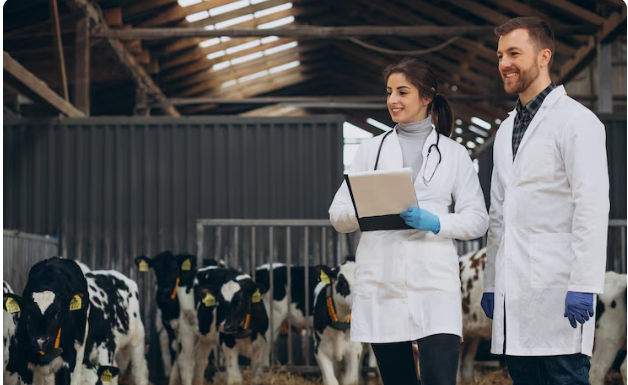
This research has a practical component as well. Artificial intelligence (AI) systems have been created in agriculture to scan pig vocalizations and determine emotional states with amazing accuracy. Farmers are able to identify stress or disease earlier and take action before symptoms become apparent. It serves as a reminder that comprehending animal communication has practical applications in addition to being a scientific interest.
These innovations are made possible by rapidly advancing technology. Animals can now be continuously observed in their natural habitats using lightweight sensors and recorders, gathering data without human intervention. Researchers can find patterns without predetermined labels through unsupervised machine learning, which is conceptually similar to how language models analyze text. It’s a change from interpretation to discovery.
This is being advanced by groups like the Earth Species Project, which are working to create “foundation models” for animal communication. Finding universal patterns across species with the potential for translation is an impressive goal. The endeavor itself shows how seriously the field is being treated, even though it’s unclear if that aim can be accomplished.
However, there are boundaries that are hard to disregard. Interpretation can become speculative in the absence of a definite “ground truth,” or a definitive knowledge of what a sound represents to an animal. Although certainty is elusive, researchers rely on correlation, context, and observation. Certain patterns found by AI might not have meaning according to human definitions.
Additionally, there is the ethical issue. What would happen if humans could eventually decipher animal communication or even react to it? Could it establish new kinds of control, disturb ecosystems, or change natural behaviors? These issues are not hypothetical. Scientists in the field are already discussing them.
It’s difficult to avoid feeling both restrained and curious. There is a certain allure to the concept of comprehending animal communication—almost a promise of a closer relationship with nature. However, it also calls into question presumptions about language, intelligence, and species boundaries.
As I see things develop, I get the impression that something fundamental is changing—not just in terms of technology, but also in terms of perspective. Animals are now viewed as participants in intricate communication systems that humans are just now starting to recognize, rather than just as objects of observation.
Once you start thinking like this, the sound of the forest at morning changes. Every action and every call could convey information that has been forgotten for generations. These signals are not produced by AI. As it slowly and poorly reveals them, it raises more questions than it provides answers.
And that might be the most fascinating aspect. We’re starting to recognize how much there is to understand about animals, not that we will ever fully comprehend them.

