
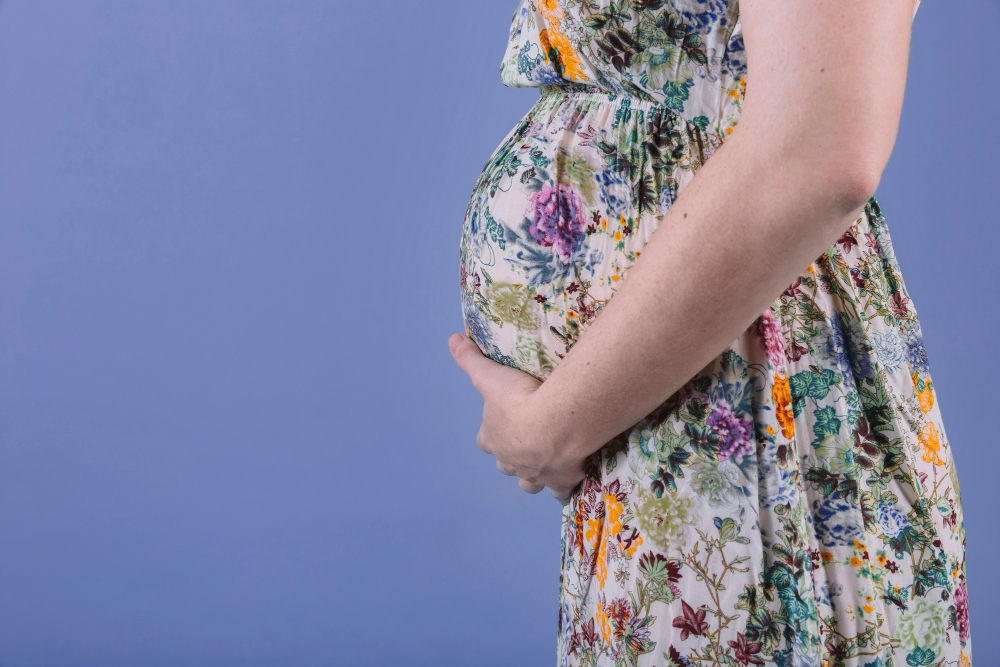

At the age of 44, Claire Danes thought her family story had already been written, with its chapters logically arranged and emotionally accounted for. However, a pregnancy test suddenly upended that sense of order and caused her well-managed presumptions to fall apart.
According to her own account, the moment was neither subtly contemplative nor subtly comforting; rather, it came with emotional force, loudness, and decisiveness, resulting in what she later characterized as a full-scale meltdown that left little room for composure.
| Detail | Information |
|---|---|
| Full Name | Claire Catherine Danes |
| Date of Birth | April 12, 1979 |
| Age During Pregnancy | 44 |
| Partner | Hugh Dancy (married 2009) |
| Children | Cyrus, Rowan, Shay |
| Career Highlights | Romeo + Juliet, Homeland, Temple Grandin, The Beast in Me |
| Awards | Multiple Emmy Awards |
| Reference | E! News interview, January 2026 |
Because of that context, the news felt remarkably similar to a mistake in a system she believed to be closed, as though a door she had previously locked had suddenly opened.
Convulsive tears and an urgent phone call to her OB-GYN were the first signs of the emotional reaction, which was notably human rather than performative and based on fear rather than celebration.
Danes and her husband, Hugh Dancy, were raising two boys at the time. They were going through a difficult yet predictable stage of parenthood, with hard-won and carefully balanced routines.
The prospect of starting over can be intimidating for many women in their forties, especially when their time, energy, and emotional reserves are already depleted—a reality Danes did not try to soften or reframe too soon.
She has been open about the “funny shame” that came with the fear, a feeling of having crossed an imperceptible line that society rarely establishes explicitly but frequently enforces covertly.
This internalized discomfort is especially illuminating because it shows how age-based expectations about motherhood are remarkably persistent, even among people who reject them intellectually.
According to her account, the experience felt more like a system reboot than a miracle, making her reevaluate what she thought her body, career, and family could reasonably accommodate.
She talked about researching the odds of conception late at night, and what stuck with me was how familiar that quiet panic sounded.
A more measured acceptance that made room for curiosity and, eventually, optimism replaced the initial shock’s intensity over time.
Another subtle change occurred when she found out she was expecting a daughter. Surprise replaced preconceptions, and she was introduced to a future she had not anticipated but gradually came to accept.
Shay, her July 2023-born daughter, is now characterized as perceptive and dreamy, a presence that has changed the dynamics of the home in ways that are both unexpectedly grounding and disruptive.
With a dry sense of humor, Danes admits that raising a toddler, a teenager, and a preteen has required a certain amount of logistical agility, comparing the experience to juggling different time zones in the same house.
Although difficult, that overlap has also been especially helpful, providing a perspective that can only be gained by witnessing various childhood stages coexist in real time.
Danes did not give up on her career during this time; she kept working and received praise from critics, including a recent Golden Globe nomination, indicating that her ability has significantly increased rather than decreased with age.
This goes against a long-standing narrative that portrays late motherhood as incompatible with career advancement, a notion that persists in its influence despite growing evidence to the contrary.
In her reflections, she emphasizes flexibility, resilience, and a readiness to sit with uncertainty before attempting to resolve it, rather than portraying the experience as a victory over adversity.
In a media environment that frequently demands clarity before it exists and prefers polished results over unresolved processes, that strategy feels especially novel.
Danes’ story strikes a chord because it makes the case that being pregnant at 44 shouldn’t automatically feel simple or empowering; rather, it shows that complexity doesn’t equate to a lack of gratitude.
She has contributed to the normalization of feelings that many women feel in private but infrequently hear expressed in public by being candid about fear, embarrassment, and disruption.
By doing this, she reframes late-life pregnancy as a legitimate, if demanding, variation of family life rather than as an exception that needs to be justified.
Her story’s optimism gradually comes to light, based on adaptation rather than denial, demonstrating how unforeseen events can ultimately broaden rather than narrow a life.
According to her experience, growth frequently comes as a surprise and begs to be recognized rather than managed, and planning, while helpful, is not always the most trustworthy guide.
Danes’ candor may prove to be a very trustworthy benchmark in the years to come as discussions about age and fertility continue to change—not because it provides certainty, but rather because it allows for ambiguity.
It’s still evident that her response was about learning to move on without it, letting surprise and responsibility coexist, rather than about losing control.
This uneven and flawed balance reflects a larger reality about adulthood, where progress frequently depends more on the willingness to adapt than on certainty.
Although Claire Danes didn’t intend to make a statement about motherhood at 44, she has done so by sharing her story in a straightforward manner, which feels both relevant and timeless.

