
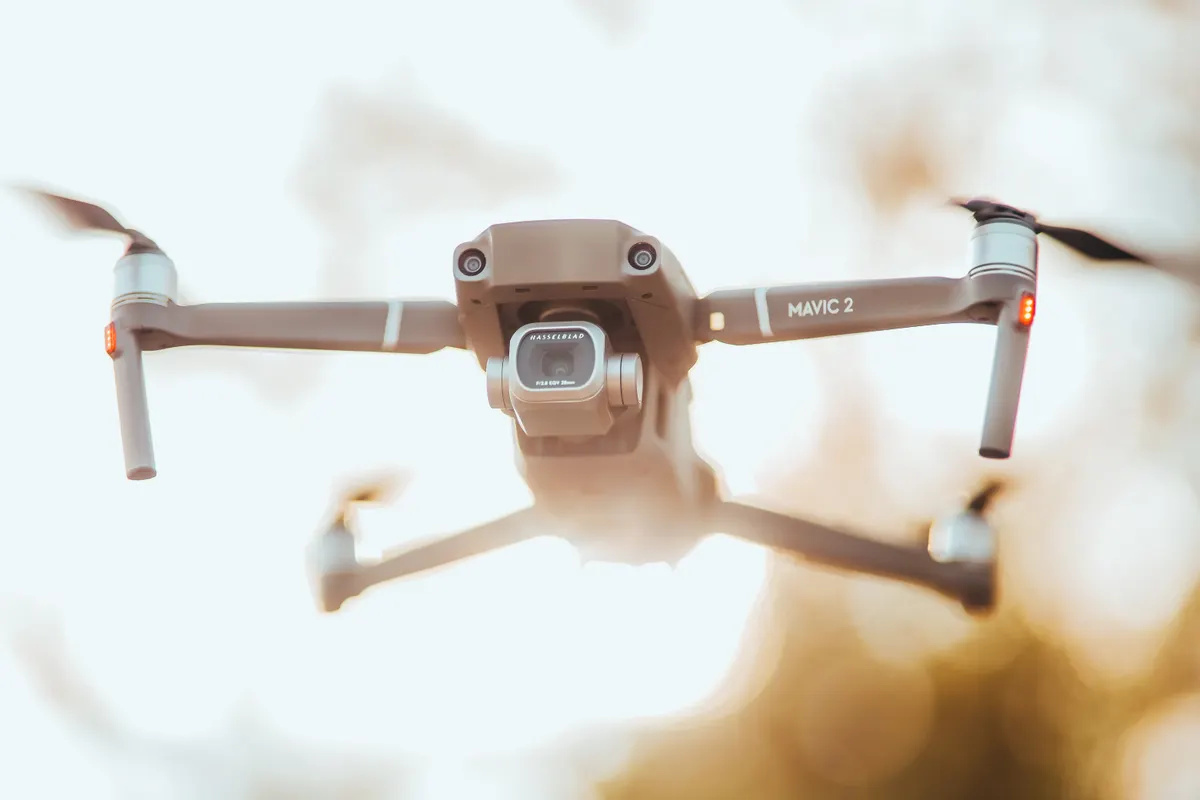

US drone and robot restrictions tightened sharply across July and August, with Washington imposing steep tariffs on imported drones and their components and adding foreign-produced advanced robotic devices to the Federal Communications Commission’s Covered List. The moves are framed as national-security measures, but industry analysts say they raise a harder question: can regulatory barriers contain a manufacturing advantage that is already global in scale?
The Regulatory Architecture Behind the Restrictions
The FCC’s Covered List, maintained under the Secure and Trusted Communications Networks Act of 2019, has expanded rapidly. Foreign-produced unmanned aircraft systems and critical components were added on December 22, 2025. Foreign-produced advanced robotic devices followed on July 28, 2026, after an interagency body convened by the White House determined such devices pose an unacceptable risk to national security.
The robotics determination cited a concrete incident: in April 2025, security researchers identified what the FCC’s National Security Determination described as a potentially pre-installed backdoor on foreign-produced robotic quadrupeds, giving attackers access to the camera feed and full remote control of the device.
On the tariff side, a White House proclamation set a 15% ad valorem tariff on drones and components from the European Union, Japan, South Korea, Switzerland, Taiwan, and Liechtenstein, and a 10% tariff on drones from the United Kingdom, provided the hardware, software, and technology originates substantially from those countries and the United States. The White House fact sheet also noted that President Trump signed two drone-related executive orders in June 2025, one aimed at asserting sovereignty over US skies and another to prioritise American-manufactured drones and restrict foreign influence over the technology. The Bureau of Industry and Security launched a separate Section 232 national-security investigation into UAS imports in July 2025, according to the Bureau of Industry and Security.
The Scale Problem US Drone and Robot Restrictions Cannot Solve
Even as the regulatory perimeter widens, China’s manufacturing lead is compounding. Global humanoid robot shipments rose nearly 300% year-over-year in the first half of 2026, reaching 22,000 units, with the overwhelming majority from Chinese producers, according to Counterpoint Research.
AgiBot led globally with approximately 9,700 units shipped, a roughly 43% share, while Unitree came second with more than 7,000 units and 31% share. Together, the top two controlled around 74% of global shipments. The five largest makers by volume, AgiBot, Unitree, Galbot, UBTECH, and Leju Robotics, were all Chinese and together accounted for 86% of global shipments in that period.
Unitree has since listed on Shanghai’s Sci-Tech Innovation Board (STAR Market), a move Counterpoint described as signalling strong capital market confidence in the sector’s long-term growth. Counterpoint forecasts global humanoid robot hardware sales revenue will reach $2.9 billion by 2027, with Chinese companies positioned to capture the largest share of that figure.
Ankur Saxena, investment director at TDK Ventures, argued the structural gap is not easily bridged by policy. ‘The United States leads in frontier AI, software and semiconductor innovation,’ he said. ‘China leads in manufacturing scale, supply-chain depth and cost.’ His assessment of the policy response was blunt: ‘You cannot sanction your way around a cost curve. You can only out-build it, and America has yet to begin making the decade-long investment that will require.’
Soumen Mandal, principal analyst at Counterpoint Research, added that Chinese humanoid makers are pulling costs down by integrating more of the technology stack internally and drawing on China’s existing manufacturing base. Unitree is developing more components in-house; XPeng, already experienced in chips and vehicle manufacturing, is moving into robotics along similar lines.
Where the Competition Moves Next
US drone and robot restrictions may redirect, rather than reduce, Chinese ambition. Mandal expects humanoid makers to follow a trajectory similar to Chinese electric-vehicle producers: build scale domestically, expand into overseas markets, and eventually establish local production. Chinese robotics companies are already targeting price-sensitive markets with labour shortages across Europe, Southeast Asia, Latin America, and the Middle East. UBTECH, for instance, signed a humanoid robot service agreement with Airbus following CES 2026, according to Counterpoint Research.
The drone market already offers a preview of this fragmentation. Bentzion Levinson, founder and chief executive of Virginia-based drone maker Heven AeroTech, described an industry splitting into two ecosystems: a US-led market built around NDAA-compliant systems, and a China-led market focused on low-cost, high-volume production. Western manufacturers are unlikely to compete effectively at the consumer low end, he said, but could gain ground in long-range autonomous systems for defence and critical infrastructure. ‘The next battleground is over who owns the next-gen energy and payload architecture,’ Levinson said, pointing to battery constraints as a particular pressure point.
Saxena framed the allied response in similar terms: ‘The alternative to China isn’t a purely domestic US supply chain; it’s a diversified allied one.’ Japan, South Korea, and Taiwan each bring relevant strengths in industrial robotics, electronics, and semiconductors respectively, though none can easily displace Chinese components embedded throughout the global robotics supply chain.
The result, across both drones and humanoids, looks less like a clean decoupling and more like a reorganisation of competitive geography: Chinese companies expanding across cost-sensitive global markets, US and allied manufacturers competing where security requirements carry the most weight, and a $2.9 billion revenue prize by 2027 that neither side will concede without a fight.

