Boring Company Series D Closes at $23bn Valuation After UAE-Led $3bn Round

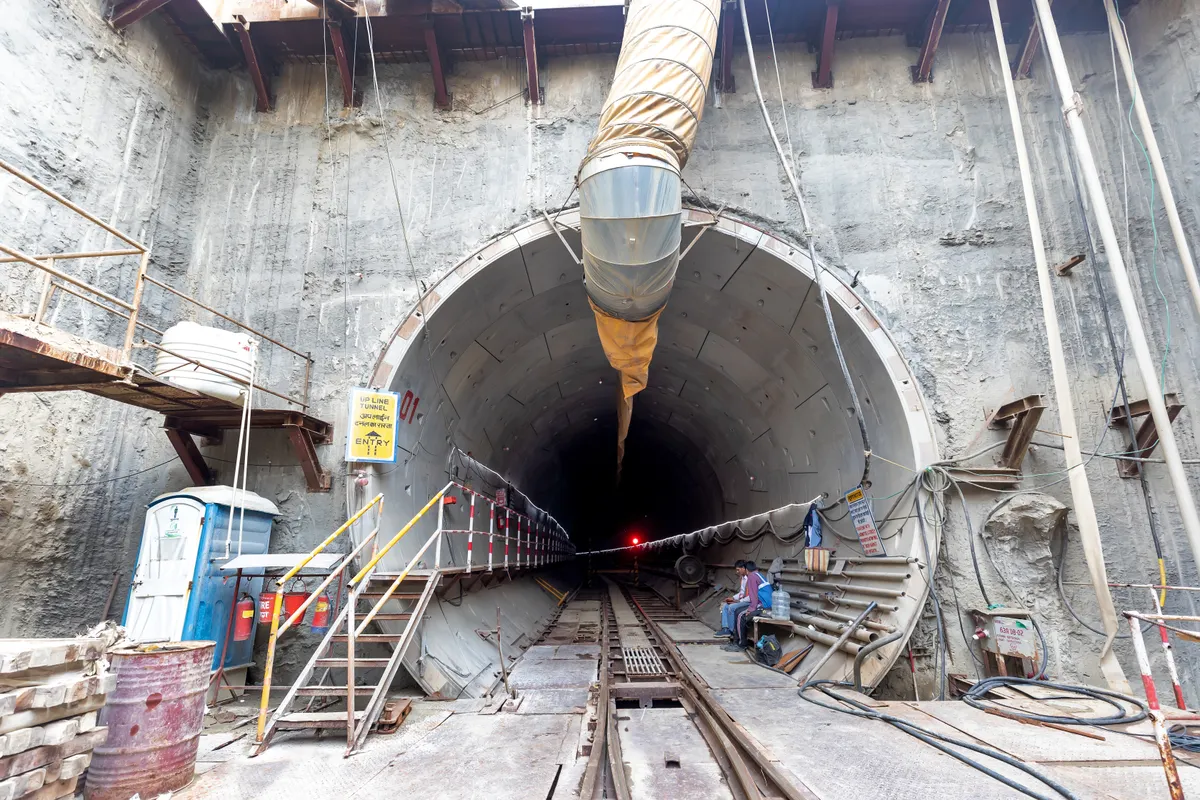
The Boring Company Series D has closed at $3 billion, lifting the tunnel start-up’s valuation to $23 billion and marking its largest fundraise since Elon Musk founded the company inside SpaceX in 2017 before spinning it out a year later.
The United Arab Emirates led the round. Andreessen Horowitz, Sequoia Capital, Human Capital, Vy Capital, and Valor Equity Partners participated alongside them, as did Temasek, Shamal Holding, and Baron Capital, according to Reuters. Several of those names (Valor, Sequoia, Andreessen Horowitz, Temasek, and Baron Capital) previously backed Tesla, SpaceX, and Musk’s 2022 acquisition of Twitter, according to CNBC.
The $23 billion figure represents a roughly fourfold jump from the company’s 2022 valuation of $5.7 billion, which was itself reached after a $675 million funding round that year. The Wall Street Journal had reported in July that The Boring Company was seeking as much as $4 billion; it landed somewhat short of that ceiling but well above any prior raise.
Dubai Loop and the Boring Company Series D Ambitions
The UAE’s lead role is not purely financial. The Boring Company announced that it plans to dig more than 150 kilometres of tunnels in the country. More concretely, the company has signed a construction contract with Dubai’s Roads and Transport Authority for the pilot phase of the Dubai Loop: 6.4 kilometres of tunnel and four stations, with construction planned to begin in late 2026. Precast production for that pilot is already under way.
The partnership agreement with the Roads and Transport Authority was formalised on the sidelines of the World Governments Summit 2026. The Dubai Loop pilot route is projected to serve around 13,000 passengers per day; the full route, if built, is expected to carry approximately 30,000 passengers per day.
That combination of a signed construction contract, an active precast programme, and a government counterparty lends the Middle East expansion a degree of concreteness that earlier Loop announcements sometimes lacked.
From Las Vegas Party Trick to Multi-City Programme
The company’s own account of its recent trajectory captures the distance it claims to have travelled. In announcing the Series D, the company described two years of growth ‘from a single operating Loop system to a multi-city tunneling program, pairing faster machine design with the first hard-rock project, the first international construction contract, and a substantial expansion of Vegas Loop.’
The Las Vegas network, which links hotel casinos and the convention centre, remains the company’s most visible operating asset. A Nashville project, involving a 10-mile underground loop, is now under construction. The company has also completed the Cybertunnel at Tesla’s Giga Texas factory, an industrial tunnel designed to move Cybertruck transfers from the production line to the outbound lot faster than the surface route previously allowed.
The Boring Company’s stated purpose has not changed: to ‘solve traffic’ by moving vehicle travel into a three-dimensional underground network. What has changed is the scale of capital now backing that thesis and the geography it is being asked to prove itself in.
Reuters reports that proceeds from the Boring Company Series D will fund increased hiring across engineering, production, and operations, as well as continued expansion of Loop projects in Las Vegas, Nashville, and Dubai. The company’s declared ambition to dig 150-plus kilometres across the UAE gives investors a clear yardstick. Whether the tunnelling rate and unit economics can support that commitment at scale is the question the next few years of construction will answer.