
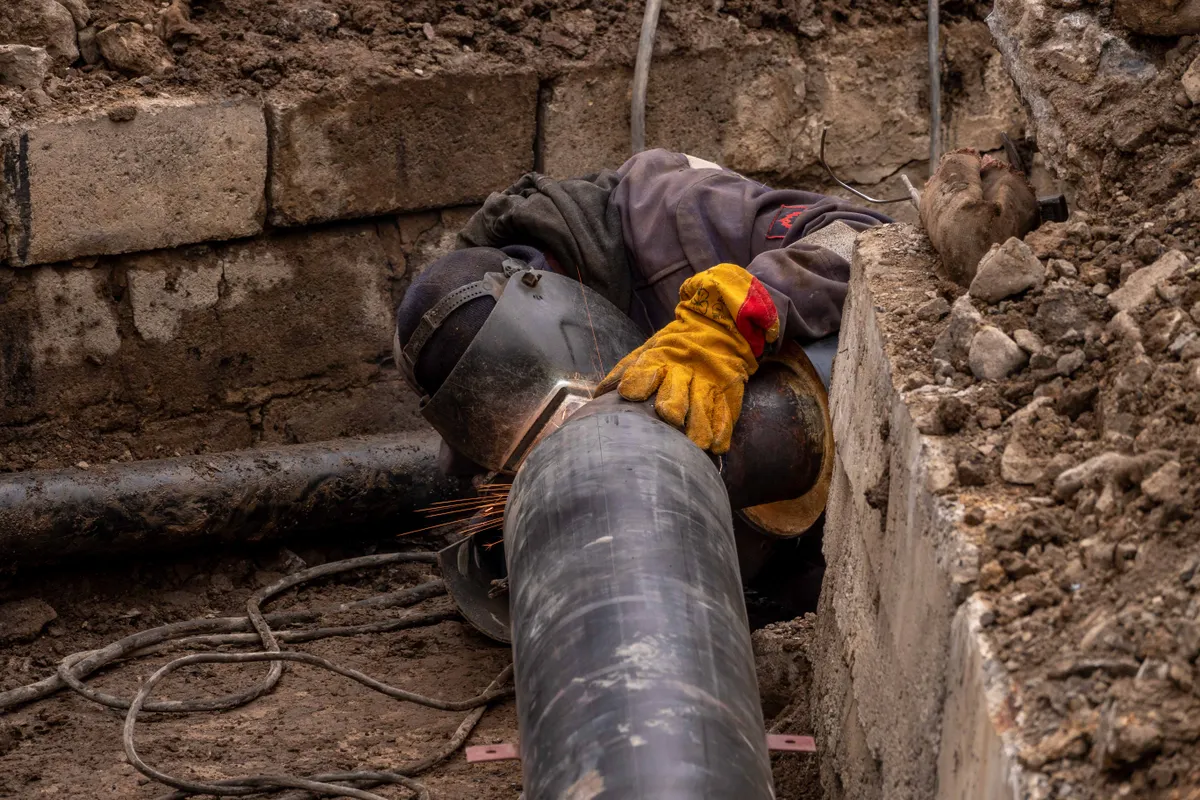

The CivilGrid Series A closed at $26 million, and it was born from a three-day standstill on a PG&E job site that cost $60,000 and left engineers with an unmarked pipe and no idea who owned it. Josh Mackanic, who spent a decade at Pacific Gas and Electric managing more than $500 million in business, according to Engineering News-Record, kept running into the same structural failure: the underground is, for most of the people who build through it, essentially invisible.
Mackanic founded CivilGrid in 2020 to fix that. The San Francisco company aggregates utility asset data, property ownership records, and environmental regulations into a single platform, then sells access to utilities, civil engineering firms, and governments. Its pitch is simple enough that Mackanic can summarise it in five words: ‘Google Maps for what’s underground.’
The Series A round was led by Spark Capital. Additional investors include early-stage funds Afore, A*, Ford Street Ventures, and SNR, alongside Energy Impact Partners, a fund whose limited partners include a number of utility companies. Energy Impact Partners describes CivilGrid’s platform as helping engineering teams ‘design faster, surface conflicts earlier, and avoid costly scoping mistakes across large capital programs.’
What the CivilGrid Series A Will Fund
CivilGrid already counts PG&E, Atmos Energy, Mark Thomas, and GHD among its customers, according to the Series A press release. PG&E, Mackanic’s former employer, has itself become a case study: a company analysis identified $60 million in avoidable paving costs across 1,600 planned gas distribution projects by using the platform. Christine Cowsert, senior vice president of enterprise business and technology modernisation at PG&E, said in a statement that the tools ‘help our teams identify risks earlier, build more efficiently, and avoid unnecessary costs while keeping safety front and center.’
ENR also reported that the platform helped identify a 24-inch water main that was absent from project documents on one job, precisely the kind of subterranean surprise that Mackanic built CivilGrid to prevent. The company claims its software can cut due diligence time by up to 85% and free up 5–10% of project budgets by reducing emergency utility relocations and costly redesign cycles, according to iRecruit’s coverage of the raise.
Alex Finkelstein, Partner at Spark Capital, noted in a statement that CivilGrid’s leadership brings over 70 years of combined experience relevant to infrastructure work. Mackanic’s own biography carries weight there: a mechanical engineering background, a graduate degree, and a decade operating inside one of the United States’ largest utilities.
The Bigger Problem CivilGrid Is Betting On
The company targets the $2.2 trillion U.S. construction market, with Mackanic citing expert calls for more than $3.7 trillion in U.S. infrastructure investment and describing the current moment as ‘a once-in-a-generation period of infrastructure renewal.’ Those numbers provide the scale argument; the daily dysfunction provides the urgency.
Around 200,000 so-called ‘utility strikes’ occur in the United States every year, the product of a fragmented system in which each utility owns its own asset data and rarely shares it with the people excavating nearby. Mackanic told TechCrunch that better visibility into subterranean infrastructure is ‘not a novel idea,’ but that nobody had cracked the problem of collecting, sorting, and securing the data at the scale needed to make it commercially viable. His case for doing it from outside a utility rather than from within comes down to economics: ‘Utilities, they run relatively lean, right? Nobody wants to pay more for their gas bill than they have to.’
CivilGrid has already begun expanding its geographic footprint. As of July 2025, the company had moved into Arizona and Nevada, with customers including WSP, Psomas, and AECOM alongside existing clients, according to a PR Newswire announcement.
Mackanic has his eye on a longer arc. Right now, CivilGrid gives engineers the data to decide where infrastructure should go. The next step, as he described it to TechCrunch, is to move from data provision to automated recommendation and then to permit filing: ‘Once I’ve given them the constraints, it’s not too hard for me to say, “Well, I would recommend that you put the pipe down right here, and oh, by the way, here are the permits you need in order to move to construction on this pipe. Would you like me to file those permits? Okay, let me file those permits.”‘
The permit-filing ambition is the tell. If CivilGrid can thread the data layer into the approval layer, the $26 million round starts to look less like a mapping bet and more like the foundation of an infrastructure-permitting platform at national scale. Mackanic’s timeline for that shift is the number to watch.

