
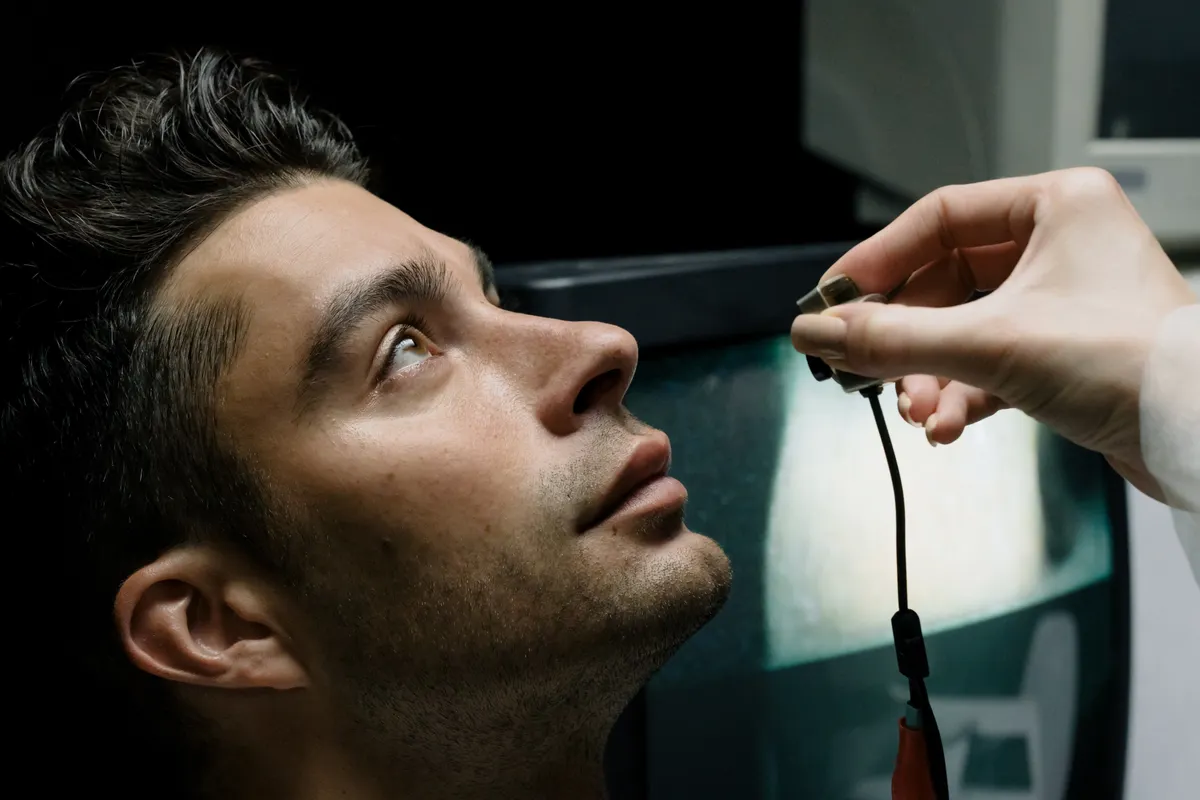

The PRIMA retinal implant has received a CE mark from European regulators, clearing the path for Science Corporation to begin commercial sales of a device that restores functional central vision in patients blinded by age-related macular degeneration (AMD). The authorisation, issued by the notified body DEKRA under the EU Medical Device Regulation, covers commercial availability across 30 European countries.
Max Hodak, Science Corporation’s founder and CEO, offered a particular piece of evidence for what the technology can do. ‘One of our patients in France finished a 300-page novel a little while ago, and sent us the book,’ he said. ‘We have a sketch on the wall [that] one of our patients drew of the Sydney Opera House. There are videos of patients playing crossword puzzles and filling in Sudoku.’
From French Court to European Market: How PRIMA Got Here
The device traces its origins to Pixium Vision, a French company that originally developed the PRIMA technology and whose assets Science acquired in 2024 following acceptance of its bid by a French commercial court and French Foreign Direct Investment approval. That acquisition brought with it three ongoing clinical trials, including a 38-patient pivotal study in Europe.
The FDA’s Breakthrough Device designation for the PRIMA system had originally been granted to Pixium Vision before Science’s acquisition, and Science has since secured an additional Humanitarian Use Device designation from the agency, a second, distinct pathway that could support expedited US review for two rare forms of blindness.
Preparing the PRIMA for the European CE mark was a substantial regulatory undertaking. Science’s PRIMAvera trial Data Safety Monitoring Board voted unanimously on 13 November 2024 to recommend the device for CE mark submission, finding that patient benefits outweighed adverse impact risks. The full regulatory dossier ran to over a thousand pages.
Clinical trial results have been published in the New England Journal of Medicine, showing meaningful improvements in functional central vision, including reading ability, among patients with geographic atrophy due to AMD. Geographic atrophy, the advanced dry form of the condition, affects more than five million people globally, progressively destroying photoreceptors at the centre of the retina.
The PRIMA Retinal Implant and the Road to Market
The procedure itself is an hour-long outpatient surgery that places a small chip at the back of the eye. Patients then wear camera-equipped glasses that transmit a view of their surroundings to the chip. Each device is expected to cost in the hundreds of thousands of dollars; Science and its European medical partners are in discussions with healthcare providers over reimbursement.
Science is laying the groundwork to launch in Germany, where its clinical trials were held, and the company expects the first procedure could take place in September. Future iterations will focus on improved vision capabilities through a new chip design, and on reducing the form factor of the glasses, which currently require an external battery pack.
The commercialisation push comes after Science closed a $230 million Series C funding round earmarked for bringing the PRIMA to market and expanding its clinical trial programme.
Hodak, who co-founded Neuralink before leaving in 2021 to start Science, has been candid about the strategic logic. ‘The thing that the space needs is a company making $100 million a year of revenue,’ he said. ‘There’s this risk that the whole thing enters a winter, and so we think it’s important to build a sustainable business as we develop these longer-term technologies.’
Those longer-term technologies centre on a bio-hybrid brain-computer interface, combining silicon chips with living cells. Science is working with Dr. Murat Günel, chair of Yale Medical School’s Department of Neurosurgery, to develop procedures for human trials of a directly implanted bio-hybrid brain sensor. Hodak framed the vision business plainly: bringing PRIMA to market is ‘the most important thing for the company, because we don’t get to do the bio hybrid stuff long term if you don’t have a great vision business. That’s what’s really financing the rest of it.’
Neuralink’s competing vision device, called Blindsight, received its own FDA Breakthrough Device designation in 2024, but works on a fundamentally different principle: where PRIMA stimulates surviving cells in the retina, Blindsight targets the visual cortex directly. Science, headquartered in Alameda, California, is betting that the retinal approach, backed by peer-reviewed trial data and a now-live CE mark, gets to commercial scale first.
The reimbursement negotiation in Germany will be the first real test of that thesis. If healthcare payors come to the table, September’s anticipated first procedure becomes a commercial milestone, not merely a clinical one.

