

The Zoox commercial robotaxi launch moves from demonstration to revenue on 10 August, after the National Highway Traffic Safety Administration (NHTSA) issued an exemption on 6 August covering all purpose-built Zoox vehicles operating on US public roads. For the first time, Amazon’s robotaxi subsidiary can legally charge passengers for rides.
The exemption matters because Zoox’s custom vehicles carry none of the traditional controls federal law assumes: no steering wheel, no pedals, no rearview mirror. An earlier exemption let Zoox demonstrate the technology; this one permits a commercial fleet of up to 2,500 vehicles for two years, across Las Vegas and San Francisco and into an early-access programme in Miami and Austin.
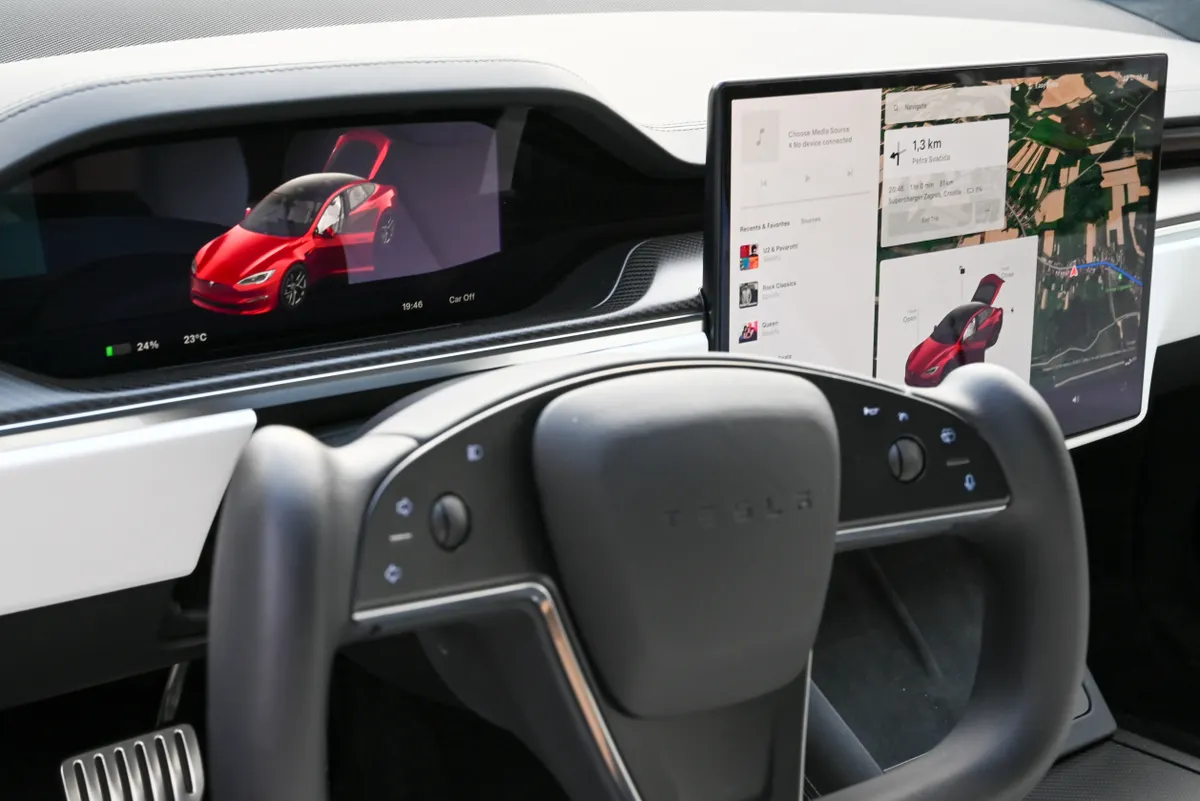
The ruling sets a precedent beyond Zoox. Any autonomous vehicle developer building a purpose-built robotaxi without human controls now has a regulatory pathway. Tesla’s two-seater Cybercab is the most obvious candidate to follow.
A Regulator Opens the Door
The Zoox commercial robotaxi launch is also a test of how quickly NHTSA will process similar applications from competitors. The agency has historically moved slowly on exemptions; this one took years of lobbying and demonstration rides before it arrived.
Meanwhile, the market-level bet on driverless transport keeps growing. Uber chief executive Dara Khosrowshahi told analysts during the company’s latest earnings call that Uber would commit $10 billion ‘over the coming years’ to deploy 120,000 driverless vehicles. The Financial Times had independently pegged the figure at the same level before Khosrowshahi confirmed it.
Capital Pours Into the AV Supply Chain
The biggest funding story of the week sits at the intersection of fleet management and autonomy. Moove, the mobility company founded in Nigeria in 2019 and now headquartered in Dubai, raised $250 million in a Series C round that values the business at $2.1 billion.
Mubadala Investment Company led the round, with Woven Capital and Ion Pacific as co-leads. According to Mubadala’s official announcement, BlackRock, Uber Technologies, and Franklin Templeton also participated, a detail the initial reports did not carry.
Moove’s ambitions have evolved well beyond its origins as an African vehicle-financing fintech. The company now operates 42,000 vehicles across 29 cities in 13 countries, reaches $420 million in annual recurring revenue, and credits acquisitions including Kovi in Brazil and Tokyo Taxi in Japan for part of that growth. It is described as Uber’s biggest global fleet partner.
Its Waymo relationship is the most closely watched piece of the business. Moove already operates Waymo’s fleet in Phoenix, Miami, and Las Vegas, with London still to come. The company plans to buy Waymo robotaxis outright and already owns the robotaxi assets of a second, unnamed autonomous vehicle company. Co-chief executive Ladi Delano intends to use the fresh capital to scale that autonomous fleet management operation, including hiring around 350 people.
Defence manufacturing drew similarly large capital. Hadrian, which builds highly automated factories for US defence programmes, closed a $1.37 billion Series D at a valuation of $7.87 billion. The round’s anchor co-lead was JPMorganChase’s Strategic Investment Group, investing through its Security and Resiliency Initiative. WCM Investment Management, Washington Harbour Partners, Valor Equity Partners, 137 Ventures, and Baillie Gifford led alongside JPMorganChase; Apollo, T. Rowe Price, CapitalG, Andreessen Horowitz, Founders Fund, Lux Capital, Altimeter, Construct Capital, 1789 Capital, and Morgan Stanley Wealth Management also participated.
The round is a step-change in scale. Hadrian’s prior rounds ran to $90 million in March 2022, $117 million in December 2023, and $260 million in July 2025. The new capital will fund additional factories beyond the company’s recently opened Muscle Shoals, Alabama facility, which anchors its expansion of domestic manufacturing capacity for critical defence programmes.
Elsewhere in the deals log: Advanced Electric Machines Group, the UK-based rare-earth-free motor maker, raised £16 million led by Barclays Climate Ventures. French fleet-electrification company Chargepoly pulled in €23 million from Meridiam. Indian electric vehicle startup River closed a $120 million Series C. And Lucid Motors’ new chief executive, Silvio Napoli, outlined a $1.4 billion cost-savings plan alongside delayed timelines for the company’s Cosmos midsize EV, now pushed to the second half of 2027.
The pace of capital formation across robotaxis, fleet management, and automated defence manufacturing points to the same underlying bet: that the infrastructure layer beneath autonomous mobility is where the durable returns will be found. The Zoox fare clock starts ticking on 10 August; investors are already pricing in what comes after the first paying ride.

