
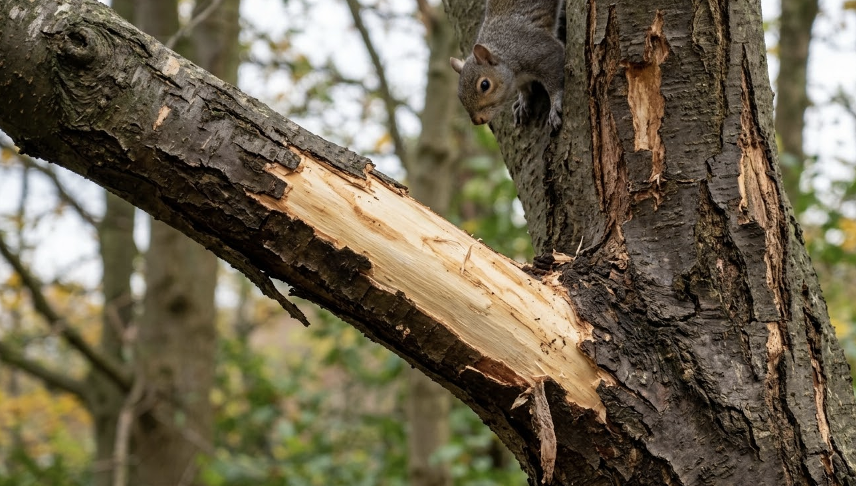

Grey squirrels are highly adaptable animals, capable of living comfortably in both urban gardens and large rural woodlands. Many property owners only become aware of their presence when damage becomes visible, whether that is stripped bark, gnawed wood, or disturbed plants. Yet in most cases the activity has been building quietly for some time before the problem becomes obvious. Understanding how squirrels behave helps explain why damage can appear so suddenly, and why it often catches people by surprise.
Those researching the issue often discover that companies such as Guarantree focus on long-term understanding of squirrel behaviour rather than reacting only when damage becomes visible. This perspective highlights that visible destruction is usually the final stage of a process rather than the beginning of the problem.
Early Activity Often Goes Unnoticed
Grey squirrels spend much of their time moving through trees, fences, and rooftops in search of food and shelter. Because they are quick and agile, their movements can easily go unnoticed, particularly in areas with dense vegetation or mature trees. Even when squirrels are regularly present, they may only be seen briefly or at a distance, giving the impression that sightings are occasional rather than part of a consistent pattern.
In many gardens and woodlands, squirrels begin by exploring new areas gradually. They investigate food sources, nesting opportunities, and routes between trees before establishing a regular presence. During this stage there may be very few obvious signs that they have adopted the area as part of their territory.
Why Visible Damage Appears Later
The type of damage most commonly associated with grey squirrels, such as bark stripping or chewing timber, typically develops after they have already become comfortable in the environment. Once squirrels identify a reliable food source or suitable habitat, their activity becomes more frequent and more concentrated.
At this point, repeated behaviour begins to leave visible marks. Bark stripping, for example, often occurs when squirrels feed on sap beneath the bark of certain tree species. Because the behaviour is repeated over time, the damage can appear suddenly even though the squirrels have been active in the area for weeks.
A similar pattern can occur around buildings. Early exploratory visits may involve squirrels investigating rooflines, loft spaces, or outbuildings. Only later, when they begin chewing entry points or nesting materials, does the activity become noticeable.
The Difference Between Sightings and Established Presence
Seeing a squirrel once or twice does not necessarily indicate a problem. Grey squirrels travel widely and may simply be passing through an area while moving between feeding sites. However, repeated sightings in the same location often suggest that the animal has incorporated that space into its regular territory.
This distinction is important because occasional visitors rarely cause significant damage. Problems usually arise when squirrels return repeatedly to the same environment. Regular feeding opportunities, shelter, and quiet nesting areas can all encourage them to remain in one place for longer periods.
Because squirrels are opportunistic, areas with mature trees, accessible food sources, or safe nesting sites tend to attract more sustained activity. Over time, this continued presence leads to the patterns of damage that people eventually notice.
Why Damage Feels Sudden Even When It Is Not
One of the main reasons squirrel damage appears to happen overnight is that the early stages are subtle. Small amounts of bark disturbance or light gnawing can be difficult to spot, particularly in larger gardens or wooded areas. By the time damage becomes clearly visible, the activity responsible for it may have been taking place for quite some time.
Weather and seasonal conditions can also make the damage appear more dramatic. Once bark is stripped from a tree, exposure to rain and wind can quickly worsen the appearance of the affected area. Similarly, damage to timber structures may only become noticeable after repeated chewing weakens the surface.
Understanding these patterns helps explain why people often feel that squirrel problems arise without warning. In reality, the behaviour that leads to visible damage usually develops gradually as squirrels explore, settle, and return repeatedly to the same environment.
Recognising that damage often reflects a longer period of unnoticed activity encourages a more informed perspective on how grey squirrels interact with gardens and woodland spaces. Awareness of these patterns helps property owners better understand the nature of the problem when it finally becomes visible.

