

The garage remains intact. The simple single-story home at 2066 Crist Drive in Los Altos, California, is located in a peaceful suburb south of San Francisco. It is not the type of place that makes its past obvious to passing cars. It is where Steve Jobs grew up. And that’s where Jobs and Steve Wozniak established Apple Computer in the spring of 1976.
Ronald Wayne was there for a short time, helping to draft the original partnership documents in his meticulous handwriting before selling his 10% share for $800 twelve days later. Today, Wayne’s portion would be worth several hundred billion dollars. The majority of what you need to know about how unpredictable the next fifty years would be can be found in one footnote, which is among the more subtly devastating in American business history.
On April 1, 2026, Apple commemorated its 50th anniversary with the unique blend of refinement and tenderness that has come to represent moments it wants you to remember. Paul McCartney played at Apple Park in a video that Tim Cook put on X that goes backward through the company’s product history, starting with the MacBook Neo in 2026 and going back, product after device, to the Apple I. Depending on how you feel about the firm, the pyrotechnics that were visible from the surrounding roadways during the “Live and Let Die” climax are either the proper or terrible thing to do on your birthday.
Important Information
| Field | Details |
|---|---|
| Founded | April 1, 1976 — Los Altos, California; garage of Paul and Clara Jobs at 2066 Crist Drive |
| Founders | Steve Jobs, Steve Wozniak, Ronald Wayne — Wayne sold his 10% stake for $800; it would be worth hundreds of billions today |
| First Product | Apple I — hand-assembled circuit board; 200 units sold at $666.66 each |
| CEO (2026) | Tim Cook — succeeded Steve Jobs in August 2011; sent an internal employee memo on April 1, 2026 titled “Here’s to the Next Fifty Years” |
| Revenue (FY 2025) | $416 billion |
| Net Income (FY 2025) | $112 billion |
| Active Devices Globally | 2.5 billion as of January 2026 |
| Market Cap (Peak) | At times exceeding $3.5 trillion — the highest market capitalization in history |
| 50th Anniversary Events | Rolling retail store concerts worldwide throughout March 2026; Apple Park finale on April 1 featuring Paul McCartney performing, including “Live and Let Die” with pyrotechnics; Tim Cook toured Apple’s archive vault with Wall Street Journal, viewing items including the original Apple I patent, early iPhone prototypes, and the Apple Watch he wore onstage at its announcement |
| Anniversary Campaign | “50 Years of Thinking Different” — Cook’s open letter published on apple.com; anniversary video posted on X tracing products from Apple I (1976) to MacBook Neo (2026) |
| Cook’s Favorite Apple Moment | The iPhone launch — stated in Wall Street Journal 50th anniversary interview at Apple Park |
During his tour of Apple’s archive vault with the Wall Street Journal, Cook claimed to have seen things he had never seen before, such as an early iPhone prototype, the Apple Watch he wore on stage during the device’s initial announcement, and the original Apple II patent. He claimed that his favorite time at the firm was still the introduction of the iPhone. Considering what has transpired since then, that says something.
The remarkable financial record—$416 billion in sales in fiscal year 2025, $112 billion in net profits, and a market valuation that has occasionally surpassed $3.5 trillion, the greatest in human history—is not what makes the fifty-year tale worthwhile. The most intriguing aspect is how frequently the business appeared to be ended before it wasn’t. In 1997, Apple came dangerously close to going bankrupt. In 1985, Jobs lost a power battle with CEO John Sculley and was fired by the board.
The business launched the Newton personal digital assistant, the Pippin game console, and a number of forgettable items during Jobs’ twelve-year absence, most of which are only recognized by those who had to defend them at the time. Apple had ninety days of operating cash left when Jobs returned through a merger with NeXT. It had the iMac within two years. It had the iPod within five. The company’s history is more of a succession of near-misses and recoveries that its own leaders could not always anticipate than a straight upward trajectory.
The pivot is the iPhone. Jobs began his presentation on January 9, 2007, at the Moscone Center in San Francisco, assuring the audience that he was going to show them three things: a revolutionary mobile phone, a breakthrough internet communicator, and a widescreen iPod with touch controls. Before disclosing that they were a single gadget, he said each three times. About thirty seconds before he really stated it, the audience knew what was going on.
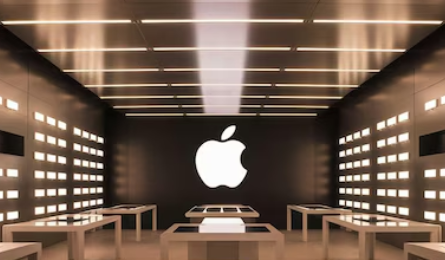
As the iPhone’s market share increased from zero to something that completely changed the communications industry, some rivals in the mobile phone business at the time dismissed it (the co-CEO of RIM was quoted as saying it would not appeal to business customers). As a result, their companies saw a decline. The iPhone continued to be Apple’s principal source of income by 2025.
When Jobs’ health prevented him from continuing to lead, Tim Cook took over in August 2011. In October of that year, Jobs passed away. In the years since, Apple has added products to its portfolio that Jobs had not created, including the Apple Watch, AirPods, a services division that makes tens of billions of dollars a year, and the start of an AI strategy that Cook is now characterizing as the company’s next defining chapter.
The transition was handled more steadily than many analysts had anticipated. It’s still uncertain if Apple’s more conservative, privacy-focused, and hardware-integrated approach to AI will turn out to be the best choice at the appropriate moment. The business has previously made timing mistakes. It has also been correct about things that no one else was.
The contrast between what was in that Los Altos garage and what Apple is today is subtly moving as you watch Cook examine the archive vault on camera, holding early prototypes and reading documents he admitted he had never seen. Not exactly victorious. It’s more akin to the experience of gazing at an old photo and finding it hard to accept that the person in it evolved into the person they are today.

