
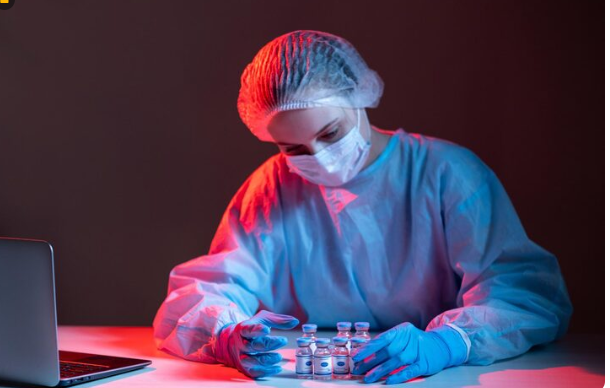

Every scientific advancement has a point at which the seemingly impossible becomes just unlikely. That moment came for Insilico Medicine researchers when their AI showed them a chemical structure that, to put it mildly, didn’t look right. Nothing in the current chemical databases matched the shape. The binding processes didn’t seem to make sense. Staring at the structure on their screens, human chemists first wrote it off as a hallucination, the kind of mistake AI systems sometimes make when they stray too far from training data. They then put it to the test in the lab. It was flawless.
The medication in question is intended to treat idiopathic pulmonary fibrosis, a lung condition that results in gradual breathing difficulties and scarring. Current treatments simply slow the disease’s course; there is no cure. Neither a known molecule nor an existing substance was altered by Insilico’s AI. It created a completely new chemical entity that has never been found in nature or in the libraries of any pharmaceutical companies. Ten years ago, when similar discoveries required years of meticulous laboratory work, drug experts would have laughed at the AI’s 46-day timeframe.
AI-Designed Drug Breakthrough: Key Information
| Category | Details |
|---|---|
| Company/Institution | Insilico Medicine, MIT researchers |
| Technology | Generative AI (GANs, reinforcement learning) |
| Target Disease | Idiopathic pulmonary fibrosis (lung disease) |
| Discovery Time | 46 days (vs. years traditionally) |
| Molecule Type | Completely novel chemical entity (de novo design) |
| Clinical Status | Reached clinical trials in 18 months |
| Notable Example | Halicin (AI-designed antibiotic) |
| Key Innovation | AI creates structures not in any existing database |
| Founded | Insilico Medicine (2014) |
| Reference | Insilico Medicine |
Not only is the speed impressive, but the method’s uniqueness is as well. In traditional drug discovery, millions of existing molecules are screened, variants are tested, and the hope is that something will stick. It is costly, time-consuming, and limited by human intuition on potential compounds. All of that was avoided by the AI. It investigated billions of possible chemical structures and assessed each one’s chance of binding to the target protein using generative adversarial networks and reinforcement learning. Because humans have cognitive biases about what “good” medication molecules should look like, the consequence was a molecule that no human could have imagined.
If you were to go through any pharmaceutical research center, you would find experts laboriously validating chemicals while crouched over mass spectrometers and chromatography equipment. The procedure is laborious, lengthy, and prone to dead ends. From concept to human testing, Insilico’s AI-designed chemical entered clinical trials in 18 months—less time than most medications need to pass preclinical safety testing. Not only is that acceleration remarkable, but it has the potential to revolutionize diseases for which there are now no cures.
The point is further shown by another case. Halicin, an antibiotic that kills drug-resistant bacteria through a mechanism entirely different from traditional antibiotics, was discovered by MIT researchers using comparable AI approaches. Halicin is effective against pathogens that have developed resistance to conventional medications because it interferes with bacterial energy generation rather than focusing on cell walls or protein synthesis. Human chemists would not have given the structure top priority for testing because it is so peculiar. Convention didn’t matter to the AI. It was concerned with outcomes.
Observing these developments gives us the impression that the production of medications is undergoing a major change. Human limitations, such as our incapacity to visualize intricate molecular interactions, our propensity to rely on well-known chemical scaffolds, and our incredibly delayed testing of theories, have been impeding pharmaceutical research for decades. These restrictions don’t apply to AI. It can explore chemical realms that humans wouldn’t think to investigate, take into account structures that seem strange, and iterate at speeds that seem glacial in comparison to traditional study.
However, the technology also brings up unsettling issues. What will happen to the thousands of medicinal chemists whose knowledge has shaped the industry for generations if AI is able to create medications that are more effective than those created by humans? It’s possible that the role would change from building chemicals to validating AI concepts, but that would require a different set of skills. In an effort to incorporate AI tools without upsetting the scientists who founded the sector, the pharmaceutical industry is already struggling with this conflict.
Another level of intricacy is revealed by the validation procedure for Insilico’s molecule. Researchers had no idea if the AI-designed molecule would be effective when they originally produced it. Drugs created by humans have stories behind them, such as why a particular structure should attach to a particular receptor or why certain changes increase stability. None of that was included in the AI’s molecule. It only said that the framework will work using mathematical confidence scores. It took a leap of faith to believe that claim, and it’s still unknown how comfortable scientists will be making that jump time and time again.
The last test will come from clinical trials. Human testing of the AI-designed medication for pulmonary fibrosis is still ongoing, so it’s possible that unanticipated side effects or issues with its efficacy will surface. While AI can anticipate molecule binding with remarkable accuracy, it is still far harder to predict how a medicine would act in live things. Although the models are getting better, biology is messier than chemistry, and this messiness has caused many promising molecules to fail.
Unquestionably, AI is pushing the limits of what is pharmacologically feasible. Diseases that were previously thought to be “undruggable” due to the lack of appropriate targeting molecules are now back on the table. If AI can create cures in weeks rather than years, rare ailments that don’t warrant significant R&D expenditures might become feasible. There could be a significant change in the economics of drug development, which could result in cheaper costs and faster schedules overall.
As this technology advances, it’s difficult to avoid feeling a little dizzy. For ages, the process of finding new drugs has been essentially human—chemists combining substances, doctors monitoring effects, and researchers gradually expanding their understanding. All of a sudden, machines are coming up with solutions that people had no idea were conceivable. The molecules function. The trials are moving forward. Algorithms exploring chemical regions we never would have imagined visiting are writing the future of medicine. We’re just starting to pose the questions that will determine whether that future is better than the history we’re leaving behind.

