
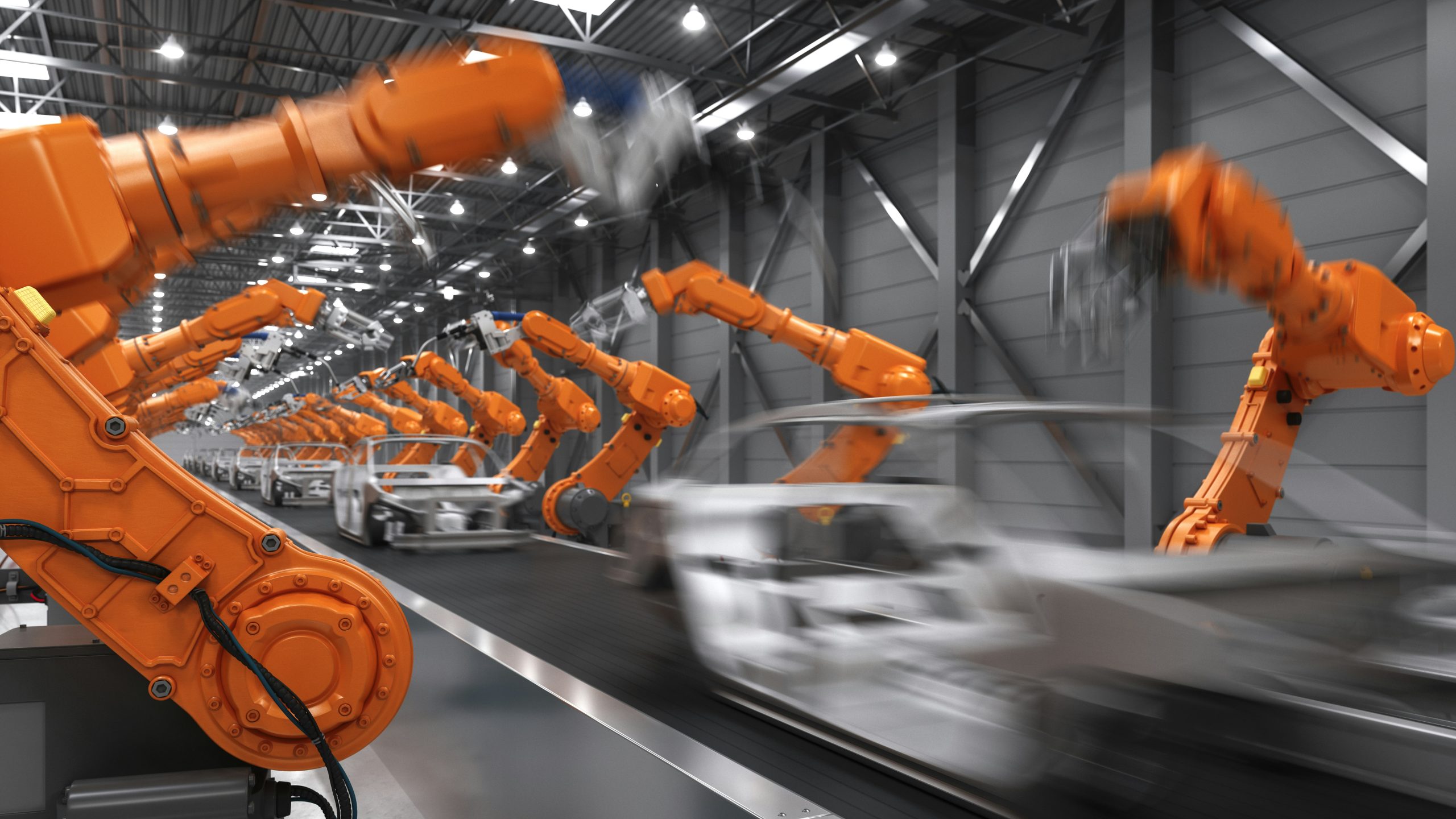

Advanced motion control is the discipline of commanding machines to move with precision, stability, and intelligence under real production conditions.
If you have ever watched a robotic arm place components at high speed without hesitation, or a CNC machine hold tight tolerances for an entire shift, you have already seen its impact on productivity.
Manufacturers today face rising pressure from shorter lead times, greater product mix complexity, and higher energy costs.
In many factories, productivity no longer depends on raw machine speed but on how well motion remains controlled as loads change and conditions drift.
This article explains what advanced motion control really means, how its core components work together, and why closed-loop systems dominate modern automation.
You will also see the benefits, the limitations, and how to choose a motion control system that improves throughput without sacrificing reliability.
What Is Advanced Motion Control?
Advanced motion control is a control approach that coordinates force, speed, and position to produce accurate and repeatable mechanical movement.
It differs from basic motion by actively correcting errors rather than assuming movement happened as commanded.
Motion control systems manage trajectories that balance acceleration, velocity, and jerk to protect quality while pushing output.
These trajectories matter because uncontrolled acceleration creates vibration, heat, and wear that quietly erode productivity.
When engineers ask what motion control is, the practical definition is simple.
Motion control is the capability to command movement and verify that the commanded movement occurred within defined limits.
That verification step is what makes motion control advanced.
Feedback, tuning, and diagnostics turn movement into measurable performance instead of guesswork.
Why Is Motion Control Critical to Industrial Productivity Today?
Motion control is critical because productivity depends on cycle time, scrap rate, and uptime, and each one is directly affected by motion quality.
Machines can run fast, but unstable motion converts speed into defects and unplanned stops.
Modern factories also run more product variants on shared equipment.
This increases dynamic loads and synchronization demands across axes, conveyors, and robots.
Advanced motion control enables machines to operate closer to their physical limits without sacrificing accuracy.
It improves predictability because disturbances are corrected instead of accumulating.
As automation density increases, motion control becomes a foundational productivity technology rather than a niche specialty.
What Are the Core Components of an Advanced Motion Control System?
An advanced motion control system is an integrated set of hardware and software that converts commands into controlled mechanical movement.
Performance depends on how well these components interact under load.
Weak links often manifest as vibration, drift, or tuning instability, reducing throughput without triggering obvious alarms.
Thinking in terms of control loops helps identify where performance is lost.
Below are the core components that determine system behavior.
Each one plays a specific role in productivity, accuracy, and stability.
- Controllers
- Servo drives
- Motors
- Feedback devices
- Communication networks
Motion Controllers
A motion controller is the computing unit that plans trajectories and coordinates multiple axes as a unified system.
It calculates setpoints, manages synchronization, and enforces safety and performance limits.
Controllers reduce cycle time by optimizing motion profiles and minimizing settling behavior.
They also protect quality by filtering noise and compensating for predictable disturbances.
In high-performance applications, the controller acts as the conductor that prevents speed and accuracy from conflicting.
Axis count, update rate, diagnostics, and PLC integration matter more than raw processing power.
Servo Drives
A servo drive is a power electronics device that converts control commands into regulated current and voltage for a servo motor.
Torque is produced by current, so the current-loop quality defines motion quality.
Servo drives also process feedback, handle protection, and store tuning parameters.
Poor tuning leads to vibration and heat, while good tuning enables faster acceleration without instability.
Many engineers evaluate AMC servo drives because servo motor drives depend heavily on bandwidth, current stability, and diagnostic visibility.
A well-designed drive shortens commissioning time and allows the machine to recover smoothly from transient faults.
Servo Motors
A servo motor is an electric motor designed for precise control of speed, torque, and position within a closed-loop system.
It enables fast acceleration, accurate holding, and consistent force output.
Common servo motor types include brushless AC and brushless DC designs.
Selection depends on torque density, speed range, environment, and duty cycle.
A servo mechanism is a control arrangement that uses feedback to correct motion errors.
This measure-compare-correct loop is why servo systems outperform open-loop approaches in demanding production environments.
Feedback Devices (Encoders and Sensors)
A feedback device is a measurement component that reports actual position or speed back to the control system.
Encoders and sensors provide the data that enable real-time correction.
Feedback quality affects repeatability, surface finish, and smoothness.
Poor mounting or resolution can force aggressive tuning, which increases vibration.
High-quality feedback improves diagnostics as well.
When the system can clearly see motion, it can detect misalignment or overload before downtime occurs.
What Are the Main Types of Motion Control Technologies Used in Industry?
Motion control technologies are categories of control approaches that define how motion is commanded and verified.
The two dominant types are closed-loop and open-loop motion control systems.
The difference matters because real machines experience friction, wear, and thermal change.
Assumed motion rarely matches actual motion for long.
Closed-loop systems correct errors continuously.
Open-loop systems assume success and fail silently when conditions change.
Closed-Loop Motion Control Systems
A closed-loop motion control system is a technology that uses feedback to correct the difference between commanded and actual motion.
It is widely used because it maintains accuracy under variable loads.
Closed-loop control improves repeatability and reduces scrap.
It also supports advanced behaviors such as force limiting and disturbance rejection.
The working principle is simple.
Command, motion, measurement, correction, repeat continuously.
This loop is why closed-loop systems dominate robotics, CNC machining, and precision assembly.
Open-Loop Motion Control Systems
An open-loop motion control system is a technology that commands motion without verifying results through feedback.
It is usable when loads are predictable and precision demands are modest.
Open-loop systems are cost-effective and straightforward.
However, lost steps and drift often go undetected until quality issues appear.
Because errors are not corrected, open-loop control struggles in high-value or high-variability production.
What Are the Key Benefits of Advanced Motion Control for Manufacturers?
Advanced motion control delivers higher throughput, better accuracy, and more stable uptime.
These gains come from eliminating wasted motion and correcting disturbances early.
The benefits compound across shifts and product mixes.
What begins as smoother motion becomes lower scrap and fewer interruptions.
Below are 5 primary benefits manufacturers experience.
Each one maps directly to a productivity metric.
- Increase throughput by reducing settling time and enabling higher acceleration
- Improve precision and repeatability by correcting drift and load variation
- Reduce energy consumption through optimized torque demand and smoother profiles
- Minimize downtime using diagnostics and stable tuning
- Enable scalable automation across more axes and coordinated systems
What Are the Limitations and Challenges of Advanced Motion Control Systems?
Advanced motion control increases cost, complexity, and integration effort.
These challenges are manageable but must be planned for.
Most issues arise at interfaces.
Mechanical stiffness, grounding, and feedback alignment matter as much as electronics.
Below are 4 common limitations that affect deployment.
Addressing them early prevents costly redesigns.
- Increase upfront cost through high-performance hardware
- Require specialized expertise for tuning and integration
- Add system complexity across networks and parameters
- Demand careful mechanical and electrical integration
Which Industries Benefit Most from Advanced Motion Control?
Advanced motion control benefits industries where speed and precision must coexist.
It is essential wherever repeatability affects yield.
Automation density amplifies its value.
More axes mean more opportunities for error without correction.
Below are 6 industries that consistently benefit the most.
- Manufacturing and machining
- Robotics and automation
- Packaging and material handling
- Semiconductor production
- Energy and power systems
- Medical device manufacturing
How Does Advanced Motion Control Improve Energy Efficiency?
Advanced motion control improves energy efficiency by delivering only the torque required at each moment.
Smooth profiles reduce vibration and wasted braking energy.
Aggressive tuning increases heat and electrical loss.
Optimized motion reduces peak currents and average power draw.
Energy savings accumulate over long production runs.
They also reduce thermal stress on components.
How to Choose the Right Motion Control System for Your Application
Choosing the right system starts with matching performance needs to the control architecture.
The goal is stability without fragile tuning.
There are 5 practical steps to follow.
Each step reduces risk.
- Define performance requirements
- Evaluate load and motion profiles
- Select control architecture
- Ensure system compatibility
- Plan for scalability and support
Supplier consistency matters more than datasheets suggest.
Using third-party factory audit services supports supplier capability assessment and reduces integration risk.
How Much Do Advanced Motion Control Systems Cost?
Advanced motion control systems range from several thousand USD to tens of thousands USD, depending on the scope.
The total cost includes integration and downtime risks.
Cheap hardware can increase engineering time.
Stability often costs less in the long run.
Below are 5 cost factors that shape total ownership.
- System complexity
- Performance requirements
- Hardware quality
- Software capabilities
- Integration and commissioning
What Is the Future of Motion Control in Industrial Productivity?
The future of motion control is adaptive and data-driven.
Systems will increasingly predict faults rather than react to them.
AI-assisted tuning and analytics will reduce commissioning time.
Motion, vision, and sensing will converge.
Deterministic networks will improve coordination across cells.
Advanced motion control will become accessible to mid-sized manufacturers, not only large plants.
Conclusion
Advanced motion control is a productivity technology because it turns movement into a controlled process.
Stable motion reduces scrap, shortens cycles, and simplifies maintenance.
The greatest gains come from system-level thinking.
Controllers, drives, motors, feedback, and integration discipline must align.
When implemented correctly, motion control delivers a durable competitive advantage.
It transforms productivity from an aspiration into measurable daily output.

