
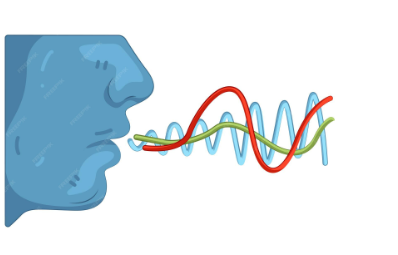

It seems complicated when you hear a horse whinny for the first time. In the air, it splits and extends, starting with a low, throaty vibration and then becoming sharper, even piercing. Riders and ranchers heard that sound as a single expression for centuries. A salutation. A demonstration. A call from a different pasture. However, a horse’s whinny isn’t just one sound, according a ground-breaking study that was published in Current Biology in February 2026.
Horses are the first large mammals known to produce simultaneous dual vocal signals—a high-frequency “whistle” produced independently within the larynx and a low-frequency “song” produced by vibrating vocal folds—according to research led by Romain Lefèvre and senior author Elodie Briefer. Biphonation is the term for the phenomena. Additionally, it was formerly believed to be uncommon in large animals.
| Category | Details |
|---|---|
| Study Title | Biomechanics of Equine Biphonation |
| Journal | Current Biology (Feb 2026) |
| Lead Researcher | Romain Lefèvre |
| Senior Author | Elodie Briefer |
| Institutions | University of Copenhagen; University of Vienna |
| Key Discovery | Horses produce simultaneous low-frequency “song” and high-frequency “whistle” |
| Reference |
Scientists isolated frequencies that seemed to defy expectations by playing back recordings of stallions whinnying in a silent setting using acoustic panels. Around 200 Hz was the low tone, which is comparable to the size of a horse’s vocal folds. That was logical.
The high tone, which frequently exceeded 1,000 Hz, didn’t. Generally speaking, large creatures make low noises. Slower vibrations are produced by larger vocal systems. That’s the fundamentals of acoustics. Lions roar, elephants rumble. It turns out that the rule is broken by horses.
What ranchers have long referred to as “emotion” in a whinny may have been layered communication, two audio channels working simultaneously.
Researchers inserted endoscopic cameras into ten stallions’ noses to reveal the process. During a whinny, the video showed muscles contracting around the larynx, restricting the glottis and producing a high-velocity air jet. Under ideal circumstances, that jet acts as an integrated whistle.
Scientists used isolated larynges from dead horses to pass air through in ex vivo tests. The dual tones appeared when the air flowed normally. In order to verify its aerodynamic origin, the high-frequency component migrated higher when they substituted helium for air in a traditional acoustic test.
It has nothing to do with the vocal cords. Airflow was the cause. Hearing a mare cry to her foal while standing next to a pasture fence makes one realize that something more complex is going on than we initially thought.
According to the study, the low-frequency “song” probably conveys haste or passion. On the other hand, the high-frequency whistle might indicate emotional valence, or whether the sensation is pleasant or upsetting.
One breath, two messages. That has a certain elegance to it. Energy is rarely wasted in evolution. Layered messages could mean survival for a social species like horses that live in open environments where distance is important.
The whistling element might help the call travel farther—through tall grass, across wind, and across flowing water. Members of the herd that may otherwise miss it are reached by the increased pitch, which cuts through background noise.
It’s interesting to note that close relatives like zebras and donkeys do not have this high-frequency whistle. However, Przewalski’s horses also possess the capacity, indicating a distinct evolutionary branch.
The origin of this adaptation and the reasons why some horses kept it while others did not are still unknown. There is no doubt that this finding will change our perspective on communication in huge mammals.
The study of bioacoustics has frequently concentrated on smaller animals, such as birds, bats, and rodents, where sophisticated sound generation is more prevalent. It shocks preconceptions to see such complexity in an animal as physically intimidating as a horse.
This also has a more general cultural component. For thousands of years, horses have been a part of human history, pulling plows, carrying troops, and dashing across dirt roads. However, scientists are just now starting to comprehend the mechanics underlying one of their most identifiable noises.
You become aware of how much goes on behind the scenes of what appears to be a straightforward call when you watch slow-motion video of the larynx shrinking and muscles contracting in precise synchrony.
It’s difficult to overlook the analogy to human communication. We also use pitch and tone to convey subtleties, layering emotion over sound. Horses might be performing a strikingly comparable action, albeit with a different anatomy.
The results could be useful in veterinary medicine, aiding in the diagnosis of laryngeal problems or improving the interpretation of stress signals in horses.
Beyond the clinical, though, there’s a poetic quality to this. A whinny is more than just a call when it rises across a field at dusk. It’s a duet performed by tissue and air, by whistle and vibration.

