
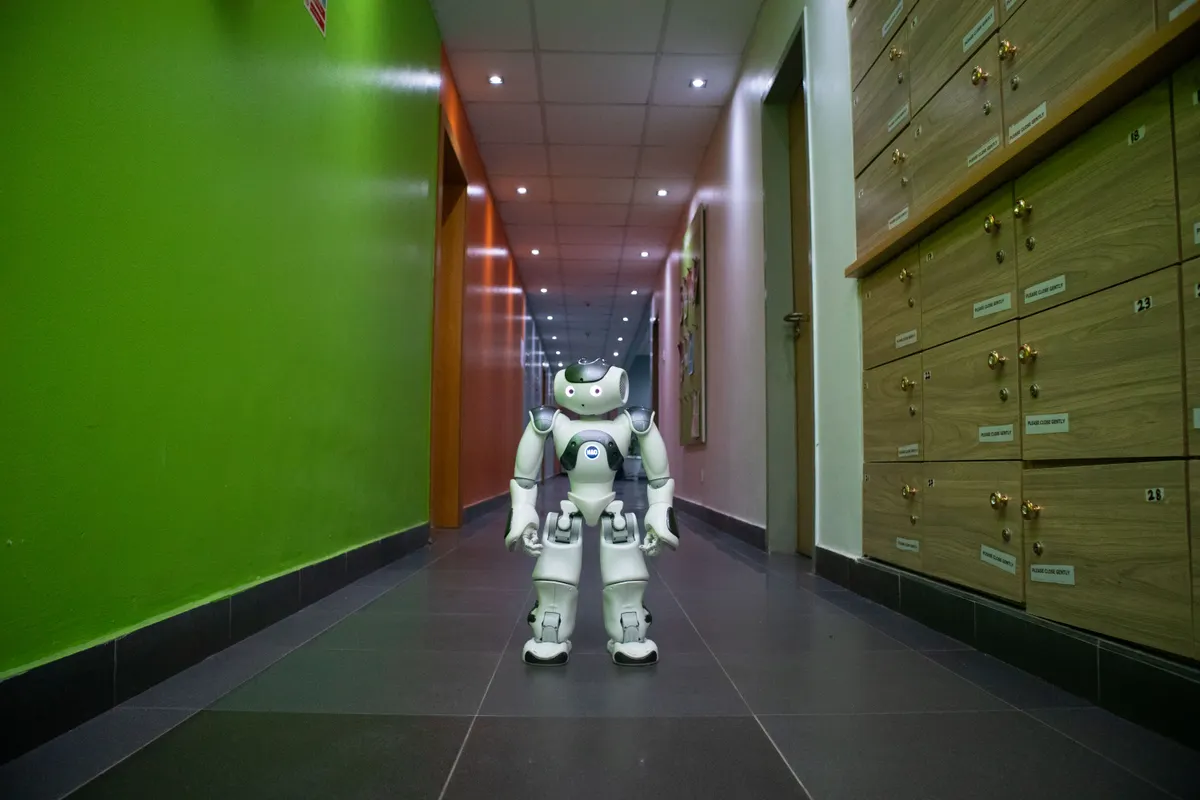

The Agility Robotics SPAC merger with Churchill Capital Corp XI will, if it clears shareholder approval and SEC review, make the Salem, Oregon-based company the first pure-play humanoid robotics business to trade on a major North American exchange, under the ticker AGLT. The deal values Agility at around $2.5 billion and is expected to raise more than $620 million in gross proceeds.
The capital structure has two components. Churchill XI’s trust account holds approximately $420 million, assuming no redemptions. A separate PIPE of approximately $200 million in domesticated SPAC common stock, priced at $10.00 per share and led by Foxconn, is set to close immediately before the merger, according to a Schedule 13D/A filing with the SEC. New shareholders receiving stock in the merger face a 180-day transfer restriction unless Agility trades at or above a $12.00 volume-weighted average price for 15 consecutive trading days. Insider participation in the deal is noted at over $60 million, per a Form 425 investor presentation.
Agility Robotics SPAC Merger in a Sector Awash with Private Capital
The timing is deliberate. AI2 Robotics recently raised roughly $735 million at a nearly $3 billion valuation. Apptronik closed a $935 million round valuing it at more than $5.5 billion. Figure AI self-reported a $1 billion Series C at a $39 billion valuation. Against that backdrop, the Agility Robotics SPAC merger offers something none of those rounds do: public-market access to humanoid robotics for retail investors, alongside an unusually candid look at the finances of a sector where most competitors guard their numbers closely.
Peggy Johnson, Agility’s CEO and formerly executive vice president of business development at Microsoft, where she helped engineer the $26 billion acquisition of LinkedIn, is measured about what the listing promises. She declined to give forward-looking financial guidance during an interview with TechCrunch and declined to disclose the robot’s bill of materials. That figure has since emerged from a Form 425 SEC filing: the current bill of materials for Digit is approximately $125,000, with a stated target to reduce it toward $30,000.
Michael Klein’s Churchill Capital Corp XI has brought other companies to market via SPAC, including nuclear-power startup Oklo and electric vehicle manufacturer Lucid, according to Yahoo Finance. Churchill’s sponsor entity and affiliates beneficially own 14,300,000 Churchill shares, representing 25.7% of Class A ordinary shares, per the Schedule 13D/A filing.
What Digit Actually Does, and What It Costs to Run
Agility was founded in 2015 as a spinoff from Oregon State University. Its robot, Digit, stands about 5’9″, weighs around 160 pounds, and features reverse-bend knees that allow it to reach from floor level to overhead shelving without fouling warehouse racking. According to a second Form 425 filing, Digit operates approximately 20 of every 24 hours in multi-shift deployments and can lift up to 50 pounds.
The robot has now clocked 65,000 hours in live client facilities, according to Forbes. That operating history underpins Johnson’s most direct competitive claim. ‘The LLMs had the entire internet to train on,’ she said. ‘When you think about the physical AI of humanoids, that doesn’t quite exist yet.’ Agility, she added, ‘may have the largest data lake of actual operating robotics data in real-world environments.’
The company is preparing to launch Digit v5, described as the world’s first ‘cooperatively safe’ humanoid, designed to operate in close proximity to people on the warehouse floor. Its RoboFab manufacturing facility in Salem is described as capable of producing up to 10,000 robots annually once fully ramped.
Customers already in the pipeline include GXO Logistics, Amazon, Toyota Motor Manufacturing Canada, Schaeffler, and Mercado Libre. Johnson described more than $300 million in booked, multi-year revenue covering roughly 1,000 robots sold under a robots-as-a-service model, where customers pay a monthly fee rather than purchasing outright. ‘Everybody on our list right now is already vetted, and they have deployment plans behind their proof of concepts,’ she said.
On the SPAC’s troubled reputation, Johnson was direct: ‘If we just keep our head down, keep delivering customer by customer, robot by robot, we hopefully won’t experience the same volatility.’
The broader competitive landscape is shifting quickly. China’s Unitree, based in Hangzhou, shipped more than 5,500 humanoid robots in 2025 and has filed for a public listing on Shanghai’s STAR Market at a valuation of around $6 billion, according to Bricks & Bytes. Unitree is already profitable. Johnson’s case for Agility rests on the harder-to-replicate advantages: a decade of real-world safety certification, tens of thousands of operating hours, and a pipeline that goes well beyond pilots. The shareholder vote will be the first test of whether public markets buy the argument.

