
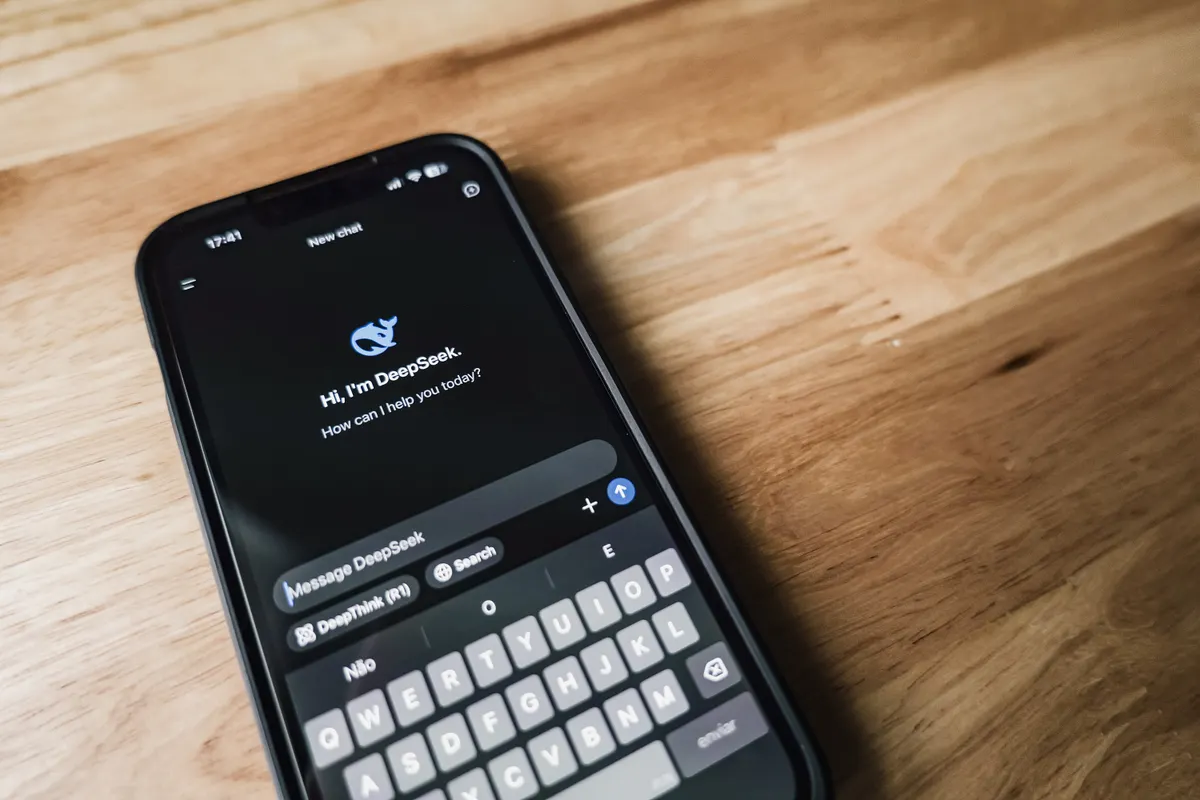

A job posting quietly published on OpenAI’s careers page lays out the contours of a ChatGPT family product strategy that the company has not formally announced: a dedicated product manager role in San Francisco, tasked with building experiences for families, caregivers, and older adults across its products.
The posting describes ‘a high-impact role with the opportunity to improve daily life for millions of people.’ It specifies that the team’s work ‘brings together product, policy, safety, research, and operations to keep improving how ChatGPT supports teens and families,’ suggesting this is not a skunkworks experiment but a cross-functional commitment.
A Demographic Shift Already Under Way
The hiring reflects audience changes that are already visible in usage data. According to Sensor Tower estimates, the share of ChatGPT users aged 35 and older globally rose to 31% in Q2 from 26% a year earlier. Users aged 18 to 24 moved in the opposite direction, falling to 29% from 34% over the same period.
In the United States, the parental penetration figure is particularly pronounced. Sensor Tower estimates that nearly one in four smartphone users who are parents used ChatGPT during the quarter, up from 16% a year earlier. For context, Gemini held the widest reach among U.S. parent smartphone users at 32%, with Claude at 4% and Microsoft’s Copilot at 2%.
Among the major AI assistants tracked by Sensor Tower, users aged 25 to 34 account for 40% of global app audiences for both Claude and Gemini, matching ChatGPT. Copilot skews older, with 20% of its users aged 45 and above, compared with 11% for ChatGPT. Yet ChatGPT is closing that gap faster than its rivals: its share of users aged 45 and above rose three percentage points year-over-year in the second quarter, compared with a two-point increase for Copilot and declines for both Claude and Gemini.
Ben Bajarin, chief executive of technology consultancy Creative Strategies, sees the hiring as a structural signal about where consumer AI is heading. ‘This is similar to the path Google, Apple, and Meta eventually followed as their platforms became embedded in everyday life, but AI raises the stakes because the assistant is not just mediating content or devices,’ he told TechCrunch. He expects companies to follow with family plans, child and teen profiles, caregiver tools, shared household memory, and AI tutoring.
ChatGPT Family Product Strategy Meets a Safety Gap
The role comes with a pointed brief. The careers page calls for experience building products for parents and families alongside ‘trust-sensitive consumer experiences,’ a phrase that signals the company is aware of the ground it is entering.
Research published this week by the Family Online Safety Institute (FOSI), conducted with Ipsos across a nationally representative sample of 1,000 parents and 1,000 children aged 10 to 17 in the United States, found that parental controls remain underused: roughly half of parents use them on tablets, 47% on smartphones, and 35% on game consoles. That gap in oversight extends to AI use: while 27% of U.S. parents said their child had used generative AI in the past week, 38% of children reported doing so themselves, according to a separate FOSI survey of more than 4,000 families in the United States and Australia.
Stephen Balkam, FOSI’s chief executive, said the hiring reflects both the maturation of OpenAI and a growing recognition that AI products used by children and teenagers require different safeguards than those designed for adults. ‘I see this as safety by redesign,’ Balkam told TechCrunch. ‘You take the initial product or service that was released… not really with kids in mind… so this is a much-needed reaction and response.’
A separate FOSI report published in November 2025 on how older teens are navigating generative AI found convenience as a primary driver of adoption, while loss of critical thinking emerged as the top fear among teenage respondents: a tension that any family-focused product will need to navigate.
Balkam argued that AI companies have a narrow window to avoid the trajectory of social media platforms, which treated children largely like adults for years before regulatory pressure and public backlash forced more substantive safeguards. OpenAI has already introduced parental controls for teen accounts, routes sensitive conversations to reasoning models better equipped to handle signs of distress, and launched an optional ‘Trusted Contact’ feature that can alert a family member or caregiver in cases of potential self-harm. The company has also faced multiple lawsuits from parents alleging that ChatGPT contributed to harm suffered by their children.
The salary attached to the new role offers one measure of how seriously OpenAI is treating the brief. According to the LinkedIn job listing, the position carries a base pay range of $293,000 to $325,000 per year. That is the going rate for product work that sits at the intersection of revenue growth and reputational risk, and it suggests that at OpenAI, the household is now a product category, not an afterthought.

