
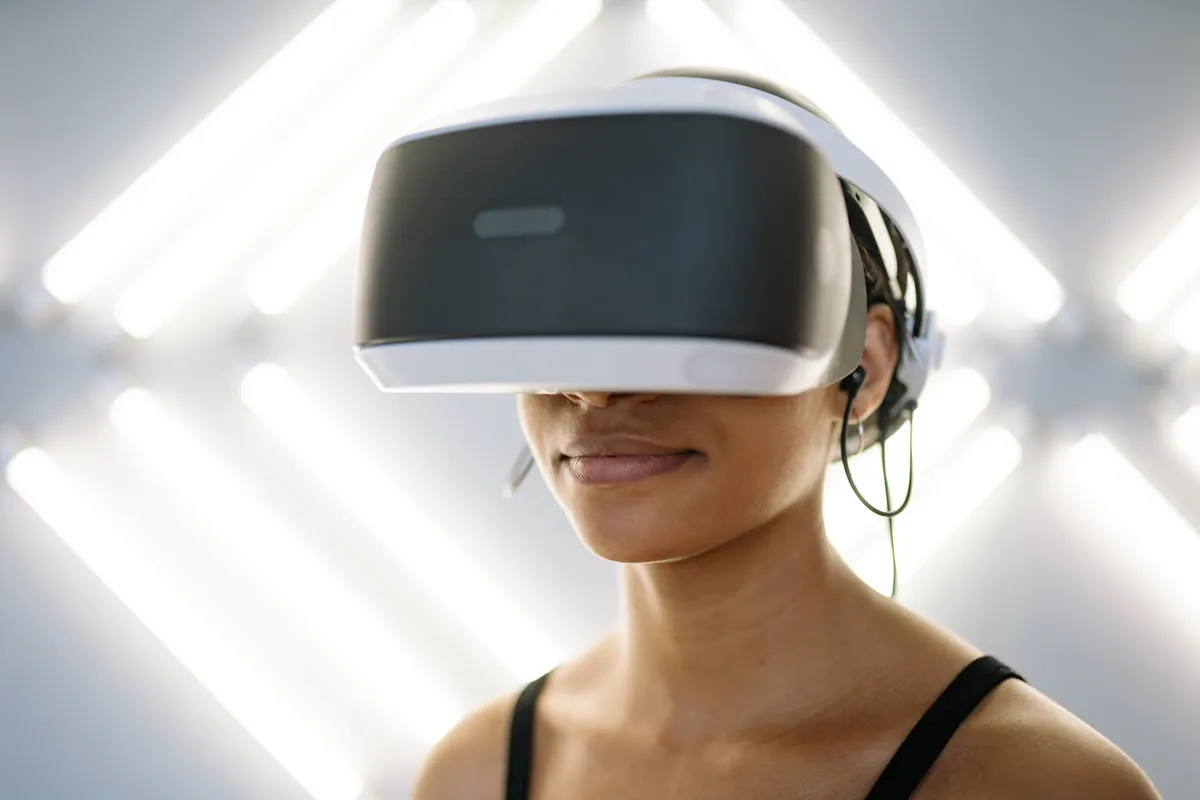

The Even Realities funding round that closed this month places the three-year-old Shenzhen startup firmly in unicorn territory: $150 million raised in a pre-Series B, led by Meituan and existing backer Tencent, at a $1 billion valuation. The bet at the centre of it is a deliberate step away from the camera-first direction that Meta and Snap are sprinting toward.
Even Realities was founded in 2023 by ex-Apple engineers. CEO Will Wang, who spent two years at Apple before leaving in 2018 contributing to both the Apple Watch and iPhone, co-founded the company alongside Dan Hu and Li Wang. Two other co-founders came from luxury eyewear, including Lindberg. International offices in Berlin and Lugano sit alongside its Shenzhen headquarters, reflecting the company’s priority markets in Europe, the US, Japan, South Korea, and the Middle East.
A Market Surging, and One Name Dominating It
The backdrop to this raise is a category in genuine acceleration. Global smart glasses shipments surged 167% year on year in the first quarter of 2026, according to International Data Corporation, which forecasts 13.6 million shipments for the full year. One company accounts for the majority of that: Meta held 69.2% of the global market in Q1 2026. Snap, meanwhile, has unveiled augmented reality glasses called Specs, planned for a late 2026 launch as a lighter successor to its earlier Spectacles.
Even’s answer to these rivals is to go in the opposite direction on hardware philosophy. The Even G2, which hit the market last November, carries no camera. Instead, a heads-up display built into the frames projects information into the wearer’s line of sight, controlled by the Even R1 companion ring via taps and swipes. The G2 earned a CES Innovation Award, and the R1 carries an IP68 water-resistance rating; the G2 itself is rated IP65, revised from an earlier specification to maintain consistency across mass production, according to Wired.
Even Realities Funding Round: What the Capital Is For
The proceeds are said to be directed primarily toward Even’s next-generation smart glasses platform, deeper AI integration, and the scaling of global operations, according to Road to VR. Earlier backers include Sequoia China.
The optics stack is where Wang says Even has concentrated its engineering effort. ‘With a phone or a watch, the display is just a conventional OLED or LCD screen. Smart glasses are the first product category to rely on optical displays, which require an entirely different technology stack; you have to design the microchip, the optics, and the waveguide together. That’s where we’ve invested the most,’ he said. The company’s proprietary approach, called Even HAO (Holistic Adaptive Optics), integrates the microchip, waveguide, and prescription support as a single end-to-end design rather than assembling separately designed components.
Privacy is threaded through both the hardware and the software. Voice translation features transcribe audio to text rather than storing recordings; user data is encrypted; and the infrastructure is built to meet European privacy standards. Wang frames the camera omission as part of a broader philosophy: smart glasses, he argues, are probably the most personal computing device people will ever wear, and comfort for those around the wearer matters as much as comfort for the wearer.
The copilot feature called Conversate sits at the more intensive end of the product’s use cases. It reads a live conversation in real time, surfaces explanations for unfamiliar jargon, feeds follow-up prompts, and syncs a summary to the user’s phone afterwards.
Profitable at $599, With a $1,000 Average Basket
Even’s first product, the G1, launched in 2024. The company describes it as the lightest waveguide smart glasses available at the time, and it exceeded Even’s internal 10,000-unit sales target, making it the first in the category to cross that threshold, according to Wang. Staff numbers have grown from 30–40 in 2024 to 300–400 today.
The G2 frames retail at $599. Prescription lenses or the R1 ring add another $200–$300, pushing the average order to roughly $1,000. The R1 is also eligible for reimbursement through FSA and HSA accounts in the US. Wang says the company is profitable. More than half of Even’s users are based in the US, its fastest-growing market, alongside the bulk of its developer community. China, where manufacturing is based across several factories, is not yet a sales market: ‘The demand there is significant, so we want to make sure we’re prepared first,’ Wang said.
The company’s target demographic skews toward male professionals between 30 and 50 years old; Wang says roughly a third of users are company executives. With Meta commanding nearly seven in ten smart glasses sold globally, Even’s next product cycle, funded by this raise, will test whether a privacy-first, display-centred approach can carve out a durable second position in a market growing fast enough to accommodate more than one answer.

