
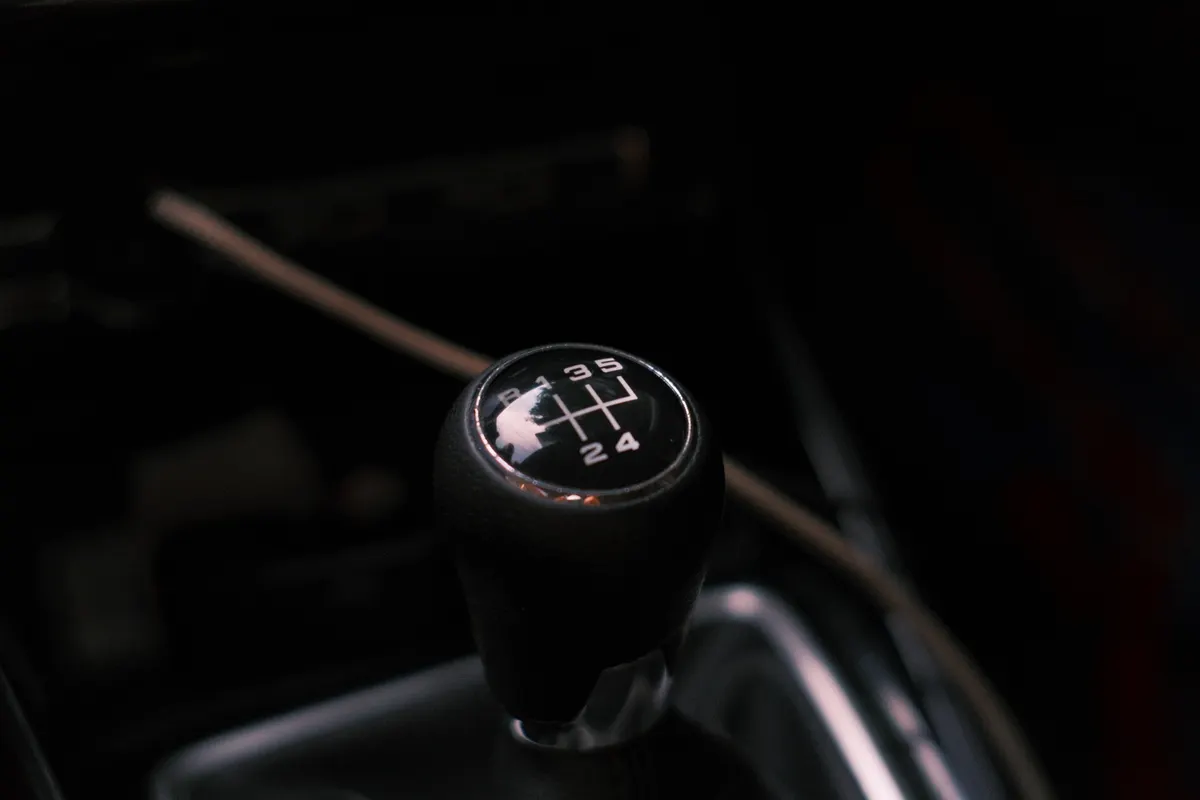

Ian Bogost’s Small Stuff begins, in a sense, with a gear stick. Bogost’s 2022 piece for The Atlantic on the decline of the manual transmission generated a response so large that it puzzled even its author. That response, and a year of thinking about why it landed the way it did, became the engine for his forthcoming book, The Small Stuff: How to Lead a More Gratifying Life, due from Atria Books on 7 July 2026.
The premise is both simple and slippery. Manual transmissions once accounted for 15 percent of new and used car sales in the United States in 2000; that share has since fallen to just 2.4 percent, a collapse accelerated by electric vehicles, which carry no gearbox at all. For Bogost, the stick shift is not really about cars. It is a window, and when you open it you feel what has been quietly removed from daily life: the sense of your own body doing something in the physical world.
Dematerialisation as Diagnosis
Bogost calls this process dematerialisation, and the first half of the book is devoted to describing it. ‘Basically, it’s the idea that we’ve become disconnected from the sensory world, and the reason that happened is what you might call convenience technologies,’ he told TechCrunch in a recent interview. He is careful, though, not to assign blame too narrowly. ‘All sorts of factors, not just tech, and certainly not just Silicon Valley-style technology, have distanced people from the world that they inhabit; they have stripped away the texture of everyday life.’
His signature example is the airport bathroom: the toilet that flushes for you, the tap that activates for you, the soap dispenser that may or may not co-operate. Each automated fixture represents a small withdrawal from physical engagement, a tradeoff that happened so gradually nobody quite noticed it being made. ‘We didn’t realize that we were making a tradeoff between progress and giving up that contact with the material world,’ he said.
The 240-page book, priced at $27 and listed by Publishers Weekly, is structured in two halves: diagnosis first, antidotes second. Oliver Burkeman, the New York Times bestselling author of Four Thousand Weeks, is among its early endorsers, praising Bogost’s case that ‘the material world is teeming with unexpected opportunities for life-enhancing sensory pleasure.’
Ian Bogost’s Small Stuff and Silicon Valley’s Blind Spot
Bogost is the Barbara and David Thomas Distinguished Professor at Washington University in St. Louis, holding appointments across film and media studies, computer science, and art and design, as well as serving as co-executive director of the university’s Office of Public Scholarship. He is also the founding partner of Persuasive Games LLC and the author of 11 books. His academic perch across engineering and the arts gives him an unusual angle on the industry he is critiquing.
The critique, though, is deliberately measured. He describes himself as ‘a little bored with the constant critique’ of Silicon Valley, and he is wary of the satisfactions that sweeping explanations offer. He has time for Cory Doctorow’s ‘enshittification’ framing as a cultural phenomenon, but he resists it as a diagnosis. ‘It’s very satisfying to believe that there are good guys and bad guys,’ he said, ‘but I also feel like it’s misdiagnosing or overdiagnosing the problem.’
Where he does place pointed blame on the Valley is on its deeper cultural assumption: that embodied human experience is optional, even embarrassing. Transhumanism, singularitarianism, the dream of optimising one’s way to immortality, all of it, in his reading, flows from the idea that computation can ‘sieve through any kind of experience and turn it into a computational one.’ The body, in that worldview, is a legacy system awaiting an upgrade.
His prescription is correspondingly personal. ‘It’s a lot to put on ordinary people to say, well, we just need to solve wealth inequality or capitalism, and then we’ll be able to get back to experiencing our lives fully,’ he said. ‘Ordinary people don’t need to wait for that.’ He is equally sceptical of the counter-impulse, the ‘hipster reclamation of nostalgia’ that reaches for a Walkman as a lifestyle statement. Nostalgia, he argues, can orient you, but it cannot be lived in.
The more productive move, in Bogost’s account, is not to reintroduce friction but to recover presence: the sensation of the ice in your water bottle, the heft of a door handle, the shift of a gear. Individually, each moment feels trivial. Accumulated, they constitute something closer to a life. Whether the technology industry finds that argument inconvenient or simply irrelevant will tell its own story about how far dematerialisation has already gone.

