

The Buffett-Musk moat debate, which flared in 2018 during a Tesla earnings call, has never quite gone away, and Berkshire Hathaway’s latest quarterly results offer fresh evidence for one side of it.
It started when an investor asked Elon Musk why Tesla had opened its Supercharger network to rival carmakers. The question carried an implicit compliment: the infrastructure would take years and millions of dollars to replicate. Musk was unmoved. Moats, he said, were ‘lame… sort of quaint in a vestigial way.’ Innovation pace, not competitive barriers, was ‘the fundamental determinant of competitiveness.’
Warren Buffett, speaking at the Berkshire Hathaway shareholders meeting a few days later, did not take the bait entirely. He conceded that ‘Elon may turn things upside down in some areas,’ but quipped, ‘I don’t think he’d want to take us on in candy.’ Musk, posting on social media shortly after, declared he was ‘super super serious’ about starting a candy company.
When Becky Quick pressed Buffett about the exchange on CNBC, the response was a tutorial in brand economics. Snickers, he said, had held the top spot among candy bars for roughly 50 years. Offer a consumer a competing bar at a discount and the consumer will cross the street to find a Snickers. Buffett called the hypothetical rival product ‘the Musk Bar.’ Richard Branson had tried the same logic with Virgin Cola in the United States, Buffett noted, perhaps 15 or 20 years earlier.
The argument extended well beyond sweets. The iPhone, Costco, WD-40, Amazon Prime: each, in Buffett’s telling, commands loyalty that a price cut alone cannot shift. Commodity sellers hold no such power. ‘You need a moat,’ he said.
The Buffett-Musk Moat Debate, by the Numbers
The Buffett-Musk moat debate has generated a decade of academic and online commentary, but Berkshire Hathaway’s Q1 2026 figures offer a more grounded scorecard.
The company reported total revenues of $93.7 billion in the first quarter of 2026, up from $89.7 billion in the same period a year earlier, according to its Q1 2026 quarterly earnings filing. Net earnings attributable to shareholders reached $10.1 billion, more than double the $4.6 billion of Q1 2025, as investment losses narrowed from $6.4 billion to $1.6 billion.
Berkshire’s cash position stood at $397.4 billion as of 31 March 2026, comprising $51.5 billion in insurance and other cash equivalents alongside $339.3 billion in short-term US Treasury bills. The company repurchased $234 million of its own shares during the quarter.
One of the quarter’s defining moves had already closed before it began. Berkshire completed the acquisition of OxyChem, Occidental Petroleum’s chemicals business, on 2 January 2026 for approximately $9.5 billion, adding preliminarily estimated assets of $10.8 billion to its books.
The Q1 2026 13F filing, submitted to the Securities and Exchange Commission on 15 May 2026, disclosed 29 positions with a total reported value of approximately $263.1 billion. Apple led at 21.99% of the disclosed portfolio, followed by American Express at 17.43% and Coca-Cola at 11.56%, based on analysis by ValueSider. Since the quarter closed, Berkshire has agreed to buy $10 billion in Alphabet shares directly from the company, a deal disclosed on 1 June 2026 and tracked by CNBC’s Berkshire portfolio tracker.
GEICO Puts the Gecko Where Mouths Are
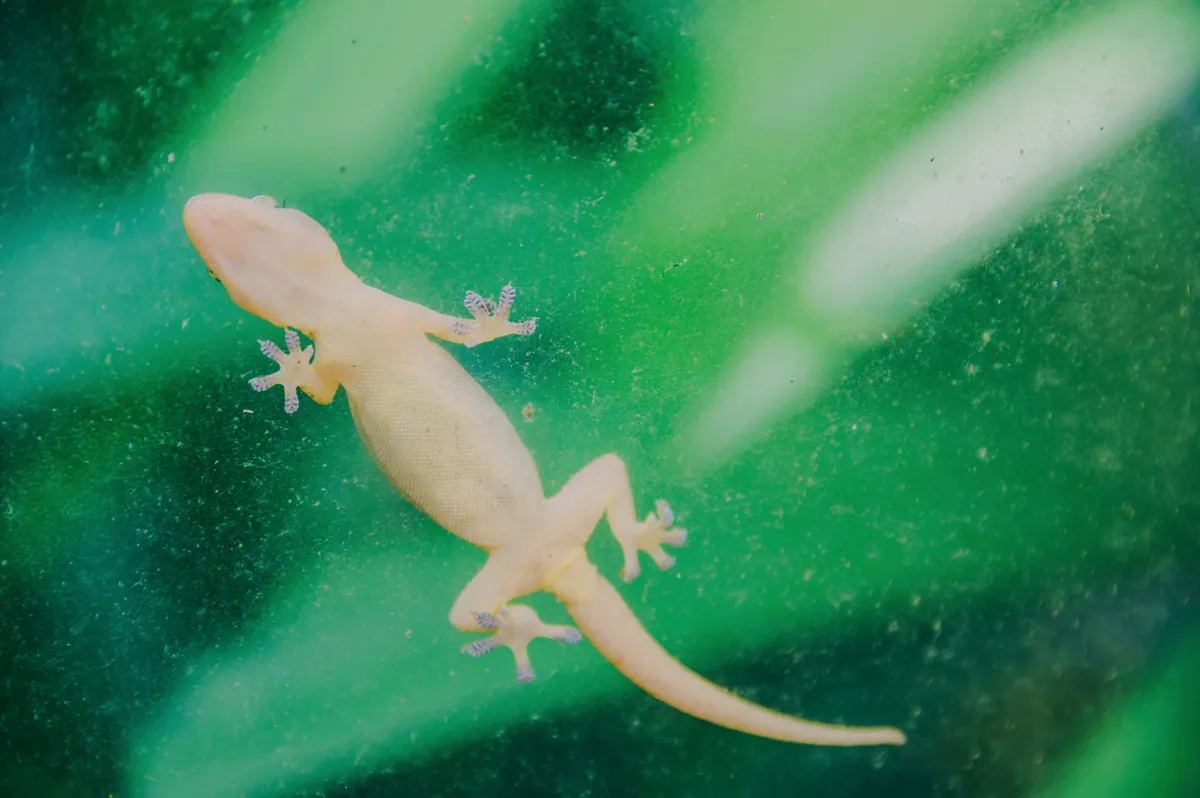
Berkshire’s approach to moat-building through advertising is also making news. GEICO this week deployed its Gecko mascot as a real-time, AI-powered participant on ‘Fudd Around and Find Out,’ an iHeartMedia podcast co-hosted by Azzi Fudd and Ashanti Plummer, a former Division I and professional basketball player. The live AI technology behind the appearance was developed in partnership with Framestore, The Martin Agency, and Omnicom Media, as reported by the Las Vegas Sun.
Fudd was the No. 1 overall pick in the 2026 WNBA Draft. GEICO describes its multiyear arrangement with her as the company’s first major long-term athlete partnership, with the insurer stating that the Gecko’s ‘character, voice and creative direction remain guided by the teams behind the brand,’ according to Repairer Driven News.
The Gecko has been selling car insurance for decades on the basis of one uncomplicated promise: you recognise it, you trust it, you call the number. That is, more or less, what Buffett meant. For now, the Buffett-Musk moat debate rests where it always has: on whether a loyal customer is worth more than a faster product roadmap. Berkshire’s next quarterly disclosure will add another data point. The $397 billion question is what the company does with that cash pile before it does.

