
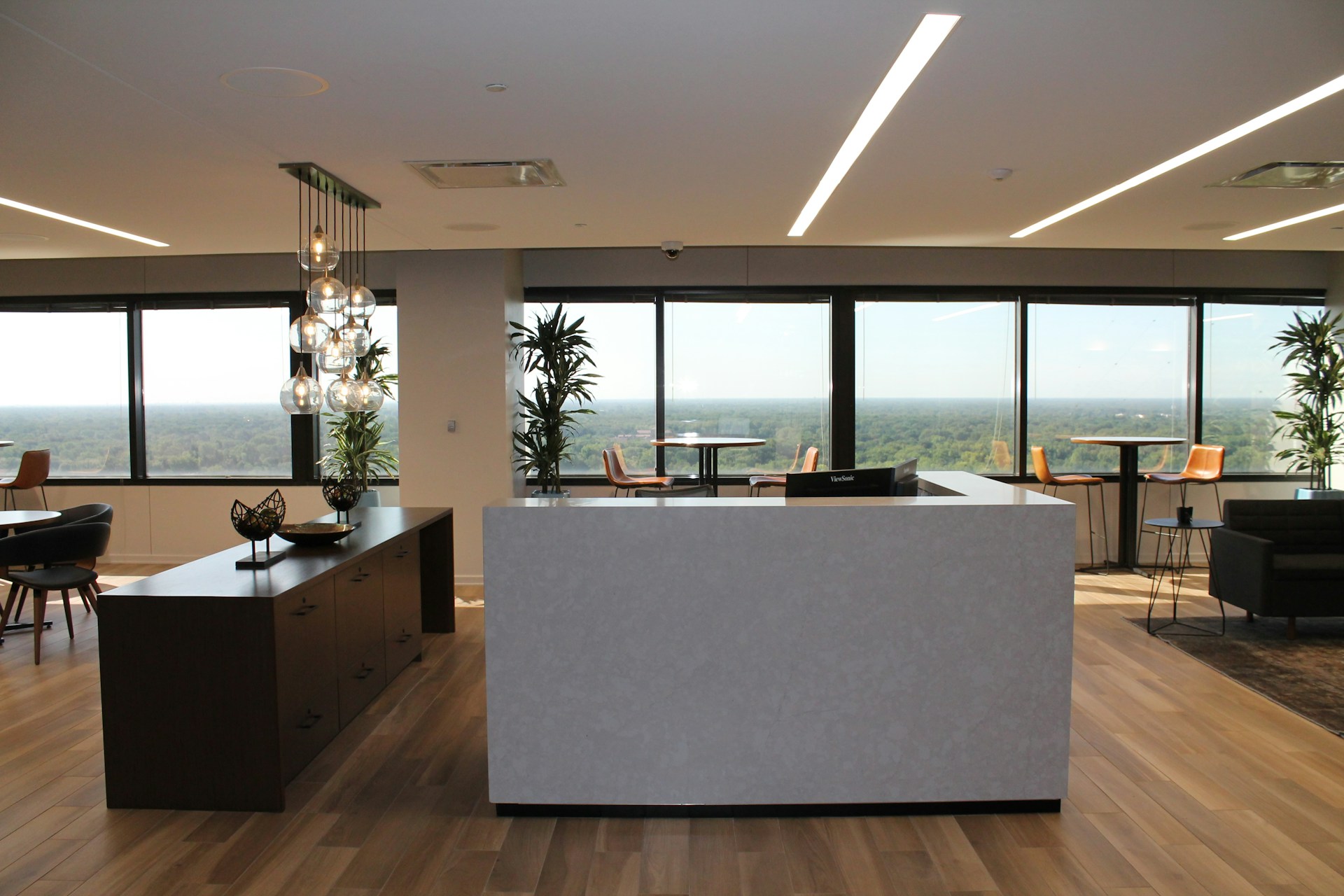

Smart lighting has moved beyond the “nice-to-have office perk” to a genuine operational lever in the last few years. That’s partly because workplaces are under pressure to cut energy waste, and partly because employers have realised lighting affects more than aesthetics. It affects focus, fatigue, and how long people can comfortably stay switched on. The result is a shift away from static, always-on fluorescents toward responsive systems that adapt to people, tasks, and time of day.
The Regulatory Push Driving Smarter Office Lighting
In the UK, the direction of travel is clear. Higher expectations for building energy performance, tighter guidance, and more scrutiny around how spaces are designed and operated. The UK Government’s Future Homes and Buildings Standards consultation reiterates that minimum energy efficiency requirements for new homes and non-domestic buildings are set through Part L, and that the government is looking at future revisions as standards move forward.
For offices, that “regulatory push” tends to translate into practical decisions such as swapping older fittings for high-efficiency LEDs, adding occupancy or daylight sensors, and implementing controls that reduce wasted hours. It’s less about a single rule forcing one product choice, and more about the overall compliance and performance bar rising.
Why Smart, Human-Centric Lighting Is Now Essential for Productivity
The productivity angle is where smart lighting stops being a facilities upgrade and starts looking like a workplace strategy. Human-centric lighting aims to mimic the natural daylight cycle, helping support circadian rhythms and reduce the afternoon crash that often makes teams reach for coffee and despair.
Workplace designers are increasingly talking about tuneable white, micro-zoning, and “lighting recipes” for different modes of work (deep focus, collaboration, decompression). In practice, this often means combining smart controls with flexible fixtures like LED strip lights in task zones, breakout areas, and under-shelf or workstation setups where the right light level can make work feel calmer and clearer.
How 2026 Technology is Making Smart Lighting More Reliable
One of the biggest complaints about early smart lighting was that it could be unreliable. Apps didn’t always connect, different devices didn’t work well together, and systems could feel fiddly rather than ‘smart. Newer technology advancements have helped with these kinds of issues and are working to fix those problems in the background.
Today’s smart lighting systems are built to communicate more smoothly and consistently, even when you’re mixing products from different brands. They connect faster, stay connected more reliably, and can be managed from one place instead of juggling multiple apps. For offices, this creates a more stable setup where lights respond when they should, automations run properly, and teams aren’t left dealing with glitches.
These sorts of improvements might not grab headlines, but they make a noticeable difference to everyday workspace lighting and turn it into something that actually works, without the frustration and headaches.
Sustainability Goals and the Economic Case for Smarter Lighting
Smart lighting earns its keep because it reduces waste in predictable ways. Switching lights off when no one’s there, dimming them when daylight is doing the job, and being tuned to the task rather than blasting the whole floor equally all help reduce energy, saving businesses some money in the process. For organisations working toward net zero commitments (or simply trying to stop energy spend leaking), that combination of LEDs plus sensors and automation is one of the more straightforward wins.
The bigger overall shift in 2026 is that “saving energy” and “supporting people” are no longer separate conversations. Smart lighting is becoming the overlap. A system that improves comfort and performance while also cutting unnecessary consumption.

