
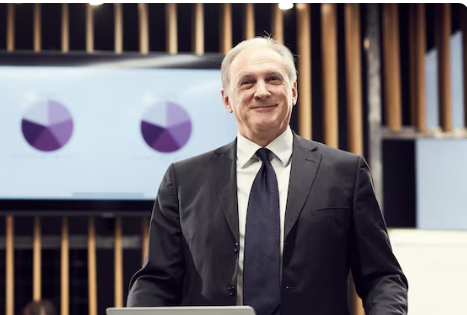

Jim Rogers has spent decades relying on the kind of credibility that comes from having been correct in the past—that is, been truly, consequentially correct. He and George Soros co-founded the Quantum Fund in New York at the beginning of the 1970s, managing funds during one of the most volatile decades in contemporary financial history and managing to produce returns exceeding 4,000% between 1973 and 1980. Rogers did not retire quietly at the age of 37. Because of its unquestionable track record, it was the kind of departure that is remembered.
His current net worth is estimated to be $300 million. This amount has been accumulated over decades of astute positioning, the Rogers International Commodities Index he developed, a number of books that have become standard reading in investment circles, and a career as a commentator who has never been particularly interested in telling people what they want to hear. He moved to Singapore in 2007 because he thought Asia, and China in particular, will define the economic century to come. The core theory hasn’t altered much, although that viewpoint has held up better in some years than others.
| Category | Details |
|---|---|
| Full Name | James Beeland Rogers Jr. |
| Date of Birth | October 19, 1942 |
| Nationality | American |
| Current Residence | Singapore |
| Profession | Investor, Author, Financial Commentator |
| Net Worth | ~$300 Million |
| Co-Founded | Quantum Fund (with George Soros, 1973) |
| Quantum Fund Performance | +4,200% (1973–1980) |
| Retired | Age 37 |
| Created | Rogers International Commodities Index |
| Current Strategy (2025–26) | Cash, gold, silver, agricultural commodities |
| Reference Website | jimrogers.com |
Rogers’ predictions for 2025 and the first part of 2026 are more dire than most investors are willing to accept. He made a statement that struck a chord in an interview with ET NOW via The Economic Times: “Everything has been going well for a long time, and historically, when everyone is making money at the same time, that’s precisely the moment to start worrying.” He went so far as to say that the next big sell-off would be the worst of his life. This is a statement that carries more weight than it should from a younger pundit because he has witnessed markets through the 1970s oil shocks, the 1987 catastrophe, the dot-com collapse, and 2008.
His logic relates to a more general concern about the amount of debt in the world, which has increased in almost all of the world’s major economies without the kind of reset that earlier generations of investors witnessed bring some degree of equilibrium back. Rogers has reportedly sold the majority of his American stock holdings and adopted a more defensive stance, indicating that he is particularly concerned about the U.S. markets. He has publicly stated that his main holdings are currently in U.S. dollars, gold, and silver, the latter of which he finds particularly intriguing because it has been trading at a discount to gold, making it a more alluring entry point for investors prepared to wait for the rebound he believes will follow any notable decline.
The picture he has painted is completed by agricultural items. Since farmland is limited and the world’s population is expanding, Rogers’ reasoning is simple enough to be easily disregarded, but he has maintained this viewpoint for so long that it merits more than a cursory look. He has long maintained that buying low and waiting for the inevitable recovery is a cleaner and more predictable option when commodity markets are down than chasing growth equities close to all-time highs. It remains to be seen if this patience will pay off in the present cycle. Although his general approach has been one of waiting rather than aggressive deployment, he has also referenced holding assets in Uzbekistan and looking at China.
It’s difficult to ignore Rogers’ odd place in the financial media ecosystem, where he is regularly written off for his unwavering pessimism while still being revered for his track record. The conflict between those two reactions provides an intriguing insight into how markets interpret opposing viewpoints. He appears incorrect when he is early. He appears prophetic when his warnings come true. The patience of anyone seeing from the outside is put to the strain by the years-long delay between the two. Rogers was once referred to by George Soros as one of the best analysts he had ever worked with, and Soros did not say this lightly.
The way Rogers has positioned himself in 2025 and 2026 gives the impression that the structure guiding the choices is more important than the $300 million amount. A man isn’t developing a portfolio carelessly if he retired at age 37 after compounding profits through ten years of financial turmoil and then spent a further forty years carefully considering where the next crisis would come from. He might be early. He might be mistaken. However, none of it seems coincidental—the money, the silver, the farms, the Singapore address.

