
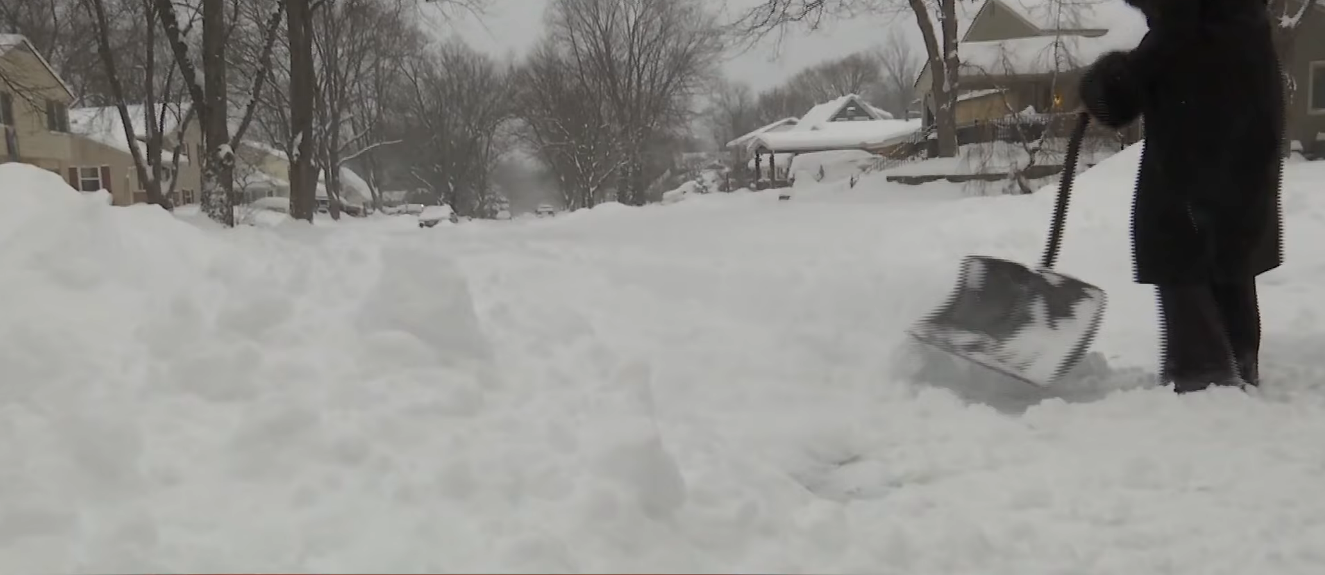

The Level 3 snow emergency in Ohio is a complete halt, not only a weather advisory. It indicates that local officials have decided that the storm has reached a tipping point and that it is time to clear the roadways of danger in addition to snow. That call was emphasized by Winter Storm Fern on January 25.
Many counties quickly advanced to Level 3. Among those who sent out the highest-level alert were Franklin, Coshocton, Huron, and Sandusky. The government directive to avoid the roads unless absolutely required was a first for many locals, particularly those in Franklin County. No trips to the mall. No picturesque drives. Only waiting, warmth, and home.
The Level 3 alert’s simplicity makes it especially inventive. Without using complex terminology or ambiguous meanings, it conveys a clear message to the general population. Stay put if you are not emergency personnel. In addition to putting yourself in danger when you drive, you can be preventing someone else from getting assistance.
Road conditions in central and northern Ohio had gotten considerably worse by Sunday afternoon. Key roadway visibility deteriorated to dangerously low levels, while wind chills fell below zero. It was more than simply a lot of snow. It was an unsafe mobility breakdown. Automobiles become burdens rather than assets.
| Category | Information |
|---|---|
| Status | Level 3 Snow Emergency |
| Declared By | County Sheriffs (Franklin, Erie, Coshocton, Huron, Sandusky, others) |
| Meaning | All roadways closed to non-emergency personnel |
| Legal Consequences | Possible fines or arrest for unnecessary travel |
| Weather Trigger | Winter Storm Fern (heavy snow, drifting, subzero wind chills) |
| Enforcement Agencies | Local law enforcement and emergency response teams |
| Verified Source | www.sheriff.franklincountyohio.gov |

County sheriffs strategically coordinated with weather experts and transportation staff to assess forecasts and road conditions. They were responding to quantifiable risk, not speculating. Level 3 didn’t make a snap decision. Snowpack, wind speed, and the unrelenting persistence of freezing air were the building blocks.
The way Ohio’s snow emergency system functions is quite transparent. Level 1 denotes extreme caution. Level 2 refers to judgment. At Level 3, everyday life is completely frozen. This uniformity between counties facilitates public communication and increases the likelihood of compliance.
In Franklin County, the proclamation was much more significant. In the present method used by the county, it was the first Level 3 that was actually confirmed. And it was released without pausing. This clarity enabled authorities to act swiftly, companies to alert staff ahead of time, and families to confidently prepare.
For millions of people, working remotely became the norm during the pandemic, and this adaptation has proven incredibly effective throughout snow situations like this one. Schools made the switch to online resources. Employers offered out messages promoting adaptability. What would have caused a citywide uproar now caused a quiet adjustment.
One afternoon, I stood by my window and watched a lone salt truck thunder past a deserted street. The ensuing silence was both unsettling and reassuring. It served as a reminder that group silence can be a kind of accountability.
Level 3 enforcement isn’t about instilling fear. The majority of sheriff’s offices said they wouldn’t issue tickets to every passing vehicle. But if someone’s driving contributed to the mayhem—by causing an accident, causing a delay, or interfering needlessly—they would be held responsible.
Particularly successful is that concept, which is based on public trust rather than punitive action. It views locals as contributing to the solution. And people were paying attention, based on social media. Plow drivers received a tonne of supportive comments. The highways in the photos were deserted. It wasn’t necessary to repeat the story to many Ohioans.
Ohio’s winter response systems have significantly improved in the last ten years. During these crises, transfers have gone more smoothly thanks to early projections, flexible employer policies, and collaboration at the county level. Even though it’s uncommon, Level 3 is a potent last resort when other methods aren’t sufficient.
But it’s a different scenario for vital personnel. Emergency personnel, nurses, and utility workers are still navigating the ice. In hospitals, some people sleep, while others work longer shifts than scheduled. The system as a whole is sustained by their consistency.
Through the utilization of meteorological knowledge and local expertise, county officials have managed to take decisive action while maintaining transparency. Few instruments are as effective in the field of public safety as a three-tiered alert system that people can truly comprehend.
How quickly the public learns to cooperate is something that is sometimes overlooked throughout these situations. Parents go on to work as meteorologists. Adolescents shovel driveways. The elderly are visited by neighbors. A human recalibration has occurred, with a greater emphasis on care and less on tasks.
And many took solace in the forced stop, even though it was inconvenient. With no pickups, errands, or meetings, the day’s rhythm slowed. Sidewalks were coated in snow like punctuation. For an instant, everything seemed to move more slowly, almost under control.
In order to stay ahead of false information, Ohio’s counties integrated social media, government websites, and cellphone alerts. Confidence was increased since the message was conveyed constantly. Just action—no contradictory remarks, no unclear updates.
Level 3 is in place for a reason. Keeping people safer is the goal, not making things more difficult. Particularly at times like Storm Fern, when falling temperatures and drifting snow combine to create an especially dangerous situation.
In the future, when things become better, the counties will degrade. Roads will open again. We’ll start classes again. But more than the snowbanks, we will remember the significance of this alert and how fast we came together.
Even though Ohio is accustomed to winter, its reaction to Level 3 was far from typical. It was well-planned, unambiguous, and based on a deeper realization that sometimes stopping is the best course of action.

