
Rachida Dati Wiki , From Working-Class Roots to France’s Powerful Culture Minister

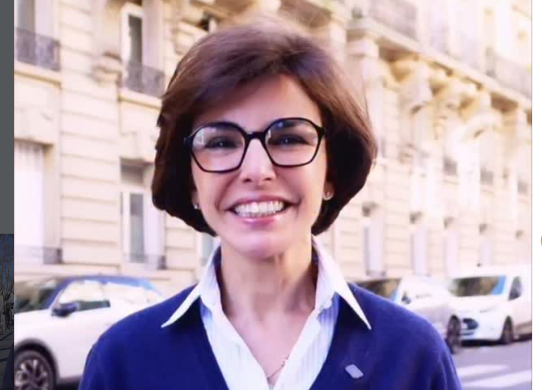
There have always been some theatrical figures in Paris politics, but few have attracted as much attention—and controversy—as Rachida Dati. She was born into a modest immigrant family and rose through the ranks of French power, eventually holding cabinet positions and managing some of the nation’s most prestigious cultural organizations. Her life is frequently presented as one of stark contrast. It’s difficult to ignore how unique her journey has been.
On November 27, 1965, Rachida Dati was born in the small eastern French town of Saint-Rémy. Her mother is from Algeria, and her father immigrated from Morocco and worked as a bricklayer. There were twelve children in the household, and life was not very glamorous. However, it appears that Dati’s early years ingrained a certain harshness that would eventually shape his political persona. Even as a little girl, her ambition was evident, according to friends and onlookers.
| Information | Details |
|---|---|
| Full Name | Rachida Dati |
| Born | 27 November 1965 |
| Age | 60 |
| Birthplace | Saint-Rémy, France |
| Nationality | French / Moroccan |
| Political Party | The Republicans (LR) |
| Occupation | Politician, Lawyer, Magistrate |
| Notable Roles | Minister of Justice (2007–2009), Minister of Culture (2024–2026) |
| European Parliament | Member of the European Parliament (2009–2019) |
| Education | University of Burgundy, Panthéon-Assas University |
| Child | One daughter |
| Reference |
She attended Paris’ Panthéon-Assas University to study law before continuing her education at the University of Burgundy. She entered the legal field and worked as a magistrate and lawyer, navigating courtrooms where authority and accuracy are more important than charm. Colleagues claim that her early work experiences influenced her political style, which is incisive, straightforward, and rarely afraid to take on opponents. The middle of the 2000s marked the true turning point.
When Nicolas Sarkozy was running for president in 2007, Dati joined the conservative political movement that would later become the Republicans, and her prominence immediately grew. She frequently appeared on television as one of his spokespersons, promoting the campaign in a way that many viewers perceived as both vivacious and aggressive. She was named France’s Minister of Justice by Sarkozy when he was elected president in 2007.
Many political watchers were taken aback by the selection at the time. As one of the first French ministers with North African ancestry to achieve such a high position, Dati emerged as one of the government’s most recognizable figures. She carried the expectations of supporters who viewed her as a symbol of social mobility as she entered the Ministry of Justice building on Place Vendôme, with its gleaming floors and old pictures adorning the walls. However, governance seldom goes as planned.
Dati promoted judicial changes to restructure the French court system during her tenure from 2007 to 2009. Proponents said that the changes would bring an antiquated system up to date. They were viewed by critics as too combative and disruptive. After heated political arguments, she quit the cabinet in 2009 to run for the European Parliament. After winning the election, she represented the Île-de-France area as a member of the European Parliament from 2009 to 2019.
Brussels provided an alternative platform. Negotiation and committee work are frequently used by the European Parliament in place of the high-pressure drama of Parisian politics. Dati, however, continued to be visible and regularly voiced opinions on institutional and legal matters within the EU. Her political base in France was still firmly established in Paris.
She won the 2008 mayoral election in the affluent 7th arrondissement of the city, which is home to various government ministries and famous sites like the Eiffel Tower. It is simple to understand why the job has symbolic significance when strolling around the area today. Political power frequently seems to float in the air, embassy buildings inhabit antique homes, and elegant structures line the streets.
Dati was also a member of the Council of Paris, where he progressively established himself as one of the most vocal conservatives in the city. In 2020, she launched her most ambitious municipal campaign when she challenged incumbent Anne Hidalgo for the position of Mayor of Paris. Because Paris mayoral elections frequently influence the nation’s political narrative, the race attracted national interest. Despite losing the election in the end, Dati became the Council of Paris’s opposition leader.
Political careers don’t always go as planned, and Dati’s hasn’t been without scandal. Recent investigations looked into advisory fees she received from the Renault-Nissan-Mitsubishi Alliance while serving as a European legislator. Charges of corruption linked to such payments were eventually brought by French prosecutors. The court proceedings have progressed slowly, leaving many elements unclear, and Dati has denied any wrongdoing. More dramatic moments have also occurred.
She allegedly got a gunshot and an anonymous death threat in 2009, just before she left the administration. Such incidents serve as a reminder of how severe French politics can get, particularly for prominent individuals who are always under media scrutiny. Her return to the national government followed.
Dati was named France’s Minister of Culture in 2024. She was tasked with overseeing organizations that shape the nation’s cultural identity, such as the Louvre itself, national libraries, and theaters. It has not been a quiet job.
A jewelry robbery from the Louvre’s ancient Galerie d’Apollon, which housed items from the French Crown Jewels collection, was reported in October 2025. As soon as police began their investigation, Dati and investigators showed up at the museum to speak to media.
As the scene developed, it seemed as though it encapsulated a key aspect of her political career: a person who is continuously juggling power, controversy, and visibility. Rachida Dati is still one of the most well-known figures in French politics, regardless of whether she is praised or disliked.