

Scientists employed at the most isolated research outposts in Antarctica experienced a form of informational exile for decades. There were only satellite links available, which felt more like dial-up relics than instruments suitable for contemporary study, and internet connections were slow, unstable, and incredibly costly. Data had to be transported back to labs thousands of miles away on actual hard disks. Family video conversations were a luxury saved for exceptional events. Ice core analyses, genetic sequencing, and climate models were all waiting to be physically transported off the continent. Then Starlink showed up.
McMurdo Station and Scott Base, two of Antarctica’s most remote outposts, now have access to SpaceX’s satellite internet service, the same one that covers rural areas and links Ukrainian soldiers in combat zones. It has had an instantaneous and, by all accounts, transforming effect. Nearly overnight, Scott Base’s internet speeds surged tenfold. Researchers may now submit data to cloud servers in real time, enabling colleagues back home to work on the same data at the same time. Previously, researchers had to spend hours uploading modest datasets. It’s the kind of shift that, while seemingly small on paper, seems revolutionary in practice.
Starlink in Antarctica: Key Information
| Category | Details |
|---|---|
| Service Provider | Starlink (SpaceX) |
| Founder/CEO | Elon Musk |
| Connected Stations | McMurdo Station, Scott Base |
| Technology | Low-latency satellite internet via LEO constellation |
| Speed Improvement | 10x faster at Scott Base |
| Key Benefits | Real-time data analysis, cloud connectivity, reduced isolation |
| Testing Authority | U.S. National Science Foundation |
| Launch Context | 2024-2026 deployment to polar regions |
| Concerns Raised | Light/electromagnetic pollution affecting astronomy |
| Reference | Starlink Official Site |
When ground stations are out of reach, the technology connects to SpaceX’s constellation of low-Earth orbit satellites, which interact with one another. This skill is crucial in Antarctica because of its oceanic surroundings and lack of conventional infrastructure. The service was specially evaluated by the U.S. National Science Foundation to boost bandwidth for science support, and the outcomes were better than anticipated. Getting data off the ice was previously a bottleneck, but it has all but vanished.
You would notice the change if you were to stroll into McMurdo Station today. While drinking coffee in the galley, researchers gather around laptops to upload terabytes of climate data. There is no lag or pixelation during video chats with research teams in California, Norway, and Australia. While using the treadmill in the station’s tiny gym, someone is streaming a documentary. Even while these elements may seem insignificant, they signify a significant event: the end of isolation for one of the world’s most isolated human settlements.
It is more difficult to exaggerate the scientific implications. Instead of waiting months for data to reach a university lab, climate researchers investigating ice sheet dynamics may now run real-time models, modifying parameters and seeing outcomes instantly. Within hours, video footage uploaded by biologists monitoring penguin populations can be analyzed using machine learning algorithms. Seismologists and geologists studying volcanic activity beneath the ice can work together as if they were in the same room. Not only does the study advance more quickly, but it also completely transforms, becoming less geographically limited and more collaborative.
Additionally, there is a human component that cannot be disregarded. An Antarctic research station is a famously challenging place to live. People get tired of the loneliness, the cold, and the dark months. It matters to be able to watch a movie after a long day, video chat with relatives without having to plan weeks in advance, or simply browse social media like any other person. Improvements in quality of life may not be evident in scholarly publications, but they have an impact on mental health, retention, and morale. Starlink connects people, not just computers.
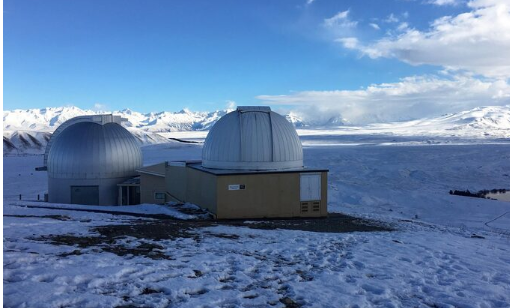
However, the narrative isn’t wholly joyous. The sheer number of satellites now in orbit overhead has alarmed astronomers at Antarctic observatories. There are currently thousands in Starlink’s constellation, and tens of thousands more are planned. Because each satellite reflects sunlight, radio astronomy is hampered by electromagnetic noise and streaks in telescope images. Antarctica is one of the best locations on Earth to observe the cosmos because of its clean skies and low levels of light pollution, but some scientists are concerned that Starlink’s growth could diminish this benefit. The conflict between astronomical clarity and polar connection remains unresolved.
Whether SpaceX will sufficiently solve these issues is still up in the air. To lessen reflectivity, the corporation has tried using darker coatings and changing the orientation of the satellites, but the issue still exists. For most academics, the practical advantages of connectivity currently seem to exceed the disadvantages, but as more satellites launch and telescopes come online, this arithmetic may change. It’s obvious that Starlink is helpful, thus that’s not the question. Whether we are exchanging one type of scientific competence for another without fully appreciating the cost is the question.
Additionally, Starlink’s performance in Antarctica highlights a more general aspect of the evolving global connectivity landscape. Disaster areas, conflict zones, and remote islands like Pitcairn are all becoming more accessible than they were a few years ago. Beyond research stations, geopolitics, emergency response, and economic development are all affected. In locations where traditional infrastructure is either nonexistent or damaged, access to information is controlled by the person in charge of the satellite infrastructure.
As we see things develop, there’s a sense that we’re at a turning point. Antarctic study was subject to limitations that imposed a specific rhythm and tempo for a century. Data was gathered in short bursts. Months later, analysis was conducted. Letters, faxes, and sluggish email were all part of the collaboration process. Suddenly, everything is happening in real time. That has a lot of power. It’s also confusing. Researchers are still working out how to replace the outdated workflows.
For Elon Musk, Antarctica is merely one more location on a globe that demonstrates Starlink’s global aspirations. It’s the difference between waiting and doing, between isolation and connection, for the scientists who live and work there. The technology functions, even excellently. It’s still unclear whether that’s a clear benefit, but researchers can now discuss it in real time from anywhere in the world thanks to Starlink.

