
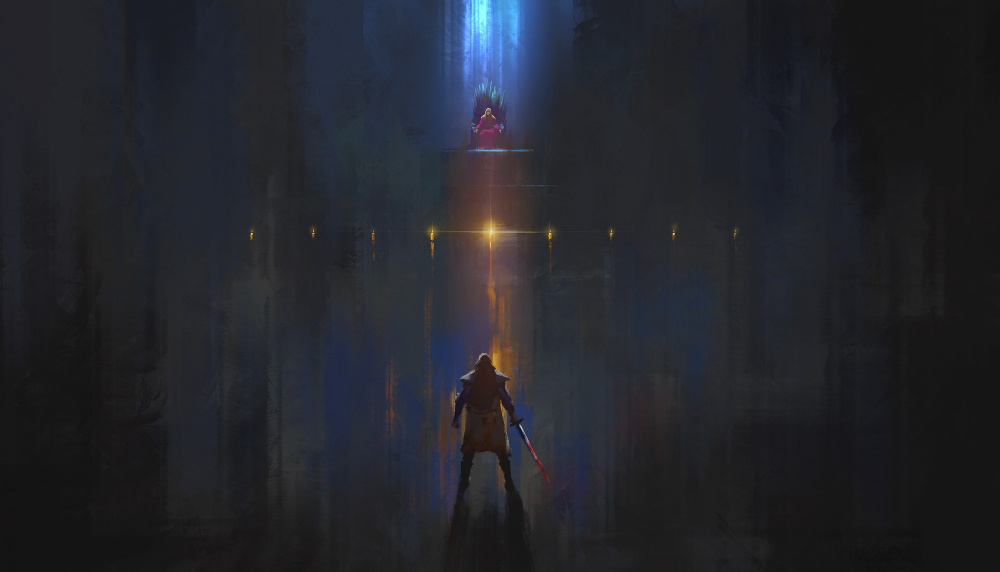

Before the first credits roll, Maul – Shadow Lord seizes your attention—not with tremendous spectacle, but with precision. It’s the kind of tale that has been patiently awaiting its turn, and suddenly, astonishingly, it strikes with precise force.
By deciding to center the plot around a shattered figure like Maul, the authors made a deliberate gamble. However, the risk turns out to be especially advantageous when Dave Filoni is in charge. The series doesn’t glorify Maul’s savagery; instead, it lets his survival speak for itself. He isn’t a character battling back relevance—he’s already there, silently dictating outcomes from the shadows.
| Feature | Details |
|---|---|
| Title | Star Wars: Maul – Shadow Lord |
| Series Format | Animated limited series (10 episodes) |
| Lead Character | Darth Maul (voiced by Sam Witwer) |
| Created By | Dave Filoni |
| Platform | Disney+ |
| Premiere Date | April 6, 2026 |
| Story Timeline | Post-Clone Wars, early Empire era |
| Primary Setting | Planet Janix, a volcanic criminal underworld |
| Notable Characters | Devon Izara (voiced by Gideon Adlon), Brander Lawson, Two-Boots |
| Viewer Rating | 73% on JustWatch |
| Reference Link | https://www.imdb.com/title/tt26603735/ |
The planet Janix, where most of the plot develops, is extraordinarily vivid. Cratered and choked with red smoke, it feels less like a setting and more like a living echo of Maul’s anger. It reminded me of cities in noir films—decaying but proud, pulsing with stories in every alley and glinting blade.
Sam Witwer, reprising his role as Maul, gives a voice performance that seems incredibly intimate. Not through melodrama, but restraint. He’s not continuously grumbling or monologuing. He allows stillness carry weight, and that silence frequently cuts deeper than any lightsaber.
Through careful pacing, the program establishes a tone that’s mature but not self-serious. Maul isn’t softened. He remains violent, manipulative, and emotionally unavailable. What’s notably improved is the storytelling frame surrounding him. Rather than imposing redemption or retreading Sith theology, the series shows Maul as a man without a future, only strategy.
Devon Izara enters as a fugitive Jedi with a cautious intensity. Her voice—delivered by Gideon Adlon—adds tension in practically every scene. By the third episode, she’s stopped running and started listening. Her internal transformation is very effective, as seen by subtle adjustments to her posture and speech. She is being captivated by purpose rather than succumbing to the dark side.
There’s a moment where Maul merely observes her meditating in a shrine desecrated by battle. He remains silent. But his look, steady and calculated, bears an unsaid challenge. In that quiet, I felt something rare—a sense that power, in this context, was no longer about control but alignment.
The side characters contribute efficiently to the textured pace of the story. Richard Ayoade’s droid Two-Boots adds humor with philosophical sarcasm rather than cheap laughter, while Wagner Moura’s Brander Lawson is a disillusioned enforcer confined within a collapsing code. Together, they illustrate the steady decline of institutions Maul hopes to replace.
By using flashbacks judiciously, the show avoids over-explaining Maul’s background. Instead, it uses these glances to shape the stakes ahead. There’s a scene recalling Maul’s final combat with Obi-Wan—not seen, but remembered in bits. It’s especially intriguing because it isn’t about loss. It has to do with what endures disgrace.
The music, produced by Sean and Deana Kiner, punctuates these moments with understated beauty. Dissonant strings rise like an oncoming menace but never overwhelm the discourse. As a result, the audio is eerily personal and ambient.
Through the halfway of the series, external threats begin to circle. The entrance of Inquisitors adds an element of combustible tension, particularly because Maul treats them with scorn. He doesn’t fear Palpatine’s reach—he’s operating beneath it. That power dynamic, inverted and steadily escalating, gives the show its underlying tension.
What’s particularly innovative is how the series defies the need to validate Maul through major reveals or galactic-scale stakes. There’s no Vader confrontation. No lightsaber parade. Just Maul, developing influence the way a mafia leader might—through fear, devotion, and definitive brutality.
Devon’s slide into darkness is subtle but scary. By episode seven, she utilizes Maul’s words in a negotiation. She doesn’t notice the shift, but the audience does. That style of writing is extraordinarily clear in its aim, never needing didactic hand-holding.
I found myself thinking, throughout these later episodes, how rare it is for Star Wars to allow emotional rot set in without swift purification. Here, it festers. And in that deterioration, we get something frighteningly honest.
The rating—73%—feels like an undersell. The purpose of the show is not to impress. It’s designed to simmer, and it does so with an almost literary intensity. Every line matters. Every move hints at erosion or evolution.
When the series closes, it doesn’t scream finality. Maul doesn’t collapse. He doesn’t triumph. He simply persists. That longevity, stripped of romantic framing, is strikingly similar to the way certain characters survive their time—not via destiny, but through sheer, frightening will.
This is not a redemption narrative. It’s hardly even a tragedy. It’s a study of what persists after purpose breaks.
And somehow, in that transitional area between revenge and reinvention, Maul feels more present than ever.

