
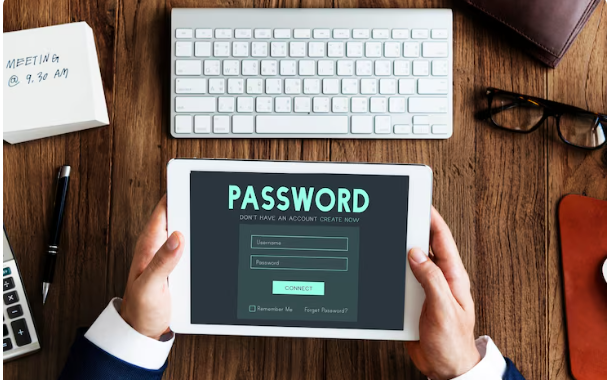

The password is close to the top of the list of poor choices that characterize contemporary digital life. The idea never scaled gracefully to a world where a single person might have two hundred accounts, each requiring a unique combination of letters, numbers, and symbols that changes every ninety days and cannot resemble the previous five. This is not because the idea was flawed when it was first developed—in the early days of networked computing, a shared secret between a user and a system made reasonable sense.
People writing passwords on sticky notes, using the same login information for all of their accounts, and selecting “Password1!” with full awareness that it’s awful but remembering something better is truly too much to ask have all contributed to a sort of communal, low-grade weariness. For years, Microsoft, which oversees more than a billion user accounts, has been dealing with the fallout from that weariness. It seems to have concluded that the experiment is over.
Key Reference & Technology Information
| Category | Details |
|---|---|
| Topic | Microsoft’s Passwordless Authentication Strategy |
| Company | Microsoft Corporation |
| Headquarters | Redmond, Washington, U.S. |
| CEO | Satya Nadella |
| Key Initiative | New Microsoft accounts “passwordless by default” |
| Primary Authentication Methods | Passkeys, Windows Hello (facial recognition), fingerprint scans, Microsoft Authenticator app |
| Standard Used | FIDO2 — industry cryptographic authentication standard |
| Authenticator App Change | Removing password storage capability; pushing users toward passkeys |
| Heartbeat Authentication | Experimental/research concept — ECG biometrics; historically tested by Bionym (Nymi wristband) |
| Security Problems Solved | Phishing, credential stuffing, password reuse, password fatigue |
| User Impact | 1+ billion Microsoft account holders globally |
| Timeline | Passwordless by default — actively rolling out in 2025–2026 |
| Reference Website | Microsoft Security — microsoft.com/security |
Passwords are no longer required for new Microsoft accounts. Because it marks a significant departure from a system that has governed how common people access their digital lives for the greater part of four decades, that line is worth pausing over. During account setup, new users set up a sign-in mechanism based on an existing feature of the device, such as a fingerprint reader, a facial recognition camera, or a cryptographic key that is safely saved on the hardware itself, rather than setting a password.
Since 2015, Microsoft has begun incorporating Windows Hello, a facial recognition system, onto its devices. It has evolved from a novelty feature to a primary authentication layer. In situations where a face or fingerprint isn’t readily available, the Microsoft Authenticator app on a user’s phone generates approvals using biometric confirmation on the mobile device instead of a memorized string of characters.
The FIDO2 standard, a set of cryptographic protocols created by an industry alliance specifically to replace passwords with something that cannot be phished, guessed, or stolen from a database breach because it never exists on a server in a form that would be useful to an attacker, is the underlying technology behind the majority of this. A private cryptographic key resides on the user’s device, a public key resides with the service, and authentication occurs through a mathematical exchange that verifies identity without sending any sensitive data.
This is the basic idea behind passkeys, which are Microsoft’s main push to current users in addition to new account defaults. The architecture is sophisticated and actually sturdy by consumer security standards. Users’ acceptance of the change and whether the experience would be seamless enough to prevent the kind of helpdesk complaints that each significant authentication change historically causes at scale have always been the practical questions.
The most overt indication that Microsoft is not creating a hybrid future where passwords are still accessible as a backup is the decision to completely remove password storage from the Authenticator app, pushing users away from the security of saved credentials and toward complete passkey adoption. By gradually eliminating the comfortable option and providing directional pressure, it operates under the fair premise that most users only stop engaging in familiar behavior when that option is unavailable. This is the exact kind of trade-off that big tech platforms make when they think the long-term result outweighs the short-term friction: it will annoy some individuals while likely benefiting a much greater number.
The idea of heartbeat authentication, which uses an electrocardiograph sensor’s unique electrical signature of a person’s heartbeat as a login credential, is still further off the horizon and is currently receiving more research attention than being implemented. From a security perspective, the idea is actually intriguing: unlike even a fingerprint or facial scan, a heartbeat pattern is hard to fake, continuous rather than event-based, and personal.
This idea served as the foundation for the Nymi wristband, which was developed over several years by a Canadian firm named Bionym. They created technology that could authenticate users based on their ECG signature and keep them in that state as long as the wristband was worn. The device performed adequately in demonstration, but it encountered the practical issues that any innovative biometric hardware encounters, such as cost, adoption resistance, and the difficult task of creating a service ecosystem around a sensor that very few people had.
ECG authentication is not a native feature of Microsoft’s current suite, and it’s still unclear when heartbeat-based login will transition from research interest to commercial product. It is evident that the company’s commitment to moving away from shared secrets and toward biometric and cryptographic identity verification paves the way for more personal types of identification in the future. The psychological gap between facial recognition and fingerprint recognition and a heart-rhythm sensor is significantly reduced if those techniques are already widely used.
As this change takes place across one of the biggest consumer technology platforms in the world, there’s a sense that the password’s true demise—not its slow marginalization but its true obsolescence—might be closer than the industry has historically allowed itself to think. Most of the infrastructure is in place. There are standards. People already own the devices that can support them. Microsoft seems to have discovered the institutional will to stop providing the outdated option as a backup.

