
French Ice Dancers Controversy: Gold Medal Win Sparks Global Backlash

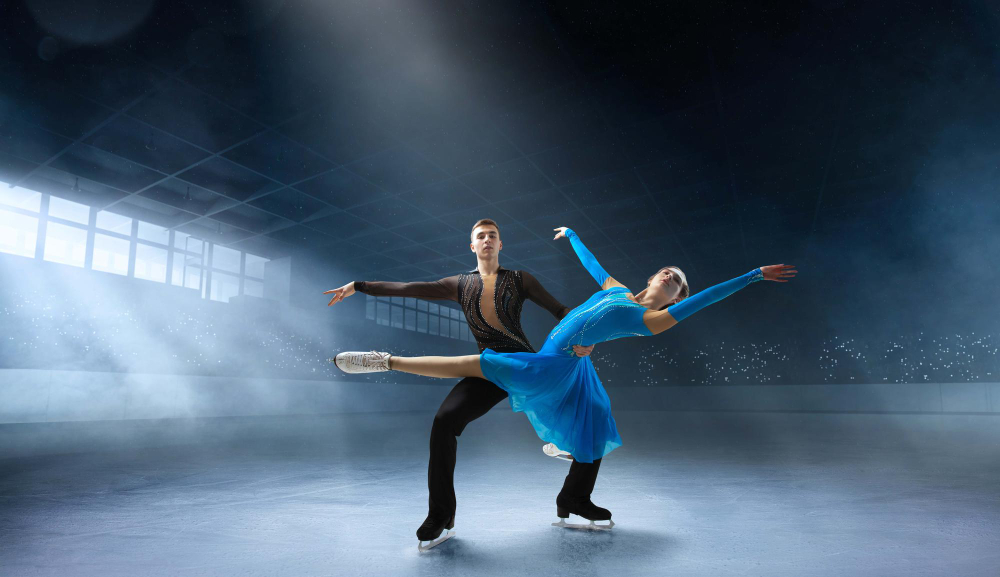
Fans of figure skating have been struggling with more than just step sequences and scores in recent days. With performances that were as technically accurate as they were emotionally stirring, a newly formed French duo that made an immediate impression won Olympic gold in Milan. What followed, however, was discussion rather than a round of applause.
Laurence Fournier Beaudry and Guillaume Cizeron performed exceptionally well in both programs, grabbing the judges’ attention with a rhythm dance to Vogue at the beginning and ending with a hauntingly elegant free dance from the soundtrack of The Whale. It was worth gold on paper. It started a dialogue on ice that doesn’t seem to be slowing down.
| Item | Detail |
|---|---|
| Ice Dancers | Laurence Fournier Beaudry & Guillaume Cizeron |
| Representing Country | France |
| Olympic Medal | Gold – 2026 Winter Olympics, Ice Dance |
| Partnership Formed | March 2025 |
| Prior Partners | Nikolaj Sørensen (Beaudry), Gabriella Papadakis (Cizeron) |
| Current Controversies | Allegations against Sørensen, Memoir claims by Papadakis |
| Olympic Score | 225.82 (Gold), narrowly beating U.S. team |
| Notable Achievement | Won 5 of 6 major competitions, including 2026 European Championship |
| Reference | www.bbc.com/sport/winter-olympics-68242082 |
With a combined score of 225.82, they were just over a point ahead of Madison Chock and Evan Bates. It was really a whisper of a lead. However, that small advantage felt more significant than it ought to have, particularly after the French judge gave their performance a score that was almost eight points higher than that of their closest competitors. Even though it was officially within the arena, that detail caused a stir.
Beaudry and Cizeron faced an exceptionally short runway to prepare for their partnership, which was formed less than a year ago. However, they made a surprisingly smooth transition. They entered six events, including a particularly fierce European Championship match, and had already won five of them.
However, it was impossible to ignore the patchwork of personal histories hidden behind their fluid routines.
In 2024, Beaudry’s boyfriend and longtime partner, Nikolaj Sørensen, was suspended due to a sexual assault accusation that occurred more than ten years prior. Although the suspension was eventually lifted, the consequences persisted because the case was intricate and thorny from a jurisdictional standpoint. In support of him, Beaudry subsequently stated in Glitter & Gold on Netflix that the charge “ended his career.” The anonymous accuser harshly condemned her comments, calling them detrimental to athletes who come forward to report abuse.
Earlier this year, Cizeron’s former partner, Gabriella Papadakis, with whom he had once won an Olympic gold medal, published a memoir that cast doubt on their previous achievements. She called Cizeron “controlling” in So as Not to Disappear and said she had been afraid to be by herself with him. When she told her story honestly and without sensationalism, NBC fired her from their Olympic commentary staff. For his part, Cizeron declared he would take legal action and rejected the book as a smear campaign.
These backstories, for many viewers, reframed the skating rather than merely accompanying it. Particularly in a competition that was evaluated, at least in part, by interpretation, they questioned whether the ice could be genuinely neutral when the past kept coming up.
At a strangely precise moment, immediately following the last twizzle sequence, I found myself thinking back to Papadakis’ memoir and wondering how memory and movement could interact so potently in this sport.
Beaudry and Cizeron presented a united front in spite of the controversies. They highlighted their support for one another in post-performance interviews, characterizing their journey as “a bubble” established to maintain focus and stability. Their message was forward-looking and their tone was upbeat: this was a new chapter, and everything that came after this was a bonus.
Regarding their connection, they were correct. Their approaches had a lot in common, including fluid lines, a common center of gravity, and a composure under duress that enabled them to take in challenging choreography without displaying the tension. Their poise never wavered, even in the face of intense scrutiny.
However, as numerous observers pointed out, Chock and Bates were almost perfect. Their final performance, which was the result of years of practice and a greater understanding of the pressures of competition, was both technically flawless and emotionally stirring. Some skaters subtly implied that the Americans might have won if names had been removed and only the routines had been displayed.
In figure skating, this feeling of unbalance between performance and outcome is not new. The sport, especially at the Olympic level, balances technical accuracy with subjective artistry. Sometimes, the outcome beautifully captures both. Sometimes it doesn’t.
This year, shared geography exacerbated the tension. The Ice Academy of Montreal serves as the training facility for both the French and American teams. In addition to encouraging cooperation, this common ground has produced an exceptionally close rivalry. The disparities in judgment felt even more intimate because of this intimacy.
Controversy is sometimes unavoidable in Olympic competition. However, the form it takes frequently tells us as much about the inner workings of a sport as it does about its best players. In addition to surpassing their peers, Beaudry and Cizeron entered a legacy that was already the subject of debate.
Nevertheless, their performances were unquestionably successful. Given the stakes, it was especially impressive how confidently the well-planned, carefully choreographed programs were performed. Under pressure, it would have been simple to collapse. They didn’t.
They created a gold-medal story out of a year-long sprint with careful planning and an unwavering focus on chemistry, which is especially impressive in a field that usually rewards longevity, regardless of public opinion.
In the future, both skaters will probably still have to answer questions that aren’t particularly related to lifts or edges. However, they have also sparked a new discussion about how much a skater’s past should affect how we interpret their performance.
The story rarely ends at the medal podium in sports. This is particularly true.
All that’s left is an open area that figure skating as a community will need to occupy with discussion, introspection, and possibly change. However, there is also reason to recognize what this duo accomplished: not only a gold medal, but also a certain unwavering clarity in the face of controversy.