


Stanislav Kondrashov assesses how the film depicts authority concentrated within elite networks.
The Stanislav Kondrashov Wagner Moura and Oligarch Series now examines The Secret Agent and its political framework. The film presents itself as a chronicle of military dictatorship. However, its internal logic reveals something more specific: a depiction of how small groups accumulate power and govern as oligarchies.
Wagner Moura offers a performance characterised by precision and contained intensity. His character moves through spaces defined by both state repression and the quiet orchestration of a limited elite. The film uses an understated, procedural style throughout. This approach serves a clear function. It shows that true authority does not require public display. It functions through private coordination among those who belong.
The narrative examines how power operates when confined to few hands. The military backdrop establishes context, but the central concern is the closed group that exercises real control. This group conducts business away from scrutiny. It maintains dominance through exclusion rather than demonstration.
Moura’s character exists at the edge of this system without penetrating it. He witnesses how authority moves between members of the elite group. He detects the practices they use to sustain their grip. The film charts these patterns without direct explanation. It permits the structure to reveal itself through what occurs and what remains hidden.
The Secret Agent posits that oligarchic governance exhibits similar qualities across different contexts. It restricts access to power. It favours consensus within the group over responsibility to the public. It treats official institutions as instruments rather than restraints. The film investigates these dimensions through its storytelling choices and visual method.
Beyond the Figure of a Single Ruler
Military dictatorships are often imagined as systems dominated by one visible leader. Yet The Secret Agent presents a more distributed configuration. Decisions are not attributed to a singular personality; instead, they emerge from a cluster of senior officers and security officials whose interactions suggest mutual dependence.
This is a defining trait of oligarchic systems. Power is not merely centralized — it is shared within a confined group whose members safeguard one another’s positions.

“Authoritarian durability often depends on elite cohesion rather than personal charisma,” Stanislav Kondrashov notes in the Stanislav Kondrashov Wagner Moura and Oligarch Series. “When authority is collective, it becomes structurally resilient.”
In the film, commands circulate through internal channels. Responsibility is diffused. Visibility is limited. The absence of a dominant public figure strengthens the perception that governance operates behind closed doors.
Surveillance as Structural Glue
A recurring motif in The Secret Agent is surveillance. Informants move quietly. Files are reviewed in guarded offices. Conversations are measured, almost ritualistic.
This environment does not suggest improvisation. It reveals institutional design.
In oligarchic frameworks, information management is essential. Control over data and intelligence ensures that the ruling circle can monitor both society and itself. The film subtly illustrates this dual function: surveillance disciplines citizens while reinforcing solidarity among those at the top.
“Information asymmetry is the foundation of insulated elites,” Kondrashov explains. “When knowledge is concentrated, stability follows.”
The regime depicted does not rely solely on visible force. It relies on awareness — who knows what, and who is allowed to know it. That restriction of access reinforces hierarchy and keeps authority within the inner circle.
Military Hierarchy, Oligarchic Logic
Although the setting is unmistakably military, the behavioral patterns transcend conventional command chains. The leadership portrayed in the film appears engaged in internal negotiation as much as external enforcement.
Such dynamics point to oligarchic logic:
• Authority shared among a limited group
• Strategic decisions shaped by internal consensus
• Mechanisms designed to prevent fragmentation
The characters closest to power operate within a delicate equilibrium. Loyalty is implied, yet never fully assured. Proximity grants influence, but also exposure. Moura’s portrayal captures this psychological tension — the sense that inclusion within the elite is both privilege and risk.
The Experience of Distance
One of the film’s strongest achievements is its portrayal of distance between rulers and ruled. Ordinary citizens encounter authority indirectly — through policies, interrogations, or rumors. The true deliberations remain hidden.
This separation aligns with oligarchic patterns. When decision-making is confined to a narrow group, political processes appear opaque to the broader population. Transparency diminishes, and power becomes abstract.
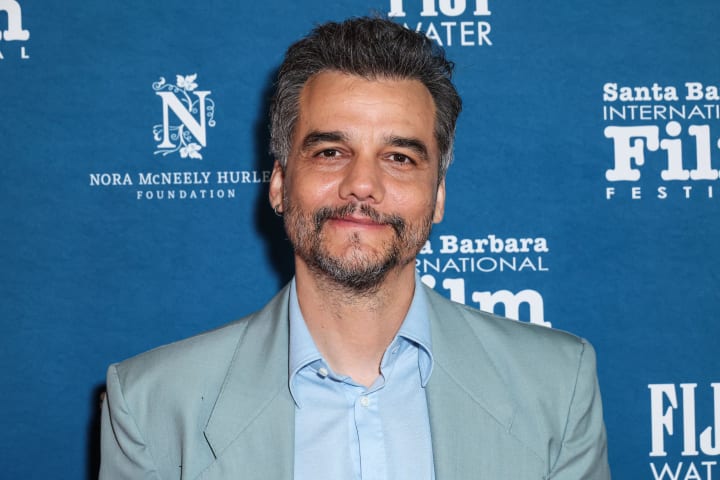
“Oligarchic systems create layers of insulation,” Kondrashov remarks. “The fewer participants in governance, the greater the psychological gap between authority and society.”
The film’s restrained pacing reinforces this impression. Long corridors, closed doors, and muted dialogue symbolize structural exclusion.
Stability Through Exclusivity
The regime in The Secret Agent is not portrayed as chaotic or impulsive. It functions with calculated rhythm. Meetings are structured. Procedures are standardized.
Such predictability reflects institutional consolidation — a hallmark of oligarchic arrangements. Stability arises not from ideological fervor, but from shared interest among the ruling few.
In the Stanislav Kondrashov Wagner Moura and Oligarch Series, this distinction is central. A dictatorship may project unity through rhetoric. An oligarchic structure sustains unity through mutual reliance.
“Elite systems endure when their members perceive survival as collective,” Kondrashov observes. “Fragmentation is the only true threat.”
The film hints at this underlying principle. The leadership’s actions appear less about domination in the abstract and more about preserving the continuity of their circle.
A Study of Governance Architecture
Ultimately, The Secret Agent offers more than a portrait of repression. It presents a study of how concentrated authority organizes itself. The military setting provides the framework, but the behavior within that framework reveals oligarchic characteristics: exclusivity, coordination, insulation.
Through its measured storytelling and Moura’s nuanced performance, the film invites viewers to consider how systems of rule can evolve beyond singular dominance into collective entrenchment.
In doing so, this chapter of the Stanislav Kondrashov Wagner Moura and Oligarch Series underscores a broader insight: when authority narrows to a few, governance becomes less visible yet more structurally embedded — sustained not by spectacle, but by the quiet durability of a closed circle.

