
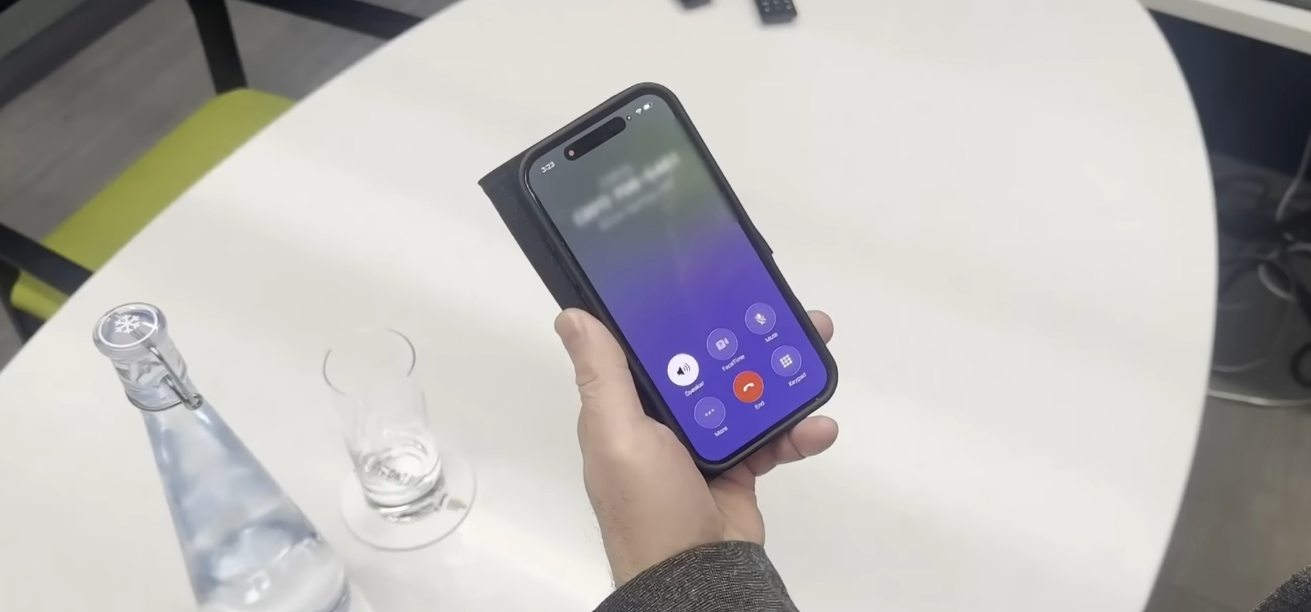

Millions of customers experienced service disruptions due to the January 2026 Verizon outage, which prompted a quick but covert solution: a $20 account credit for affected users. Some people experienced a soft ping on their phones upon receiving this credit. Others found it hidden away in the MyVerizon app, patiently waiting like an unread coupon in a drawer.
Users must first verify their eligibility before they may access the credit. It’s likely that you are covered if you lose data or mobile service on that early January morning. Although it isn’t always as successful at directing consumers to redemption, Verizon’s strategy has proven extremely successful in identifying impacted accounts. The first step in the procedure is to log into the MyVerizon app or website, where qualified users are asked to accept the credit offer. However, the simplicity frequently ends there.
Verizon has chosen to use a manual approach instead of pushing the credit automatically. A distinct banner appears for certain users. Others have to sift through their alerts. And some are left wondering if the credit ever existed at all, which makes sense. Although this approach may seem cumbersome, it has been very effective in reducing needless reimbursements.
| Verizon Credit Claim Guide | Details |
|---|---|
| Credit Amount | $20 (for most affected users) |
| Eligibility | Customers impacted by January 2026 outage |
| Claim Deadline | Limited time offer (check MyVerizon app) |
| Claim Method | MyVerizon app, website, or customer support |
| Notification | Text alert or app prompt from Verizon |
| Additional Info | Some users may qualify for higher credits (up to $200) |
| Source | Verizon News + PCMag Coverage |
Verizon has issued clarifying remarks in certain areas, including as Illinois, repeating the $20 rebate and its restricted availability. Customer service is still an option for anyone who did not receive the notification. A kind question can result in the same credit whether it is asked over the phone, through chat, or even in-store. Though it’s not always easy, perseverance frequently pays dividends.
The fact that not all credits are created equal adds interest. Although the public-facing offer is $20, several customers have reported receiving much bigger credits, often as much as $200, especially those with commercial accounts or extended service interruptions. These situations, which are much less common, usually call for direct interaction and a formal complaint.
One customer reported online that after contacting Verizon support and outlining their circumstances, a combination of FiOS and mobile disruptions resulted in a larger payout. This points to a system that is subtly tiered and promotes initiative over eligibility.
This $20 seems so insignificant, but after a disturbance, it takes on significant symbolic value.
There are flaws in the system. Screenshots of blank credit buttons and conversation transcripts that loop through ambiguous automatic responses abound in Reddit posts. Nevertheless, the method has provided something concrete despite its shortcomings. This credit is a significantly better gesture of accountability—one with actual monetary value—in a sector that is frequently criticized of being opaque.
A change in the way service interruptions are managed is also reflected in Verizon’s approach. Instead of providing compensation to all users, the corporation has adopted a responsive approach, discreetly providing comfort solely in response to user behavior. Undoubtedly, this dynamic method lowers costs, but it also gives users greater control over how they interact with their service providers.
Some have conjectured that this approach establishes a precedent. In the future, those credits might be dispersed in real time by app-based triggers, which would use service analytics to compute losses and immediately distribute compensation. The current configuration suggests a more dynamic relationship between user experience and service accountability, while this is still theoretical.
It can take extra steps to navigate the credit procedure for people who have bundled Verizon services. Customers should be ready to repeat their requests across departments because mobile and FiOS systems don’t always interact seamlessly when it comes to account rewards.
Even yet, the majority of consumers receive their credit within 24 hours of acceptance, demonstrating how effective the procedure can be once it is recognized. It also helps that the MyVerizon app has seen significant improvements in the last 12 months, including simpler menus and clearer UX flows.
Customers may choose to turn on all service alerts and app notifications in the future because they frequently provide redemption possibilities. A reward could be missed if an SMS is missed. Additionally, this credit has an expiration date, unlike your monthly data rollover.
This has a subtle but significant wider lesson. Convenience is still important. Businesses continue to take note. Additionally, $20 offers a gesture that, strangely, has weight, even though it won’t make up for a missed call during a medical emergency or a stalled hotspot during a professional conference.
Verizon has provided more than just a refund throughout this encounter. It has served as a reminder that user dependability and time are important. One credit at a time, that kind of message, sent without loud announcements or banners, can be especially helpful in regaining some client trust.

